19
MONTEREY
BOATS
Safety Equipment
PYROTECHNICS ARE UNIVERSALLY RECOGNIZED AS
EXCELLENT DISTRESS SIGNALS. HOWEVER, THERE IS
POTENTIAL FOR INJURY AND PROPERTY DAMAGE IF NOT
PROPERLY HANDLED. THESE DEVICES PRODUCE A VERY
WITH CAUTION. IN SOME STATES THEY ARE CONSIDERED A
CAREFUL AND FOLLOW THE MANUFACTURER’S INSTRUCTIONS
EXACTLY WHEN USING PYROTECHNIC DISTRESS SIGNALS.
Non-Pyrotechnic Devices
Non-Pyrotechnic visual distress signals must be
in serviceable condition, readily accessible, and
U.S. Coast Guard requirements. They include:
• Orange Distress Flag (Day use only)
be at least 3 x 3 feet with a black square and
ball on an orange background. It is most
distinctive when attached and waved from a
paddle or boat hook.
• Electric Distress Light (Night use only)
The electric distress light is accepted for
the international SOS distress signal. Under
“Inland Navigation Rules,” a high intensity
50-70 times per minute is considered a
distress signal.
Sound Signaling Devices
The navigation rules require sound signals to be
made under certain circumstances. Recreational
vessels also are required to sound fog signals dur-
ing periods of reduced visibility. Therefore, you
sound signal.
Navigation Lights
Recreational boats are required to display naviga-
tion lights between sunset and sunrise and other
periods of reduced visibility (fog, rain, haze, etc.)
Navigation lights are intended to keep other ves-
sels informed of your presence and course. Your
boat is equipped with navigation lights required by
the U.S. Coast Guard at the time of manufacture.
It is up to you to make sure they are operational
and turned on when required.
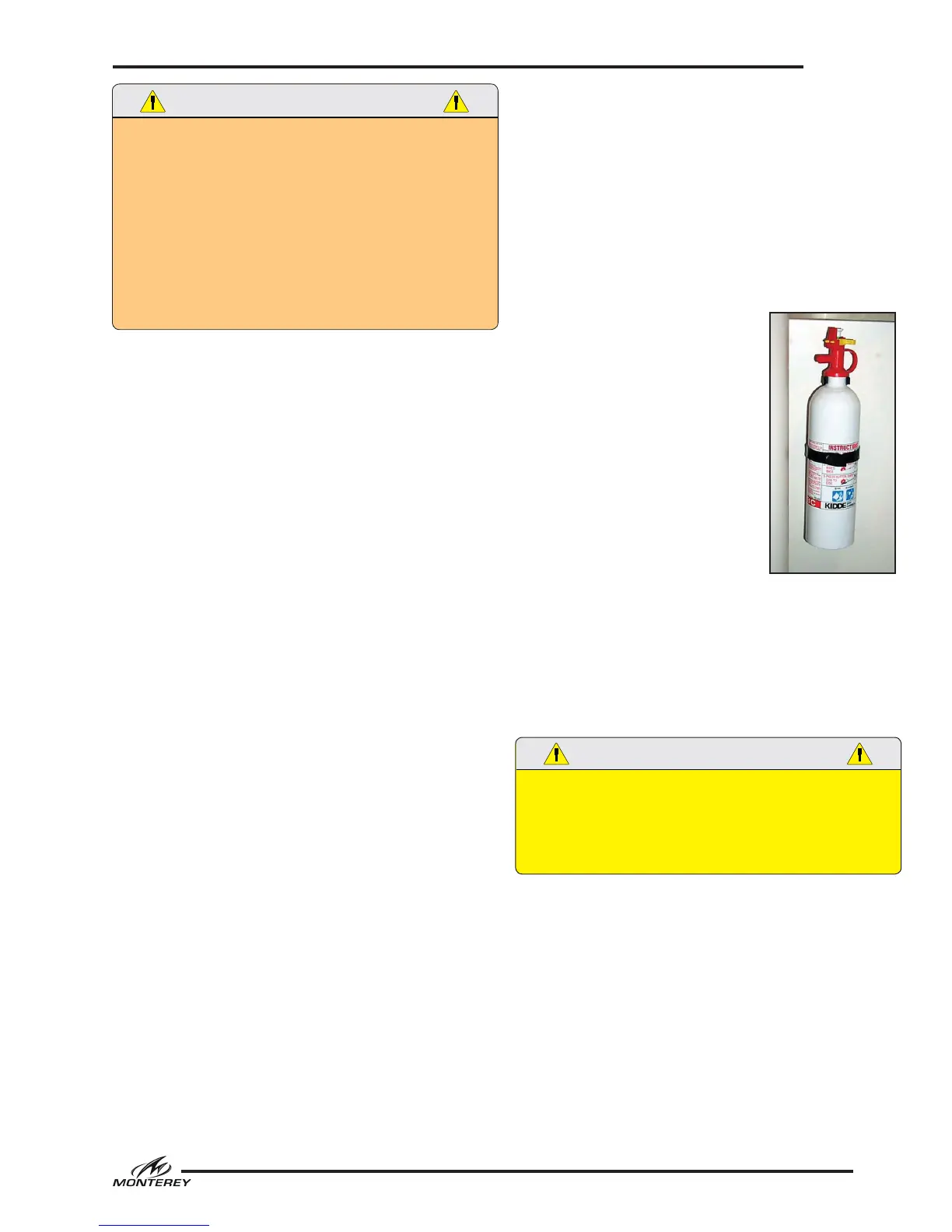
Fire Extinguishers
Inboard boats less than 26 feet are required to
type mounting bracket. It is recommended the
extinguisher be mounted in a readily accessible
position.
Fire extinguishers require regular inspec-
tions to ensure that:
• Seals & tamper indicators
are not broken or missing.
• Pressure gauges or indicators
read in the operable range.
• There is no obvious physical
damage, corrosion, leakage
or clogged nozzles.
Refer to the “Federal Require-
ments And Safety Tips For
Recreational Boats” pamphlet
or contact the U.S. Coast Guard
Boating Safety Hotline, 1-800-
368-5647, for information on the type and size
Please refer to the information provided by the
extinguisher.
IS ESSENTIAL THAT YOU READ THE INFORMATION CAREFULLY
AND COMPLETELY UNDERSTAND THE SYSTEM, IN THEORY AND
1.6 Bilge and Fuel Fires
-
ous because of the presence of gasoline or diesel
fuel in the various components of the fuel system
and the possibility for explosion. You must make
your only option.


 To Next Page