14
15
DK ENG
3.0 Maintenance
The maximum recommended weight of wood fuel per load is 2 kg/h/5.5Ibs (approx 3 split
logs).
Under normal ring, the average ue temperature in the stove pipe, measured 20 cm above
the stove, is approx. 300° C (550°F). The maximum ue temperature in the stove pipe must
not exceed 450° C (750°F). If the ue temperature exceeds 450°C (750°F), it is considered
as over ring and may cause premature wear and tear of the stove.
To help gauge the correct running temperature of your stove, we recommend you use the Morsø
Flue Gas Thermometer (part # 62901200). The Flue Gas Thermometer magnetically attaches onto
the stove pipe approx 20 cm (8”) above the stove’s top plate and measures the surface temperature
of the stove pipe. Please see your authorized Morsø Dealer for availability.
Draft conditions
If smoke or fumes come out of your stove when lightning up and reloading, or if the re simply
will not respond, a poor draft is almost certainly to blame. (In a very few cases, there may be
insucient fresh air getting into the room - see installation advice above). Take advice from
your stove supplier on how best to upgrade your ue system to improve draft.
Rules of woodburning
If you want less heat, put fewer logs on the stove and reduce the amount of air. It is still impor-
tant to maintain a good layer of embers.
- Less heat - less wood - less air
- Greater heat - more wood - more air
- Soot deposits will settle on the glass if the stove is run too slowly or if your wood is not
well seasoned.
Carbon monoxide detectors
It is required in some jurisdictions to install smoke and carbon monoxide detectors where
heaters are installed. Install at least one smoke detector on each oor of your home
to ensure your safety. It should be located away from the wood appliance and close to
the sleeping areas. Locating a smoke detector too close to a wood appliance can cause the
smoke detector alarm to sound if a pu of smoke is emitted while the wood appliance door
is open during reloading. Follow the smoke detector manufacturers placement, installation,
and maintenance instructions
Revisions
Rev.
Sign.:
Title:
Drawing no.:
1:1
1410 NA
Morsø 1400
RSV
28.04.2010
A2
Exploded Diagram
Date of print: 28-04-2010
U:\udv\Tegninger\1400\1400 Samlingstegning.SLDASM
1400-347 a
-
Itemno.:
This drawing is Morsø Jernstøberi A/S' property and must not be sold, lended or copied without any written authorization from the company.
Material:
Weight:
Model no.
Drawingtype:
Location of file:
Scale:
Format:
Released:
Construction:
Date:
When perfoming maintenance on your stove, always protect yourself, using safety goggles
and gloves.
3.1 Exterior Maintenance
The stove surface is painted with heat-resistant Senotherm paint. It is best kept clean by
vacuuming with a soft brush attachment or by wiping with a lint-free cloth.
Over a period of time, the painted surface may become slightly grey. A can of Morsø touch-up
spray paint should be available from your stove supplier. This can be applied - in accordance with
the instructions - in just a few minutes. When rst ring after touching up, the stove will give o
a slight smell as the paint cures. Make sure to ventilate the room well during this phase.
3.2 Internal maintenance
Glass
If the stove is generally run at the correct temperatures, there should be little or no dirt on
the glass. If dirt does settle during lighting, most will burn o as temperatures increase.For
heavier deposits that will not burn o, use Morsø glass cleaner, applied when the glass is
cold, in accordance with the instructions. Never use abrasive cleaners on the glass surface.
Reasons for dirty glass
- Fuel too wet
- Logs too large or not split
- Combustion temperatures too low
Do not clean the glass while hot
Replace broken glass immediately.
Do not operate your stove if the glass in the door is damaged.
If you need to replace the glass, it should be replaced with the high temperature ceramic
class supplied by Morsø, contact your Morsø dealer.
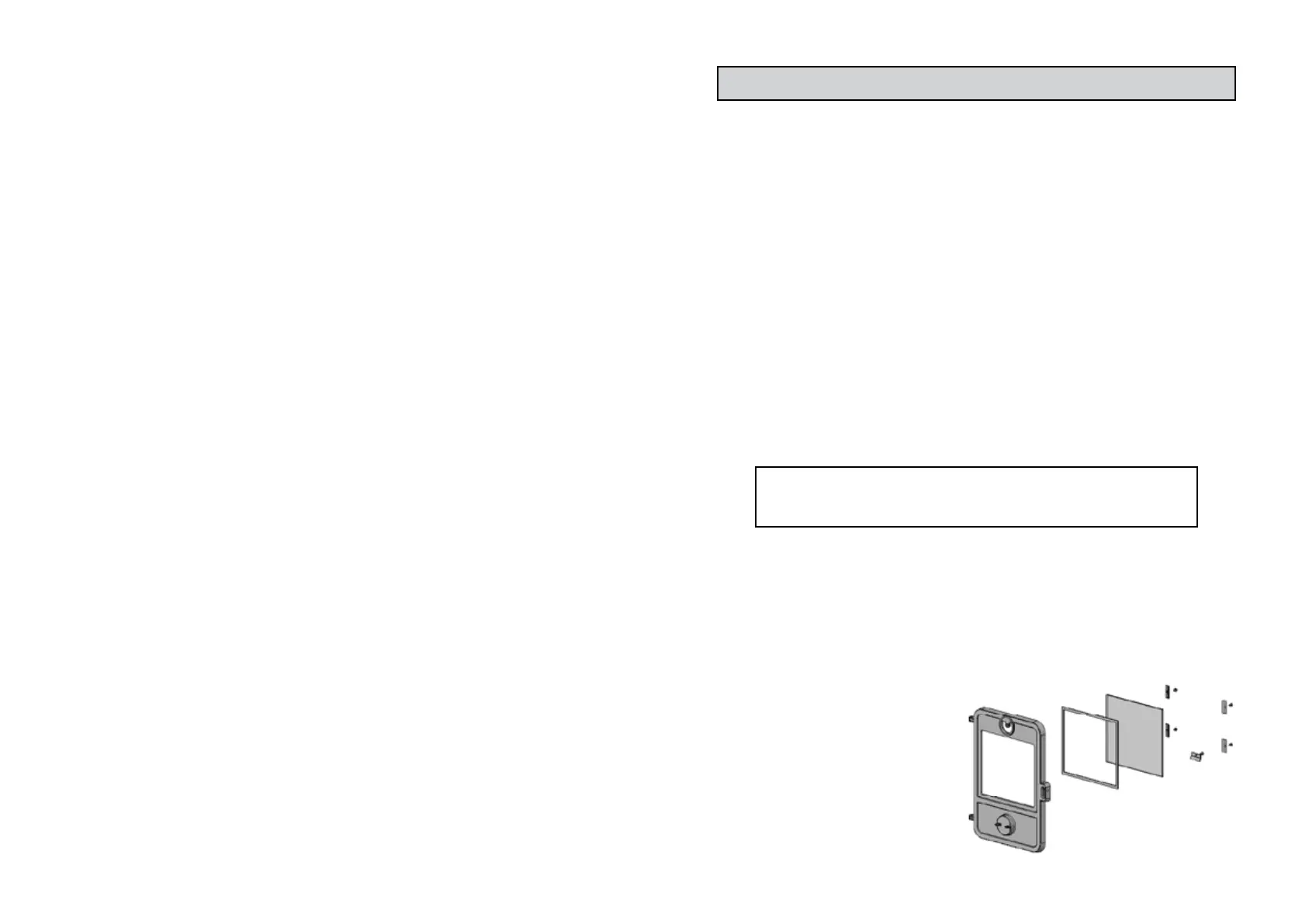
Installing the glass
Never install the glass when the stove is in function.
Ceramic glass replacement
Ceramic glass cannot be recycled because it
has a higher melting point that ordinary glass.
If ceramic glass is mixed with ordinary glass,
the raw material is spoiled, and the
reclaiming process may be halted. Take
care that the ovenproof glass does not end up
among ordinary recycled waste. That
will be a great benet to the environment.
Note: Should be handed in to a
recycling station as ceramic glass.


 To Next Page