MORTEX PRODUCTS INC. 501 TERMINAL RD FORT WORTH, TX 76106 Page 3
How The Air Handler Works – Heating Cycle
How the Furnace Works
This furnace must only be installed in the downow orientation.
The furnace is equipped with the controls necessary for proper
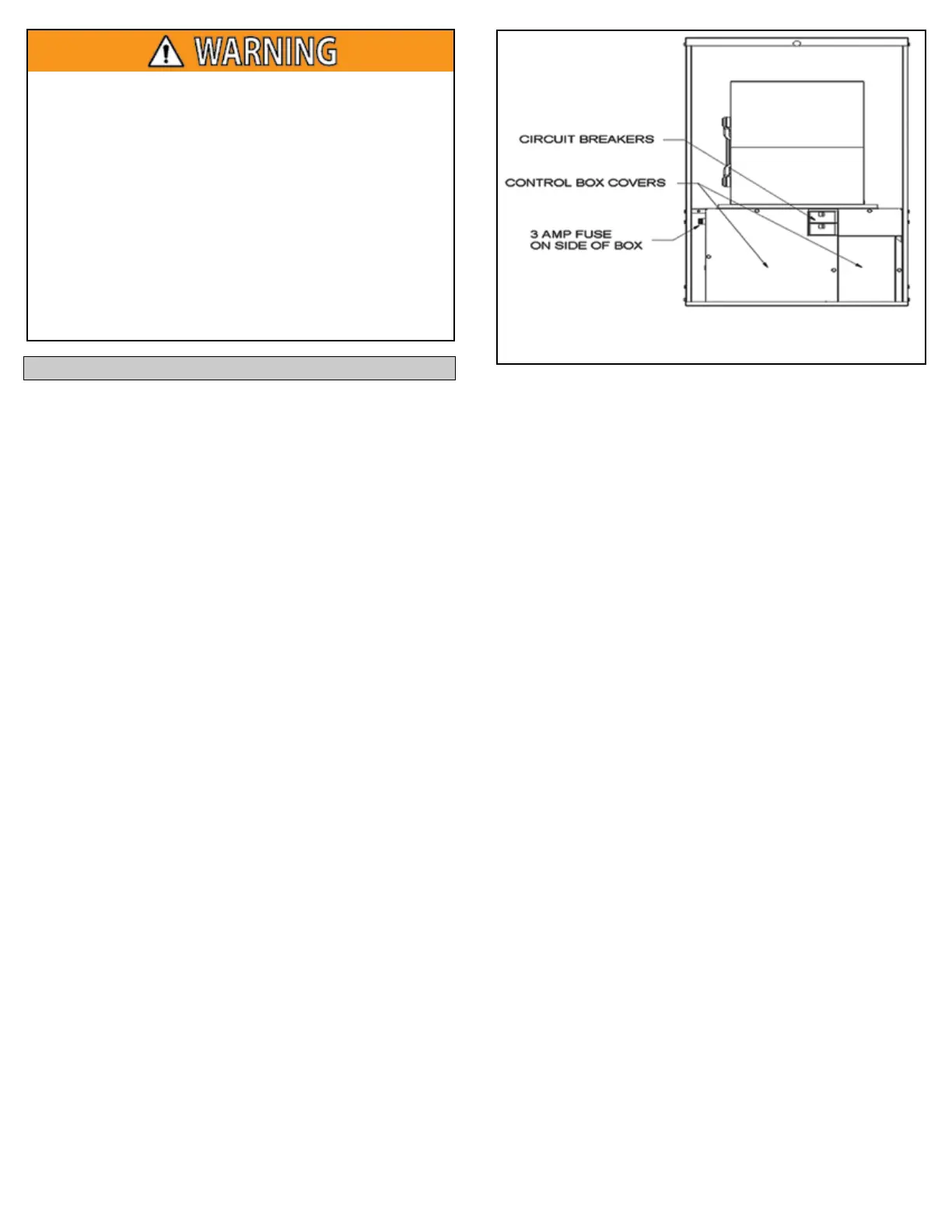
and safe operation. Figure 1 shows the furnace in the downow
position and the location of the circuit breakers and low
voltage fuse. The furnace is equipped with a blower assembly
and transformer for no-heat models or a blower assembly,
transformer, electric heat contactors, circuit breakers, and electric
heating elements for electric heat models.
The transformer provides 24 VAC for the operation of the furnace
controls and thermostat. When the thermostat calls for heat,
24 VAC is sent through the furnace low voltage terminal block
(LVTB) and the over-temperature limits to the contactor coil which
causes the contactor contacts to close. This sends 208/240 VAC to
the electric heating elements which causing them to heat up. The
furnace blower motor is then energized on the heating speed.
The blower draws cool air from the living space, passes it across
the heating elements, and circulates the warm air through the
ductwork to the living space. When the thermostat is satised, the
electric heating elements are de-energized and the blower motor
is de-energized. The furnace is now in “standby” awaiting the next
call for heat.
Visual Inspection of Furnace
The homeowner/user should visually inspect the furnace every
month for any defects or problems. The items to be inspected are:
1. The physical support of the furnace with no sagging cracks,
gaps, etc.
2. The furnace casing for any obvious signs of deterioration from
rust or corrosion.
3. The supply duct connection is sealed to the furnace casing. The
return connection (furnace base) is sealed to the oor base.
4. The furnace must be serviced by a qualied service technician
annually, preferably at the start of each heating season.
FIRE OR ELECTRICAL HAZARD
Servicing heating/cooling equipment can be hazardous
due to electrical components.
Only trained and qualified personnel can service or repair
heating/cooling equipment. The homeowner must never
try to perform service, repair or maintenance on this air
handler.
Untrained service personnel can perform only basic
maintenance functions such as cleaning of exterior
surfaces and replacing the air filters ONLY!
Observe all precautions in the manuals and on the
attached labels when working on this air handler.
SECTION 3: HOMEOWNER/USER INFORMATION
Figure 1: Circuit Breaker Locations
The Service Technician
If the furnace gives any indication of improper operation, a
service technician should be called to inspect and repair the
furnace. The service technician is allowed to perform the normal
routine care of the furnace and can detect potential problems
and then make corrections before trouble develops. Preventative
maintenance of this type will allow the furnace to operate with
minimal concerns to the homeowner/user and will provide years
of comfort.
Warranty and Responsibilities
It is the sole responsibility of the homeowner to make certain
the furnace has been properly installed and adjusted to operate
properly.
The manufacturer warrants the furnace to be free from defects
in material or workmanship for a stated time in the warranty
agreement. The manufacturer will not be responsible for any
repair costs to correct problems due to improper setup, improper
installation, improper furnace adjustments, adding parts that
are not listed for use with this furnace, improper operating
procedures by the homeowner/user or repairs performed by the
homeowner/ user.
Examples of service calls not covered by warranty:
1. Correcting faulty duct system in the home. This can be due
to an insufficient number of ducts or ducts that are too small to
provide proper air-flow through the air handler.
2. Correcting electrical wiring problems in the supply wiring to
the air handler.
3. Resetting circuit breakers or ON/OFF switches used for
servicing.
4. Problems caused by installation and operation of any outdoor
unit or air quality devises which are not approved for use with
this air handler.
5. Improper thermostat settings or calibrating the thermostat.
6. Problems caused by construction debris that has fallen into
the furnace.
7. Replacement of fuses.
8. Insufficient air-flow problems caused by dirty air filters.
9. Furnace malfunction or component premature failure caused
by restrictions in the return or supply ducts causing low air-flow.



 To Next Page