EasyManua.ls Logo

Motomaster 011-1505-8 - User Manual

Motomaster 011-1505-8
16 pages
Print Icon
To Next Page IconTo Next Page
Loading...
headline bars
tabs
continuation tabs
notes
warnings
0
U
L
CHARGING
5
10
DC AMPS
011-1505-8
LISTED
C
E32074
Battery Type/Type de batterie
Read warning on back
and instruction manual.
Lisez los consignes de sécurité au
dos et celles du guide d'utilisation.
AUTOMATIC AND MANUAL
AUTOMATIQUE ET MANUEL
Charge Rate/
FAST CHARGE
CHARGE RAPIDE
TRICKLE CHARGE
CHARGE D'ENTRETIEN
FOR 6 & 12 V BATTERIES
POUR BATTERIES DE 6 ET 12 V
Battery Charger
WITH ENGINE START
AVEC AIDE-DÉMARRAGE
Chargeur de batterie
Taux de charge
12V 2A
12V 15A
100 A
15 A
2 A
Convontional
Doop Cycle & AGM
Décharge poussée et AGM
Conventionnel
815G
FULL
CHARGE
CHECK
BATTERY
START
15
6V 15A
6V
Manual
Automatic
Engine Start
ENGINE START
Aide-d
é
marrage
AIDE-D
É
MARRAGE
12V
Engine Start
Aide-d
é
marrage
Automatique
Automatic
Automatique
Manuel
model no. 011-1505-8
INSTRUCTION
MANUAL
BATTERY CHARGER
headline bars
tabs
continuation tabs
notes
warnings
IMPORTANT:
This manual contains important safety and operating instructions.
Read all instructions and follow them when using this product.
Question and Answer IconNeed help?

Do you have a question about the Motomaster 011-1505-8 and is the answer not in the manual?

Summary

Important Product Warning

Warranty Information

Technical Specifications

Safety Information

Important Safety Instructions

Contains crucial safety and operating instructions for using the product. Read all instructions.

Abbreviations and Acronyms

Defines common abbreviations and acronyms used in the manual, such as Amp, Volt, and DC.

Personal Precautions

Safety measures to prevent personal injury, such as avoiding sparks near batteries and removing metal items.

Electric Shock Hazard Warning

Instructions to reduce the risk of electric shock, including unplugging before maintenance.

Battery Handling and Acid Safety

Guidelines for handling batteries, dealing with battery acid exposure, and necessary protective gear.

Preparing to Charge

Steps to take before charging a battery, including removing terminals and ensuring safety.

Explosion Hazard Warning

Critical warnings about explosive gases from batteries and precautions to prevent explosions.

Charger Location

Recommendations for placing the battery charger to ensure safety and prevent damage.

DC Connection Precautions

Safety steps for connecting and disconnecting the DC output clips to the battery.

Connecting Battery in Vehicle (Negative Ground)

Step-by-step guide for connecting the charger to a vehicle with a negative-grounded battery.

Connecting Battery in Vehicle (Positive Ground)

Detailed steps for connecting the charger to a vehicle with a positive-grounded battery.

Connecting Battery Outside Vehicle

Step-by-step guide for connecting the charger to a battery removed from a vehicle.

AC Connection and Disconnection

Procedures for connecting and disconnecting the charger's AC power cord.

Grounding and AC Power Cord

Information on proper grounding and AC power cord connections to prevent shock.

Extension Cord Specifications

Guidance on selecting the appropriate wire gauge for extension cords based on length.

Important Notes and Regulations

Notes on marine battery charging, cord management, normal sounds, and adapter plug restrictions.

Features and Components

Key Parts Identification

Identifies and labels the main components of the battery charger using a diagram and numbered list.

Important Information

Battery Charger Components Explained

Detailed explanations of the ammeter, LED indicators, battery type switch, and charge rate selector.

Ammeter Function

Explanation of how the ammeter indicates charging current and battery charge status.

LED Indicator Functions

Description of the red 'Check Battery' and green 'Full Charge' LED indicators and their meanings.

Battery Type Selector Switch

Instructions on using the switch to select between Conventional, Deep-cycle, and AGM battery types.

Charge Rate Selector Switch

Guidance on selecting the appropriate charge rate (6V Manual, 12V 2A, 12V 15A, 12V Engine Start).

Operation

Manual Charging (6 V Only)

Instructions for performing manual charging on 6V batteries, emphasizing constant monitoring.

Automatic Charging (12 V Only)

How the charger automatically switches to maintain mode after charging 12V batteries.

Maintain Mode Operation

Explanation of the maintain mode, how it keeps batteries charged, and its interaction with charge mode.

Using the Engine Start Feature

Step-by-step guide on how to use the battery charger to jump-start a car.

Engine Start Feature Warnings and Notes

Crucial precautions and notes regarding the use of the engine start feature to prevent damage.

Calculating Charge Time

A guide to determine charging time based on battery size, rating, and charger settings.

Operational Notes and Troubleshooting Tips

Notes on charging in cold weather, battery voltage, and troubleshooting engine start issues.

Maintenance and Storage

Maintenance Procedures

Instructions for cleaning and inspecting the battery charger and its components after use.

Storage Guidelines

Recommendations for storing the battery charger safely and properly to ensure longevity.

Troubleshooting

Common Problems and Solutions

Lists common operational problems, their possible causes, and recommended solutions for the battery charger.

Troubleshooting Support

Information on contacting customer service for further assistance with troubleshooting or replacement parts.

Before Returning for Repairs

Steps to take before returning the charger for repair, including checking connections and battery condition.

Overview

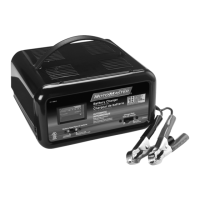
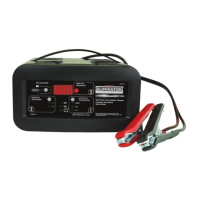
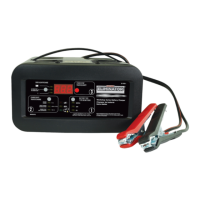
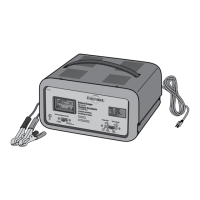
This document describes the MotoMaster Battery Charger, model no. 011-1505-8, a versatile device designed for charging 6 V and 12 V lead-acid batteries, including deep cycle and Absorbed Glass Mat (AGM) types. It also features an engine start function to assist in cranking vehicle engines.

Function Description:

The MotoMaster Battery Charger is primarily used to charge lead-acid batteries. It offers both manual and automatic charging modes, as well as an engine start feature. The manual charging mode (6 V only) requires the user to monitor the ammeter to determine when the battery is charged, as the charger will not automatically shut off. The automatic charging mode (12 V only) automatically switches to a "maintain mode" once the battery is fully charged, delivering a small current to keep the battery at full charge. If the battery voltage drops below a preset level, the charger will re-enter charge mode until full charge is restored. The engine start feature provides a high current boost (100 A for 12 V systems, or 6 V engine start for 6 V systems) to help crank a low-battery vehicle engine.

Important Technical Specifications:

  • Model Number: 011-1505-8
  • Input Voltage: 120 V AC
  • Input Frequency: 60 Hz
  • Input Current: 3 A (charging), 18 A (engine start)
  • Output Voltage: 6 V/12 V DC
  • Output Current:
    • 2 A/6 V DC
    • 2 A/12 V DC
    • 15 A/12 V DC
    • 100 A (engine start)
  • Power Cord Length: 6' (1.8 m)
  • Warranty: Two (2) year warranty against defects in workmanship and materials.

Usage Features:

The charger is equipped with several features to facilitate its use:

  • Ammeter (1): Displays the amount of current (in amps) being drawn by the battery. A decreasing current indicates the battery is taking on a charge. The "START" area on the meter indicates high current draw during engine start.
  • Battery Type Selector Switch (5): Allows selection between "Conventional" batteries (most common type, used for starting engines, often "low maintenance" or "maintenance-free" with vent caps) and "Deep-cycle and AGM" batteries (designed for repeated discharges, sealed case without vent caps, electrolyte absorbed in glass mat separators).
  • Charge Rate Selector Switch (3): Offers multiple charging rates:
    • 6 V MANUAL: For medium to large 6 V lead-acid batteries, requires frequent monitoring.
    • 12 V 2 A AUTOMATIC/6 V ENGINE START: For small 12 V batteries (31 Ah or less), warming larger 12 V batteries, or assisting 6 V engine cranking.
    • 12 V 15 A AUTOMATIC: For faster charging of larger 12 V batteries.
    • 12 V ENGINE START: 100 A for assisting 12 V engine cranking (not for 6 V batteries).
  • LED Indicators:
    • Check Battery (red) LED (4): Illuminates if there is a problem with the battery or DC connections.
    • Full Charge (green) LED (7): Illuminates when the battery is fully charged and the charger is in maintain mode.
  • Safety Precautions: The manual emphasizes critical safety instructions, including never smoking near a battery, wearing eye and body protection, avoiding contact with battery acid, and ensuring proper ventilation. It also provides detailed steps for connecting the charger to batteries installed in a vehicle or removed from a vehicle, with specific instructions for negative-grounded and positive-grounded vehicles.
  • Grounding: The charger is designed for use on a nominal 120 V circuit with a grounded plug to reduce electric shock risk.
  • Charge Time Calculation: A table is provided to estimate charge times based on battery size/rating (CCA, RC, Ah) and selected charge rate (2 A or 15 A), assuming a 50% charged battery.

Maintenance Features:

  • Cleaning: After use and before maintenance, the charger should be unplugged and disconnected. A dry cloth should be used to wipe battery corrosion, dirt, or oil from the battery clips, cords, and charger case.
  • Component Check: Ensure all charger components, including plastic boots on battery clips, are in place and in good working condition.
  • Servicing: All other servicing should be performed by qualified service personnel.
  • Storage: Store the charger unplugged and in an upright position in a cool, dry place (unless it's an on-board marine charger). Do not store clips on the handle, clipped together, on or around metal, or clipped to cables to prevent damage or personal injury.
  • Troubleshooting: A troubleshooting guide is included to address common issues such as clicking sounds, loud buzz/hum, charger not turning on, or not charging properly, offering possible causes and solutions. For persistent problems, users are advised to contact customer service.

Motomaster 011-1505-8 Specifications

General IconGeneral
BrandMotomaster
Model011-1505-8
CategoryBattery Charger
LanguageEnglish

Related product manuals