MAYCO LS450 CONCRETE PUMP • OPERATION MANUAL — REV. #2 (02/23/21) — PAGE 19
Reverse Pumping Procedure
1. Switch the pump into reverse. With pump speed at
medium-slow (approx. 12 strokes per minute), try to
pull the ‘pack’ back into the hopper with 5 or 6 reverse
strokes.
2. Remix the concrete in the hopper.
3. Switch the pump into forward. If it is still blocked, repeat
the reverse pumping procedure three times.
4. If the concrete still does not move, proceed to the
Shuttle Tube Inspection Procedure.
Shuttle Tube Inspection Procedure
1. Stop the pump. Turn off the engine.
2. The senior or most experienced operator must warn all
others to stand at least 20 feet away from the machine
and turn their heads to face away from the pump.
3. The operator will position himself beside the reducing
elbow at the pump outlet. While wearing safety glasses,
slip the end of a pry bar (24-inch length of reinforcing
steel rod) under the latch of the hose clamp and flip it up.
4. Carefully knock the end of the hose away from the
reducer.
5. Chip the concrete out of the reducer with the pry bar.
6. Remove the reducer. From the discharge end, chip
the concrete out of the shuttle tube with the pry bar.
If concrete cannot be loosened from the outlet of the
shuttle tube, remove the clean-out plug on the bottom
of the hopper to discharge the concrete.
7. Chip the blockage out with the pry bar.
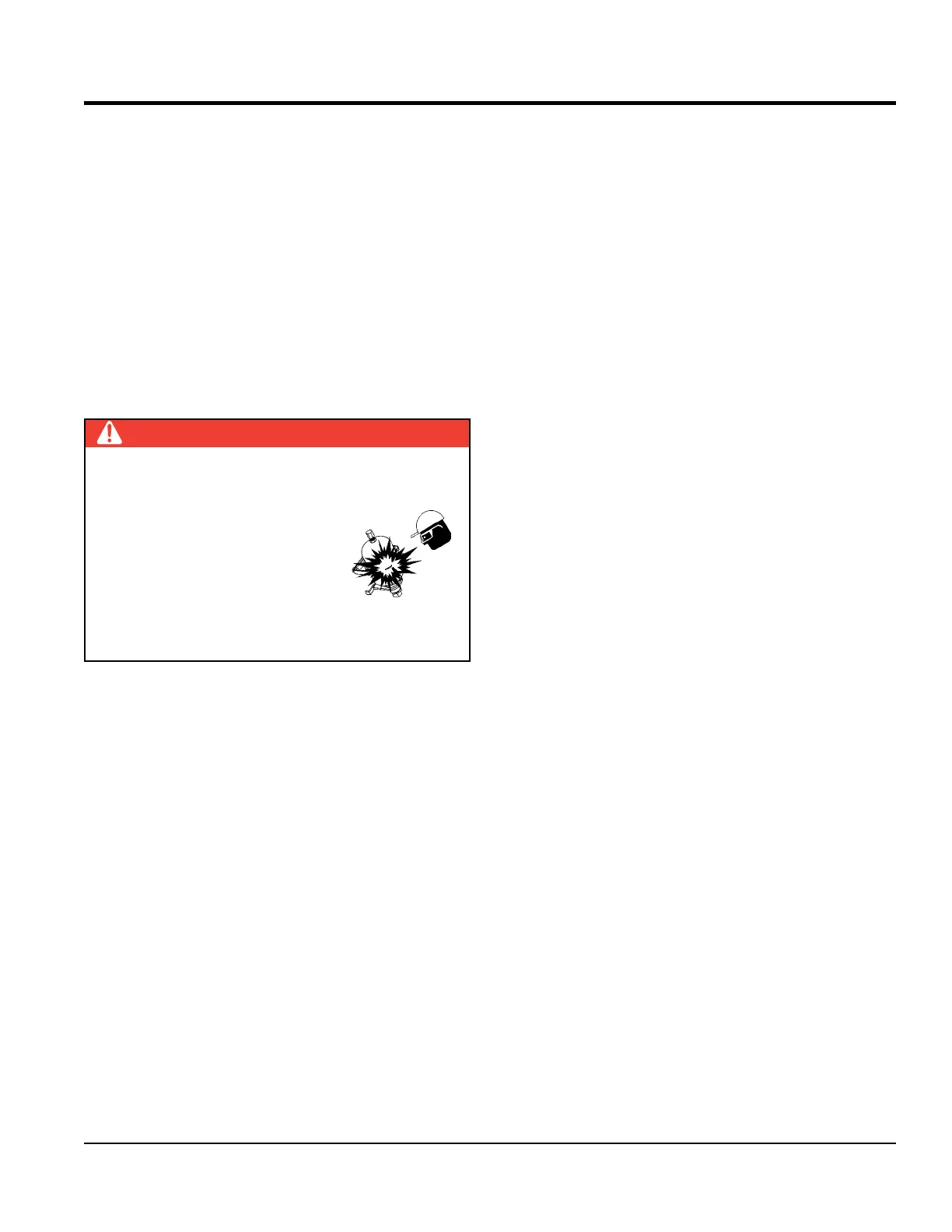
DANGER
Accumulator Pressure
Make sure the accumulator pressure
gauge reads ZERO psi prior to
performing any maintenance or
inspection. ALWAYS follow
proper lockout/tagout procedures.
Improper accumulator pressure
can result in an explosion causing
serious injury or death.
GENERAL INFORMATION
8. Flush the shuttle tube with water.
9. Before resuming operation of the pump, perform the
Reverse Pumping Procedure to relieve pressure on
the shuttle tubes.
The following is a brief explanation of how the concrete
cylinders, hydraulic cylinders, shuttle tube, valves and
hopper work in sequence to pump concrete.
The hydraulic pressure is generated by a variable-volume,
pressure-compensated, axial piston pump that is driven by
a diesel engine. The rod sides of the drive cylinders are
hydraulically connected together creating a ‘slave circuit’ which
allows hydraulic oil to transfer from one piston to the other.
The two part cycling sequence is initiated by an electrical
signal generated by two proximity switches activated by
the drive cylinder. The proximity switches are normally
open, magnetically sensing the movement of the main
drive cylinder. As the drive cylinder piston head passes
the proximity switch, an electrical signal is sent to the
solenoid-operated pilot valve which in turn directs pilot
oil to the four valves controlling the drive cylinder and the
shuttle cylinder.
A one-gallon accumulator assists the movement of the
shuttle tube. This circuit assures that the shuttle tube will
throw with the same intensity of each stroke regardless of
how fast the main drive cylinders are cycling.


 To Next Page