19
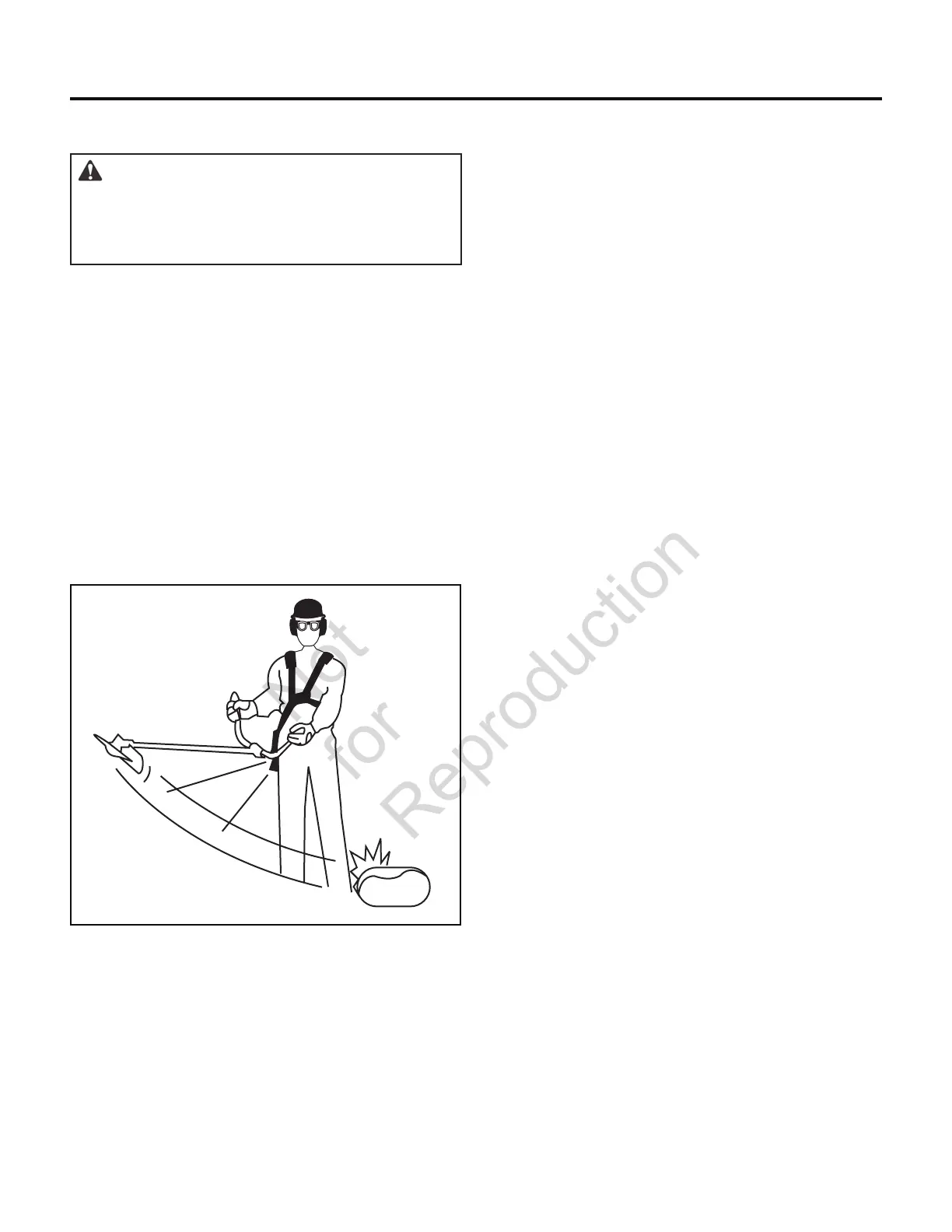
Blade Thrust (Kickback)
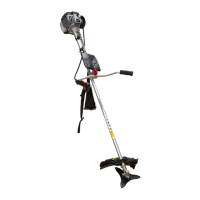
Blade thrust (kickback) throws the trimmer in the direction
opposite blade rotation at the point of contact, and the jolt
received by the operator can result in further loss of control
(Figure 22).
• Replace or resharpen dull blades. Dull blades are more
likely to bind in the cut and cause blade thrust.
• Watch for hidden obstacles, such as rocks, stumps,
roots, etc., that could cause the blade to kickback if
struck. Blade thrust is more likely to occur in areas
where it is difficult to see what is being cut.
• Accelerate the engine to maximum speed before
starting the cut, and saw through with uniform
pressure.
Trimming and Edging
• Use a nylon line for cutting against a hard surface.
• Work from an angle where debris that strikes the hard
surface will fly away from you.
• Avoid contact with wires, wire fences, metal rods, etc.
Overlapping a wire will cause the nylon line to wrap
around the wire and break off.
Operating on Slopes
• Start on the low side of a slope, and work upward.
• Avoid steep slopes that would require holding the
cutting head above waist level.
• Avoid slippery slopes that might cause you to lose
your balance.
OPERATION
WARNING Blade thrust (kickback) is the sudden,
forceful, and uncontrolled movement of a blade-
equipped trimmer that may occur if the blade binds in
the cut of if the blade strikes a solid object.
Figure 22


 To Next Page