EasyManua.ls Logo

NAD 7020i - User Manual

NAD 7020i
3 pages
Print Icon
To Next Page IconTo Next Page
Loading...
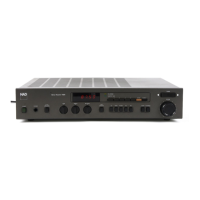
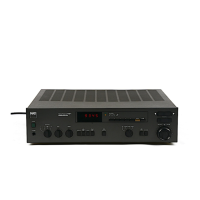
7020i
Stereo Receiver
Date of manufacture : Feb 90 - ?
Please note that this document contains the text from the original product brochure, and some technical statements may now be out of date
Conservatively rated at 20 W/channel continuous power, with +3 dB of IHF Dynamic Headroom.
Dynamic power exceeds 40 W/channel at 8 or 4 ohms, 50 W/ channel at 2 ohms.
High-current output stage delivers peak currents up to 15 amperes, for precise control of voice-coil
motion with speaker impedances as low as 2 ohms.
Gold-plated phono input jacks for a long life of corrosion-free contact in this sensitive low level signal
path.
Heavy duty speaker binding-post connections provide a secure, low resistance connection for all
speaker wires and banana plugs.
Flexibility: the 7020i’s pre and power amplifier are connected by external jumpers which are
removable to allow for greater flexibility to upgrade your system.
Sensitive precise digital tuning with three stages of I.F. filtering for outstanding freedom from noise
and interference.
The modest cost and simple controls of the NAD 7020i Stereo Receiver make it an ideal choice for the
person who wants fine musical reproduction without becoming involved in the technicalities of hi-fi.
NAD’s approach to audio design can be characterised in one phrase: “high-value engineering”. When
you choose an NAD receiver, you are investing in quality behind the front panel . innovative circuit
design, selected parts, high-current transistors, exacting quality control, and solid construction for
consistent performance and long-term reliability.
The rated “continuous” power of a receiver tells you how well it plays sine-wave test tones; but real
musical waveforms are much more complex and dynamic. The NAD 7020i is conservatively rated at 20
watts per channel for test tones, but its high-voltage design produces extra power for rapidly changing
waveforms -over 40 watts per channel of dynamic power for the exciting peaks and climaxes in music
(especially in digital Compact Discs).
Many FM receivers look good on paper; but in side-by- side comparisons, NAD receivers often pull in
weak or difficult stations with audibly better freedom from noise and interference, thanks to sensitive
dual-gate MOSFET amplification and sophisticated multi-stage I.F. filtering.
Circuit Features High-Current Output Stage
NAD was the first manufacturer to emphasise the importance of output current capacity. The 7020i can
deliver peak currents as high as 15 amperes. The “20-watt” 7020i employs the same high-speed output
transistors that other manufacturers use in their “50-watt” receivers.
Impedance Selector
NAD’s unique Speaker Impedance selector and high-current output stage deliver maximum power to
loudspeakers of any impedance - high or low, simple or complex. The 7020i will even drive a 2 ohm
impedance safely, without current-limiting or distortion.
Question and Answer IconNeed help?

Do you have a question about the NAD 7020i and is the answer not in the manual?

Summary

NAD 7020 i Stereo Receiver Features

High-Current Output Stage

Features a high-current output stage delivering peak currents up to 15 amperes for precise control of voice-coil motion.

Impedance Selector

Unique speaker impedance selector allows maximum power to loudspeakers of any impedance, safely driving 2 ohm loads.

Soft Clipping

Exclusive circuit gently limits waveform voltage to prevent transistor saturation, allowing safe overdriving on peaks.

Digital-ready Dynamic Range

Overload-proof inputs accommodate dynamic range greater than 100 dB, minimizing noise and preserving clarity.

Quiet Phono Preamplifier

Refined discrete-transistor phono preamplifier circuit offers a good signal-to-noise ratio, minimizing preamp hiss.

Musically Useful Tone Controls

Bass and treble controls vary strength, keeping the important midrange flat at moderate boost/cut settings.

Sensitive Digital Tuning

Precise frequency-synthesis digital tuning with dual-gate MOSFET FM circuit for weak station reception.

Quiet AM Tuning

AM section uses IC developed for digital tuners, offering sensitivity, noise resistance, and extended high-frequency range.

NAD 7020 i Technical Specifications

Pre-Amp Section

Details input impedance, sensitivity, signal/noise ratio, THD, and RIAA accuracy for the phono input.

Line Level Inputs and Outputs

Specifies input impedance, sensitivity, maximum input signal, signal/noise ratio, frequency response, and infrasonic filter.

Tone Controls

Defines the boost/cut range for Treble and Bass frequencies.

Power Amp Section

Lists continuous output power, rated distortion, clipping power, IHF headroom, dynamic power, damping factor, and input sensitivity.

FM Tuner Section

Provides specifications for input sensitivity, capture ratio, AM rejection, selectivity, image rejection, IF rejection, and distortion.

AM Tuner Section

Details usable sensitivity, selectivity, image rejection, IF rejection, signal/noise ratio, and harmonic distortion.

Physical Specifications

Includes dimensions, net weight, shipping weight, and power consumption.

Summary

NAD 7020 i Stereo Receiver Features

High-Current Output Stage

Features a high-current output stage delivering peak currents up to 15 amperes for precise control of voice-coil motion.

Impedance Selector

Unique speaker impedance selector allows maximum power to loudspeakers of any impedance, safely driving 2 ohm loads.

Soft Clipping

Exclusive circuit gently limits waveform voltage to prevent transistor saturation, allowing safe overdriving on peaks.

Digital-ready Dynamic Range

Overload-proof inputs accommodate dynamic range greater than 100 dB, minimizing noise and preserving clarity.

Quiet Phono Preamplifier

Refined discrete-transistor phono preamplifier circuit offers a good signal-to-noise ratio, minimizing preamp hiss.

Musically Useful Tone Controls

Bass and treble controls vary strength, keeping the important midrange flat at moderate boost/cut settings.

Sensitive Digital Tuning

Precise frequency-synthesis digital tuning with dual-gate MOSFET FM circuit for weak station reception.

Quiet AM Tuning

AM section uses IC developed for digital tuners, offering sensitivity, noise resistance, and extended high-frequency range.

NAD 7020 i Technical Specifications

Pre-Amp Section

Details input impedance, sensitivity, signal/noise ratio, THD, and RIAA accuracy for the phono input.

Line Level Inputs and Outputs

Specifies input impedance, sensitivity, maximum input signal, signal/noise ratio, frequency response, and infrasonic filter.

Tone Controls

Defines the boost/cut range for Treble and Bass frequencies.

Power Amp Section

Lists continuous output power, rated distortion, clipping power, IHF headroom, dynamic power, damping factor, and input sensitivity.

FM Tuner Section

Provides specifications for input sensitivity, capture ratio, AM rejection, selectivity, image rejection, IF rejection, and distortion.

AM Tuner Section

Details usable sensitivity, selectivity, image rejection, IF rejection, signal/noise ratio, and harmonic distortion.

Physical Specifications

Includes dimensions, net weight, shipping weight, and power consumption.

Overview

The NAD 7020i Stereo Receiver is an audio device designed for high-fidelity musical reproduction, emphasizing "high-value engineering" through innovative circuit design, selected components, and robust construction. Manufactured from February 1990 onwards, it aims to provide excellent sound quality without requiring users to delve into complex technicalities.

Function Description:

The 7020i functions as an integrated stereo receiver, combining a pre-amplifier, power amplifier, and a digital tuner (FM and AM) in a single chassis. It is designed to drive loudspeakers with a variety of impedances, including challenging 2-ohm loads, safely and without distortion. The receiver's architecture allows for system upgrades, as its pre-amplifier and power amplifier sections are connected by external jumpers, enabling users to integrate separate components if desired. Its primary purpose is to receive radio broadcasts and amplify audio signals from various sources (such as phono, CD, tape, and video) to power passive loudspeakers, delivering a clear and dynamic listening experience.

Important Technical Specifications:

Power Amplifier Section:

  • Continuous Output Power: Conservatively rated at 20 Watts per channel into 8 ohms (13dBW), with both channels driven from 20Hz to 20kHz, and a rated distortion (THD) of 0.03%.
  • Clipping Power: Maximum continuous power per channel is 25 Watts.
  • IHF Dynamic Headroom: +2.5dB at 8 ohms.
  • IHF Dynamic Power (short term):
    • 35 Watts into 8 ohms (15.5dBW)
    • 35 Watts into 4 ohms (15.5dBW)
    • 50 Watts into 2 ohms (17dBW)
  • Peak Current Delivery: Up to 15 amperes, ensuring precise control of speaker voice-coil motion, even with low impedance speakers.
  • Damping Factor: Greater than 30 (referenced to 8 ohms, 50Hz).
  • Input Sensitivity (for rated power into 8 ohms): 900mV.

Pre-Amplifier Section:

  • Phono Input:
    • Input Impedance: 47kΩ / 100pF
    • Input Sensitivity (1kHz): 2.4mV reference 20W
    • Signal/Noise Ratio (A-weighted with cartridge connected): 75dB reference 5mV
    • THD (20Hz-20kHz): <0.04%
    • RIAA Response Accuracy (20Hz-20kHz): ±0.5dB
  • Line Level Inputs:
    • Input Impedance: 40kΩ / 100pF
    • Input Sensitivity (reference 20W): 150mV
    • Maximum Input Signal: >10V
    • Signal/Noise Ratio (A-weighted reference 1W): 84dB
    • Frequency Response (20Hz-20kHz): +0.5dB, -1.0dB
    • Infrasonic Filter: -3dB at 15Hz, 24dB/octave
  • Line Level Outputs:
    • Output Impedance (Tape): Source Z + 1kΩ
    • Output Impedance (Phones): 220Ω
    • Maximum Output Level (Tape): 10V
    • Maximum Output Level (Phones): >10V into 600Ω, >500mV into 8Ω

Tone Controls:

  • Treble: ±7dB at 10kHz
  • Bass: ±10dB at 50Hz

FM Tuner Section:

  • Input Sensitivity (Mono -30dB THD+N): 11.3dBf (2.0µV/300Ω)
  • Input Sensitivity (Mono 30dB S/N): 15dBf (3.0µV/300Ω)
  • Input Sensitivity (Stereo 50dB S/N): 37dBf (40µV/300Ω)
  • Input Sensitivity (Stereo 60dB S/N): 47dBf (120µV/300Ω)
  • Capture Ratio (45-65dBf): <1.5dB
  • AM Rejection (45-65dBf): >60dB
  • Selectivity (alternate channel): 58dB
  • Image Rejection: 70dB
  • IF Rejection: 90dB
  • Harmonic Distortion (Mono/Stereo): 0.1%
  • Signal/Noise Ratio (Mono): >80dB
  • Signal/Noise Ratio (Stereo): >74dB
  • Frequency Response (±0.5dB): 30Hz - 15kHz
  • Channel Separation (at 1kHz): 45dB

AM Tuner Section:

  • Usable Sensitivity: 5µV
  • Selectivity: 30dB
  • Image Rejection: 45dB
  • IF Rejection: 35dB
  • Signal/Noise Ratio: 45dB
  • Harmonic Distortion: 0.5%

Physical Specifications:

  • Dimensions (W x H x D): 420 x 91 x 273mm (cabinet only; add up to 18mm for total height with feet; depth excludes terminals, sockets, controls, and buttons).
  • Net Weight: 5.5kg
  • Shipping Weight: 6.8kg
  • Power Consumption (120-240V, 50/60Hz): 150W

Usage Features:

  • Soft Clipping™: An exclusive NAD circuit that gently limits waveform voltage when the receiver is overdriven, preventing output transistors from saturating ("hard clipping"). This allows the receiver to be driven substantially beyond its rated power on peaks while maintaining a smooth and musical sound.
  • Digital-ready Dynamic Range: Inputs for video, tape, and digital Compact Disc are designed to accommodate a dynamic range greater than 100 dB. All circuits, including the low-impedance tone-control stage, minimize background noise and preserve recording clarity.
  • Quiet Phono Preamplifier: Utilizes a refined discrete-transistor phono preamplifier circuit, rather than low-cost integrated-circuit (IC) chips, resulting in an excellent signal-to-noise ratio of 75 dB (with cartridge connected). This minimizes preamp hiss, even with quiet recordings.
  • Musically Useful Tone Controls: Bass and treble controls are designed to vary the strength of these frequency ranges while keeping the important midrange (300 to 1500 Hz) essentially flat at moderate boost/cut settings, providing genuinely helpful aid to enjoyable music listening.
  • Sensitive Digital Tuning: Employs precise frequency-synthesis digital tuning with crystal-controlled accuracy. A dual-gate MOSFET FM circuit effectively pulls in weak stations while resisting overloading from strong signals. Multi-stage I.F. filtering optimizes selectivity for separating closely-spaced stations and minimizes stereo signal distortion.
  • Quiet AM Tuning: The AM section uses an IC specifically developed for digital tuners, offering surprising sensitivity, unusual resistance to noise, and an extended high-frequency range compared to most other AM tuning circuits.
  • Gold-plated Phono Input Jacks: Ensures a long life of corrosion-free contact in the sensitive low-level signal path.
  • Heavy Duty Speaker Binding-Post Connections: Provides a secure, low-resistance connection for all speaker wires and banana plugs.
  • Impedance Selector: NAD's unique Speaker Impedance selector, combined with the high-current output stage, delivers maximum power to loudspeakers of any impedance (high or low, simple or complex) safely, without current-limiting or distortion.
  • Flexibility: External jumpers connect the pre-amplifier and power amplifier sections, allowing for greater flexibility to upgrade the system with separate components.

Maintenance Features:

The document does not explicitly detail specific user-level maintenance features. However, the emphasis on "solid construction for consistent performance and long-term reliability" suggests a design philosophy aimed at minimizing the need for frequent maintenance. The use of high-quality components like gold-plated phono jacks and heavy-duty speaker binding posts contributes to durability and stable connections over time, reducing potential issues related to corrosion or loose contacts. The robust design and conservative power ratings also imply a reduced risk of component stress and failure under typical operating conditions. No information on user-serviceable parts or routine cleaning procedures is provided.

NAD 7020i Specifications

General IconGeneral
BrandNAD
Model7020i
CategoryStereo Receiver
LanguageEnglish

Related product manuals