EasyManua.ls Logo

NAD 7020e - Service Manual

NAD 7020e
22 pages
Print Icon
To Next Page IconTo Next Page
Loading...
SERVICE
MANUAL

Other manuals for NAD 7020e

Question and Answer IconNeed help?

Do you have a question about the NAD 7020e and is the answer not in the manual?

Summary

Front and Rear Panel Interfaces

Rear Panel Connections

Identifies and describes rear panel inputs, outputs, and terminals for connectivity.

Front Panel Controls

Identifies and describes front panel controls, buttons, and indicators.

Technical Specifications

Power Amplifier Specifications

Detailed technical performance data for the power amplifier section.

Preamplifier Specifications

Technical details for the preamplifier, including phono and high-level inputs.

FM Tuner Specifications

Technical performance data for the FM tuner section.

Physical and Electrical Specifications

Dimensions, weight, power consumption, and power supply details.

Audio Section Alignment

Initial Adjustment Procedure

Steps for initial calibration of center voltage and idling current.

Final Adjustment Procedure

Steps for final calibration after initial adjustments.

FM Alignment Procedures

Necessary Instrumentation for FM Alignment

Lists test equipment required for FM tuning and alignment.

Tuning Voltage (Oscillator) Adjustment

Procedure to check and adjust the oscillator tuning voltage.

RF Tracking Alignment

Method for aligning RF tracking across frequencies.

FM Detector and MPX Alignment

Detector Coarse and Final Alignment

Steps for coarse and final calibration of the FM detector.

Autosearch Level Adjustment

Procedure to set the level for the autosearch function.

Stereo Decoder and MPX Filter Adjustments

Calibration of stereo decoding and MPX filters.

FM Stereo Separation and MPX Filter Tuning

Stereo Separation Adjustment

Method to adjust stereo separation for optimal output.

MPX Filter Adjustment

Procedure for tuning the MPX filter for minimum output.

AM Alignment Procedures

AM Oscillator (OSC) Adjustment

Procedure to adjust the AM oscillator circuit.

AM Intermediate Frequency (IF) Adjustment

Steps for aligning the AM intermediate frequency stages.

AM Tracking Adjustment

Method for aligning the AM tuner's tracking.

Amplifier PCB Layout and Wiring Diagram

Amplifier PCB Layout Diagram

Amplifier PCB Component Layout

Amplifier Schematic Diagram

Tuner PCB Layout

Tuner Circuit Diagram

Parts List

Exploded View

Packing Diagram

Summary

Front and Rear Panel Interfaces

Rear Panel Connections

Identifies and describes rear panel inputs, outputs, and terminals for connectivity.

Front Panel Controls

Identifies and describes front panel controls, buttons, and indicators.

Technical Specifications

Power Amplifier Specifications

Detailed technical performance data for the power amplifier section.

Preamplifier Specifications

Technical details for the preamplifier, including phono and high-level inputs.

FM Tuner Specifications

Technical performance data for the FM tuner section.

Physical and Electrical Specifications

Dimensions, weight, power consumption, and power supply details.

Audio Section Alignment

Initial Adjustment Procedure

Steps for initial calibration of center voltage and idling current.

Final Adjustment Procedure

Steps for final calibration after initial adjustments.

FM Alignment Procedures

Necessary Instrumentation for FM Alignment

Lists test equipment required for FM tuning and alignment.

Tuning Voltage (Oscillator) Adjustment

Procedure to check and adjust the oscillator tuning voltage.

RF Tracking Alignment

Method for aligning RF tracking across frequencies.

FM Detector and MPX Alignment

Detector Coarse and Final Alignment

Steps for coarse and final calibration of the FM detector.

Autosearch Level Adjustment

Procedure to set the level for the autosearch function.

Stereo Decoder and MPX Filter Adjustments

Calibration of stereo decoding and MPX filters.

FM Stereo Separation and MPX Filter Tuning

Stereo Separation Adjustment

Method to adjust stereo separation for optimal output.

MPX Filter Adjustment

Procedure for tuning the MPX filter for minimum output.

AM Alignment Procedures

AM Oscillator (OSC) Adjustment

Procedure to adjust the AM oscillator circuit.

AM Intermediate Frequency (IF) Adjustment

Steps for aligning the AM intermediate frequency stages.

AM Tracking Adjustment

Method for aligning the AM tuner's tracking.

Amplifier PCB Layout and Wiring Diagram

Amplifier PCB Layout Diagram

Amplifier PCB Component Layout

Amplifier Schematic Diagram

Tuner PCB Layout

Tuner Circuit Diagram

Parts List

Exploded View

Packing Diagram

Overview

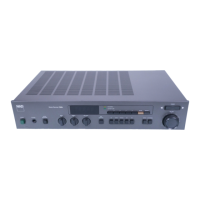
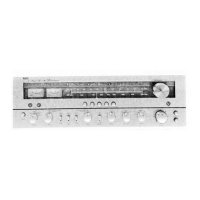
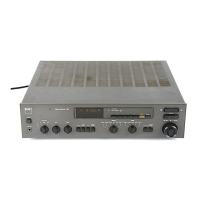
The NAD 7220PE / 7020e AM/FM Receivers are designed to provide high-quality audio reproduction and versatile functionality for your home entertainment system. These receivers combine an amplifier and a tuner into a single unit, offering a comprehensive solution for listening to radio broadcasts and playing audio from various external sources.

Function Description

The primary function of the NAD 7220PE / 7020e is to receive and amplify AM/FM radio signals, delivering clear and powerful audio to connected speakers. Beyond radio, the receiver acts as a central hub for multiple audio components. It features dedicated inputs for a turntable (Phono), CD player, video sound sources, and tape decks, allowing you to connect and switch between various devices effortlessly. The integrated amplifier ensures that the audio signals from these sources are boosted to a level suitable for driving your speakers, providing a rich and dynamic listening experience.

Usage Features

The NAD 7220PE / 7020e offers a user-friendly interface with a range of controls for tailoring your audio experience.

Front Panel Controls:

  • Power: Turns the unit on and off.
  • Phones: A headphone jack for private listening.
  • Extra Speakers: Activates additional speakers, if connected.
  • Bass and Treble: Tone controls to adjust the low and high frequencies of the audio output, allowing you to customize the sound to your preference or room acoustics.
  • Balance: Adjusts the relative volume between the left and right channels.
  • Tape Monitor: Engages the tape monitor function, useful for monitoring recordings or connecting an equalizer.
  • Input Selector: A rotary switch to choose between different audio sources: CD, Video Sound, Phono, AM, and FM.
  • Mono: Forces the audio output to mono, which can improve reception for weak stereo FM signals.
  • Loudness: A contour control that boosts bass and treble frequencies at low listening levels, compensating for the ear's reduced sensitivity to these frequencies.
  • Volume: The main control for adjusting the overall output level.
  • Tuning Display: A digital display showing the current radio frequency.
  • Center-tune Indicator: Helps in precisely tuning to FM stations for optimal reception.
  • FM Stereo Indicator: Lights up when a stereo FM broadcast is received.
  • Tuning Pre-sets: Allows you to store and recall your favorite radio stations for quick access.
  • Memory Enter: Used to save a tuned station into a pre-set memory slot.
  • Search Mode: Initiates an automatic scan for radio stations.
  • Up/Down Tuning: Buttons for manually tuning up or down the frequency band.

Rear Panel Connections:

  • AC Line Cord and AC Outlets: For connecting the receiver to mains power and providing power to other components.
  • Speakers A and B: Terminals for connecting two pairs of stereo speakers.
  • Antenna Terminals: Connections for AM and FM antennas to receive radio broadcasts. The FM antenna terminals support both 75Ω coaxial and 300Ω twin-lead connections.
  • Phono Ground: A terminal for grounding a turntable, reducing hum.
  • Phono Input: RCA jacks for connecting a turntable.
  • Video Sound Input: RCA jacks for connecting the audio output from a video source.
  • CD Input: RCA jacks for connecting a CD player.
  • Tape Input/Output: RCA jacks for connecting a tape deck, allowing for both playback and recording.
  • Soft Clipping: A switchable feature that gently limits the output signal when the amplifier is driven beyond its rated power, preventing harsh distortion and protecting speakers.
  • Speaker Impedance Selector: A switch to match the amplifier's output to the impedance of the connected speakers (8Ω or 4Ω), ensuring optimal performance and safety.

Maintenance Features

The service manual provides detailed instructions for alignment and troubleshooting, indicating that the device is designed for professional servicing to ensure its longevity and optimal performance.

Alignment Method: The manual outlines specific alignment procedures for both the audio and tuner sections.

  • Audio Section Alignment: This involves adjusting the center voltage and idling current of the amplifier. These adjustments are crucial for maintaining the amplifier's stability and sound quality. The process requires a DC millivoltmeter and involves setting specific voltage readings across designated test points and resistors. It is recommended to allow the unit to power on for a minimum of 5 minutes before final adjustments.
  • FM Alignment: This section covers tuning voltage, RF adjustment (tracking), IF adjustment, autosearch level, and stereo decoder/MPX filters. These procedures involve using specialized equipment such as an FM generator, stereo generator, AC VTVMs, THD analyzer, oscilloscope, frequency counter, and VOM/DMM. The goal is to optimize the tuner's sensitivity, selectivity, and stereo separation for the best possible radio reception. Specific adjustments are made to coils (e.g., L101, L2-L5, I1, I102, I103) and variable resistors (e.g., R117, VR2, VR3, VR4, VR5) to achieve the desired performance characteristics.
  • AM Alignment: This section details adjustments for the AM oscillator (L102) and IF section (IFT2, IFT3), as well as tracking adjustments (L101, C138) to ensure accurate tuning and reception of AM broadcasts.

Parts List and Exploded View: The manual includes a comprehensive parts list and an exploded view diagram. These resources are invaluable for technicians, facilitating the identification and replacement of components during repair. The exploded view provides a visual guide to the internal structure of the receiver, showing how different parts fit together.

Schematic Diagrams and PCB Layouts: Detailed schematic diagrams for both the amplifier and tuner sections, along with PCB layouts, are provided. These diagrams illustrate the electronic circuitry and component placement, which are essential for diagnosing faults and performing repairs.

Overall, the NAD 7220PE / 7020e AM/FM Receivers are designed as robust and serviceable audio components, offering a blend of performance, versatility, and maintainability for enthusiasts and professionals alike.

NAD 7020e Specifications

General IconGeneral
Tuning RangeFM, MW
Frequency Response20Hz - 20kHz
Input Sensitivity2.5mV (MM), 150mV (line)
Speaker Load Impedance4Ω to 16Ω
Power Output20 watts per channel into 8Ω (stereo)

Related product manuals