Need help?
Do you have a question about the Nedap TRANSIT Entry and is the answer not in the manual?
The TRANSIT Entry reader is a sophisticated hands-free access solution designed for secure and convenient identification in various applications, including door access and vehicle gate control. This device leverages advanced RFID technology to provide reliable and consistent identification at distances up to 4 meters (12 feet), making it an ideal choice for environments where presenting an ID badge manually is inconvenient but high security is paramount.
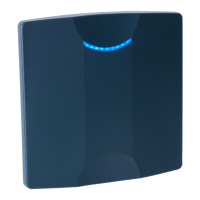
The primary function of the TRANSIT Entry reader is to identify long-range transponders that are within its line of sight, enabling hands-free access. It operates in the 2.45GHz frequency band, ensuring robust communication with transponders. The reader is continuously active, scanning for transponders unless explicitly disabled via its read disable input. Upon successful identification of a valid transponder, the device automatically activates its internal relay output, illuminates a "smile" indicator on its front cover, and generates an event message through its communication interface(s). This seamless process facilitates quick and efficient access without requiring physical interaction with the reader.
For enhanced versatility, the TRANSIT Entry reader can be equipped with an optional Multi-Technology Reader Module (MTR). This module expands the reader's capabilities to include the identification of standard proximity cards and smartcard CSNs (Chip Serial Numbers) at short range, typically when presented directly to the face of the reader. The MTR supports a wide array of card technologies, including 120-125 kHz HID prox, Nedap, and EM read-only cards, as well as 13.56 MHz HID iClass CSN, MIFARE, LEGIC Advant UID, ISO14443A, and ISO15693 smartcards. This multi-technology support allows the TRANSIT Entry to integrate with existing credential systems, eliminating the need for multiple readers at a single access point.
The device also features several communication interfaces to integrate with various access control systems and host applications. It includes an on-board RS232 interface for serial data communication, which can be enabled or disabled via DIP-switch settings. For longer cable runs, an RS422 interface is also available. Additionally, a USB interface (Type B) is provided for service and installation purposes, allowing for easy configuration and firmware upgrades. When the USB interface is active, the RS232 and RS422 interfaces are temporarily disabled. Optional interface boards, such as an Ethernet (TCP/IP) board, can be installed to connect the reader to an Ethernet network, further expanding its connectivity options.
Digital I/O capabilities include a relay output for controlling access mechanisms, a read disable input that can be used with external sensors (like inductive loops) to temporarily halt reading, and three general-purpose inputs and outputs for flexible integration with other systems. A tamper switch is also integrated, providing an alarm signal if the service cover is opened, enhancing the physical security of the device.
The TRANSIT Entry reader is designed for ease of use and adaptability in various installation scenarios. Its adjustable mounting bracket allows for precise aiming of the reader towards the desired detection area, accommodating both wall and mast installations (round or square masts). This flexibility ensures optimal read range performance in diverse environments.
The device's read range can be finely controlled using an embedded squelch function. This feature allows installers to adjust the sensitivity of the reader, preventing unintended "cross-over" reading in situations where multiple readers are in close proximity. The squelch level is set via a potentiometer, offering maximum read range when fully clockwise and minimum read range when fully counter-clockwise. Two LEDs, SQ-ENA and SQ-ACT, provide visual feedback on the squelch status, indicating when it is enabled and when the transponder signal is below the set squelch level.
To mitigate radio interference, especially when multiple readers are installed within a 15-meter range, the TRANSIT Entry allows for on-site adjustment of its operating frequency. A built-in display and UP/DOWN switches enable installers to select from a range of frequencies within the 2.45GHz band, ensuring compliance with local radio regulations and minimizing interference. The display automatically switches off after 5 seconds to conserve power.
The internal range beeper provides audible feedback upon transponder identification. Its beeping frequency varies with the signal strength of the identified transponder, beeping faster when the transponder is closer to the reader. This feature can be enabled or disabled via DIP-switch settings, offering customization based on operational preferences.
Maintenance and service of the TRANSIT Entry reader are facilitated by its accessible design. The service cover can be easily opened by unscrewing fasteners on the bottom of the device, providing access to internal connections, DIP switches, LED indicators, and the read range adjustment potentiometer. The screws are designed to remain attached to the cover, preventing loss during maintenance.
Firmware upgrades are straightforward, performed via the serial interface (RS232, RS422, or USB) using a dedicated "PIC downloader" application. This allows for easy updates to the reader's functionality and protocol support without requiring physical replacement of components. The upgrade process includes options to preserve or overwrite customer codes, ensuring data integrity. In case of an aborted download, the procedure can be repeated, and a reset switch is available to restart the reader if necessary, aiding in troubleshooting.
The device's LED indicators provide comprehensive status information, assisting in diagnostics and monitoring. LEDs indicate received tag signal strength, presence of radio interference, read disable status, input status, serial data transmission/reception, transponder identification, system heartbeat, power supply voltage levels (high/low), internal supply failure, critical temperature, and PLL unlock status. These visual cues are invaluable for quick assessment of the reader's operational health and for identifying potential issues.
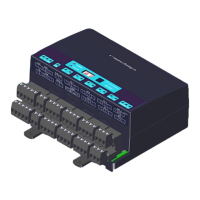
The robust construction, including an IP65 protection class, ensures durability and resistance to environmental factors, reducing the need for frequent maintenance. The use of EMC cable glands for all connections, including the DC supply, is crucial for water protection and overall system reliability. The spring cage terminal connectors simplify wire connections, making installation and re-wiring more efficient.
 General
| Type | RFID Reader |
|---|---|
| Category | Rfid Systems |
| Protocol | Nedap proprietary |
| Power Supply | 12-24 VDC |
| Environmental Rating | IP66 |
| Ingress Protection | IP66 |
| Communication Interface | RS-485, Wiegand |
| Interface | Wiegand, RS485 |
| Operating Temperature | -20°C to +55°C |


 To Next Page