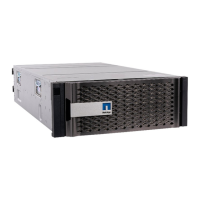
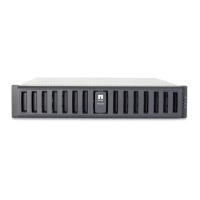
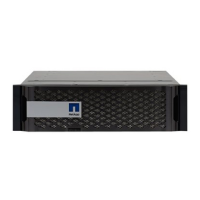
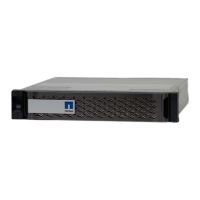
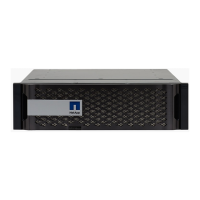
This document is a comprehensive guide for NetApp FAS (Fabric-Attached Storage) systems, specifically covering installation, setup, and maintenance procedures for various models including FAS500f, FAS2600, FAS2700, FAS8200, FAS8300/FAS8700, FAS9000, and FAS9500. It provides detailed instructions, including quick steps, video tutorials, and in-depth guides for different configurations and replacement tasks.
Function Description:
The NetApp FAS systems are storage solutions designed for ONTAP environments. They are used for data storage, management, and retrieval, supporting various network configurations and data encryption methods. The document outlines procedures for initial system setup, hardware installation (racking, cabling), and software configuration using tools like System Manager Guided Setup and Config Advisor. It also covers maintenance tasks such as replacing boot media, chassis, controller modules, DIMMs, NVMEM batteries, PCIe cards, caching modules, fans, and power supplies.
Important Technical Specifications:
The document details various cable types and their part numbers, lengths, connector types, and uses:
- 25 GbE cable (X66240A-05, X66240-2, X66240A-2, X66240A-5): Available in 0.5m, 2m, and 5m lengths. Used for cluster interconnect and data networks.
- 100 GbE cable (X66211-2, X66211-5): Available in 2m and 5m lengths. Used for storage.
- RJ-45 (order dependent, X6585-R6, X6562-R6): Available in 3m and 5m lengths. Used for management network (BMC and wrench port) and Ethernet data (e0a and e0b).
- Fibre Channel (X66250-2, X66250-5, X66250-15, X66250-30): Available in 2m, 5m, 15m, and 30m lengths. Used for FC network connections.
- Micro-USB console cable: Not applicable for part number/length. Used for console connection during software setup.
- Power cables: Not applicable for part number/length. Used for powering up the system.
- 10 GbE network cable (X6566B-2-R6, X6566B-3-R6, X6566B-5-R6): Available in 2m, 3m, and 5m lengths. Used for network connections.
- 40 GbE network cable (X66100-1, X66100-3, X66100-5): Available in 1m, 3m, and 5m lengths. Used for 40 GbE network and cluster interconnect.
- 100 GbE network cable (X66211A-05, X66211A-1, X66211A-2, X66211A-5): Available in 0.5m, 1m, 2m, and 5m lengths. Used for storage, cluster interconnect/HA, and Ethernet data (for AFF A700 only).
- 25 GbE cable (SFP28s) (X66240-2, X66240-5): Available in 2m and 5m lengths. Used for GbE network connection.
- 32 Gb FC (SFP+ Op) (X66250-2, X66250-5, X66250-15): Available in 2m, 5m, and 15m lengths. Used for FC network connection.
- Storage Cables (X66030A, X66031A, X66032A, X66033A): Available in 0.5m, 1m, 2m, and 3m lengths. Mini-SAS HD to mini-SAS HD cables (order-dependent).
- Optical cables (X66250-2-N-C): 2m length. Used for 16 Gb FC or 25GbE cables for mezzanine cards (order-dependent).
- Weight considerations: Systems can weigh up to 29.2 kg (64.5 lbs) for an empty chassis and 240 lbs (109 kg) for a fully-populated system, requiring awareness of lifting hazards.
- Boot media: Requires a USB flash drive, formatted to MBR/FAT32, with at least 4GB capacity to hold the image_xxx.tgz file.
- NVMEM LED: Blinks while destaging contents to flash memory when the system halts; turns off when destage is complete. Flashes if power is lost without a clean shutdown until destage is complete. Is on if power is on and unwritten data is stored on NVMEM.
- DIMM slots: FAS8300 uses slots 2, 4, 13, 15. FAS8700 uses slots 2, 4, 7, 9, 13, 15, 18, 20. NVDIMM is in slot 11.
- Caching module (FlashCache/NVMe SSD Flash Cache): Located in slot 6 (FAS9000/FAS9500) or rear of controller module (FAS8200, AFF A220/FAS2700). X9170A core dump module (1TB) for AFF A700 systems running ONTAP 9.8 or later, installed in slots 6-1 and 6-2 (recommended 6-1).
- Power supplies: Redundant and hot-swappable. Replacement should occur within two minutes to prevent overheating. Do not mix PSUs with different efficiency ratings.
Usage Features:
- Installation and Setup: Offers "Quick steps" (printable PDF with live links), "Video steps" (video instructions), and "Detailed steps" (online instructions with live links) for various FAS models.
- MetroCluster IP Configuration: Specific instructions are provided for systems in a MetroCluster IP configuration.
- System Manager Guided Setup: An example of using this tool for initial system configuration is included in video tutorials.
- Config Advisor: Used to verify system health and cabling correctness.
- ONTAP Configuration Guide: Recommended for collecting required information for system configuration.
- NetApp Hardware Universe: Provides information on site requirements and configured system details.
- Release Notes for ONTAP: Offers additional information about specific ONTAP versions.
- Network Discovery: Guides for enabling and using network discovery on a laptop for automatic cluster discovery.
- Console Access: Instructions for connecting a laptop or console to the management switch and configuring console port settings (115,200 baud, N-8-1).
- Node Management IP Address: Steps to assign an initial IP address to a node.
- PuTTY: Recommended for opening console sessions if network discovery is not enabled.
- AutoSupport: Instructions for suppressing automatic case creation during maintenance.
- NVE/NSE Configuration: Procedures for verifying and restoring NetApp Volume Encryption (NVE) or NetApp Storage Encryption (NSE) configurations, including backing up Onboard Key Manager (OKM) information.
- MetroCluster Operations: Steps for checking MetroCluster status, performing switchover, resynchronizing data aggregates, healing root aggregates, and reestablishing SnapMirror/SnapVault configurations.
- System ID Reassignment: Procedures for verifying and manually reassigning system IDs for disks in HA pair and stand-alone systems.
- License Installation: Steps to install new license keys for replacement controllers, with a 90-day grace period.
Maintenance Features:
- Boot Media Replacement: Detailed steps for removing the impaired controller module, replacing boot media, and transferring the boot image from a USB flash drive. Includes instructions for both nondisruptive and disruptive replacements, with considerations for network connectivity and var file system restoration.
- Chassis Replacement: Involves moving power supplies, hard drives, controller modules, I/O modules, DCPM modules, and USB LED modules from the impaired chassis to a new one, then installing the replacement chassis and its components. This is a disruptive procedure.
- Controller Module Replacement: Involves removing the impaired controller, moving FRU components (power supply, fans, boot media, DIMMs, PCIe cards, NVMEM battery, caching module) to the replacement controller, installing the new module, and booting to Maintenance mode.
- DIMM Replacement: Steps to locate, remove, and install DIMMs, including visual inspection to ensure proper seating.
- NVMEM Battery Replacement: Procedures for replacing the NVMEM battery, including checking the NVMEM LED and handling the battery.
- PCIe Card Replacement: Instructions for removing and installing PCIe cards, including handling risers and ensuring proper seating.
- Caching Module Replacement: Steps to replace or add caching modules, including preparing the slot, removing/installing the module, and bringing it online.
- Fan Module Replacement: Hot-swapping procedure for fan modules, emphasizing replacement within two minutes to prevent overheating.
- I/O Module Replacement: Steps to replace I/O modules, including unplugging cables, removing the module, and installing the replacement.
- Real-time Clock (RTC) Battery Replacement: Procedure for replacing the RTC battery, including setting the time and date after replacement.
- Diagnostics: Running system-level diagnostics (boot_diags, sldiag device run) to verify hardware functionality after component replacement.
- Return of Failed Parts: Instructions for returning failed components to NetApp as per RMA instructions.
- Safety Information: Warnings regarding lifting hazards and proper handling of components to prevent damage.

 Need help?

 To Next Page
 General