EasyManua.ls Logo

Nintendo CONTROL DECK - User Manual

Nintendo CONTROL DECK
13 pages
Print Icon
To Next Page IconTo Next Page
Loading...
CONTROL
DECK"
_
THE
CONTROL
DECK
THAT
PUTS
YOU
(
IN
CONTROL
OF
INCREDIBLE
FUN!
©
ENTERTAINMENT
ee
Question and Answer IconNeed help?

Do you have a question about the Nintendo CONTROL DECK and is the answer not in the manual?

Summary

NES Instruction Manual Introduction

Customer Assistance and Support

Contact Nintendo Consumer Assistance for troubleshooting and support via telephone.

NES Components Identification

Control Deck and Accessories

Details the main unit, controllers, power adapter, A/V cable, and RF converters.

Connection Port Views

Illustrates connection ports on the rear and side of the Control Deck and TV.

Connecting NES to TV via Audio;Video

Connecting NES to TV via RF Switch

NES System Component Connections

AC Adapter and Controller Hookup

Instructions for connecting the AC adapter and game controllers to the Control Deck.

Operating the Nintendo Entertainment System

Starting a Game and Game Pak Insertion

Step-by-step guide to turning on the NES, inserting game paks, and starting play.

Safe Game Pak Swapping Procedures

Procedure for safely removing and inserting game paks during operation.

NES System Care and Operation Precautions

General System Handling and Safety

Important warnings about using approved accessories, avoiding unauthorized repairs, and general system care.

Game Pak and Environmental Care

Guidelines for handling game paks, cleaning connectors, and environmental conditions.

Controller Button and Pad Operations

Explains the functions of the SELECT, START buttons, Control Pad, and A/B buttons.

Troubleshooting Common NES Issues

Display and Picture Problems

Solutions for blank screens, rolling pictures, fuzzy video, and snow.

Audio and TV Interference

Resolving distorted sound, lack of audio, and interference with TV reception.

FCC Compliance and Interference

Warranty and Service Information

90-Day Limited Warranty Coverage

Explains the warranty coverage, limitations, and requirements for validation.

Warranty and Service Information

Warranty Service Procedure

Steps to follow for obtaining warranty repair or replacement service from Nintendo.

Warranty Limitations and Consumer Rights

Outlines warranty exclusions, implied warranty limits, and consumer legal rights.

Post-Warranty Repair Services

Consumer Parts Ordering

Summary

NES Instruction Manual Introduction

Customer Assistance and Support

Contact Nintendo Consumer Assistance for troubleshooting and support via telephone.

NES Components Identification

Control Deck and Accessories

Details the main unit, controllers, power adapter, A/V cable, and RF converters.

Connection Port Views

Illustrates connection ports on the rear and side of the Control Deck and TV.

Connecting NES to TV via Audio;Video

Connecting NES to TV via RF Switch

NES System Component Connections

AC Adapter and Controller Hookup

Instructions for connecting the AC adapter and game controllers to the Control Deck.

Operating the Nintendo Entertainment System

Starting a Game and Game Pak Insertion

Step-by-step guide to turning on the NES, inserting game paks, and starting play.

Safe Game Pak Swapping Procedures

Procedure for safely removing and inserting game paks during operation.

NES System Care and Operation Precautions

General System Handling and Safety

Important warnings about using approved accessories, avoiding unauthorized repairs, and general system care.

Game Pak and Environmental Care

Guidelines for handling game paks, cleaning connectors, and environmental conditions.

Controller Button and Pad Operations

Explains the functions of the SELECT, START buttons, Control Pad, and A/B buttons.

Troubleshooting Common NES Issues

Display and Picture Problems

Solutions for blank screens, rolling pictures, fuzzy video, and snow.

Audio and TV Interference

Resolving distorted sound, lack of audio, and interference with TV reception.

FCC Compliance and Interference

Warranty and Service Information

90-Day Limited Warranty Coverage

Explains the warranty coverage, limitations, and requirements for validation.

Warranty and Service Information

Warranty Service Procedure

Steps to follow for obtaining warranty repair or replacement service from Nintendo.

Warranty Limitations and Consumer Rights

Outlines warranty exclusions, implied warranty limits, and consumer legal rights.

Post-Warranty Repair Services

Consumer Parts Ordering

Overview

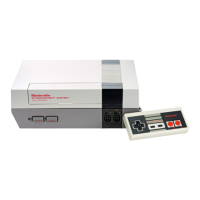
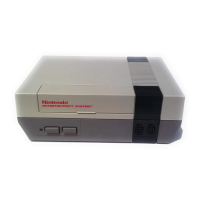
The Nintendo Entertainment System (NES) Control Deck is a home video game console designed to provide users with an immersive and enjoyable gaming experience. It serves as the central unit for playing a wide variety of video games, offering both single-player and multi-player options. The system is designed for ease of use, with straightforward connections to a television set and simple controls for gameplay.

Function Description

The primary function of the NES Control Deck is to process and display video game content on a television screen. It achieves this by reading game data from removable game paks, executing the game's logic, and generating audio and video signals that are then sent to the TV. The Control Deck features two controller sockets, allowing for either one or two players to participate simultaneously, depending on the game.

The system includes a Power Switch to turn the console on and off, and a Reset Switch to restart games or the system itself. A "Power On and Reinsert Indicator" light on the front of the deck provides visual feedback, particularly when a game pak is not loaded correctly, indicated by flashing.

For connecting to a television, the NES offers two main methods:

  1. Audio/Video Cable Connection: This method is used for TVs with direct audio/video input jacks. The Control Deck has dedicated Video-Out and Audio-Out jacks that connect to the TV's Video-In and Audio-In jacks. This connection bypasses the need for an RF switch or antenna manipulation, offering a potentially clearer signal.
  2. RF Switch and Converters Connection: This method is compatible with most TVs, especially older models that may not have direct audio/video inputs. The RF Switch connects to the TV's VHF antenna terminals (either two screws or a cable connector) and then to the Control Deck's RF Switch Jack. Converters (75/300Ω and 300/75Ω) are provided to adapt to different TV antenna types (twin lead wire or coaxial cable). This setup allows the TV to receive the NES signal on either Channel 3 or Channel 4, selected via a switch on the back of the Control Deck. The RF switch also allows the existing antenna/cable signal to pass through to the TV when the NES is turned off, enabling regular TV viewing without disconnecting the system.

The AC Adapter provides power to the Control Deck, plugging into a standard 110/120-volt AC wall outlet and the AC Adapter Jack on the back of the Control Deck.

Usage Features

Operating the NES involves a few simple steps to ensure proper functionality and an optimal gaming experience:

Starting Play:

  1. Turn your television on and set it to Channel 3 (or Channel 4 if Channel 3 is broadcasting in your area and causing interference).
  2. If your TV has an automatic fine tuning control (AFC), it's generally recommended to turn it off to manually adjust the picture for clarity, unless turning it off causes a color TV to display in black and white.
  3. Ensure the Power Switch on the Control Deck is off before inserting a game pak. This is a crucial precaution to prevent game malfunction or damage.
  4. Open the Chamber Lid on the Control Deck, insert a Game Pak with the label facing up, push it all the way in, and then press down on the Game Pak until it locks into place. Close the Chamber Lid.
  5. Turn on the Power Switch of the NES Control Deck and then press the Reset Button. A colorful game display should appear on the TV screen if the game pak is inserted correctly. If the "reinsert" indicator light flashes, or the picture is imperfect, turn off the power, re-insert the game pak, and try again.
  6. Use Controller 1 to select the desired game variation with the SELECT button and start the game with the START button. The START button can also be used to pause gameplay.

Changing Game Paks:

  1. Always turn off the Control Deck power switch before inserting or removing a game pak to prevent damage.
  2. Open the Chamber Lid. Gently push down on the Game Pak, allowing it to pop up, then pull it out. Do not attempt to pry it up.
  3. Insert a new game pak as described above.
  4. Turn on the Control Deck power switch.

Using Controllers:

The NES comes with two identical controllers. The controller plugged into socket 1 functions as Controller 1, used for selecting and starting games, and for single-player gameplay. The controller in socket 2 functions as Controller 2, for two-player games.

  • SELECT Button (Controller 1 only): Used to choose game variations from the menu.
  • START Button (Controller 1 only): Used to begin games and to pause/unpause gameplay.
  • Control Pad: A 4-way directional pad used to move the main character or navigate menus. Its specific function may vary by game.
  • Buttons A and B: Perform various in-game actions, with functions differing across games.

Returning to Regular TV Viewing:

After playing, simply turn off the power switch on the Control Deck and switch your TV channel selector to the desired channel for regular programming. There is no need to disconnect the RF switch.

Maintenance Features (Care and Precautions)

To ensure the longevity and proper functioning of your NES Control Deck and its components, several care and precaution guidelines should be followed:

  • Power Supply: Only use the AC adapter provided with your NES. Do not use any other power plug.
  • RF Switch: Only use the RF switch included with your NES.
  • Disassembly and Repair: Do not attempt to disassemble or repair any NES components, as this will void your warranties.
  • Game Pak Handling:
    • Always turn off the Control Deck power switch before inserting or removing a game pak.
    • Before inserting a Game Pak, inspect its edge connector for foreign materials and avoid touching the connector with your fingers to keep contacts clean.
    • Remove Game Paks from the Control Deck after playing and close the chamber cover.
    • Store Game Paks in their plastic sleeves when not in use.
    • Keep Game Paks and the Control Deck chamber clean and free of dirt, dust, and lint.
  • General System Care:
    • Do not pull or yank the NES wires.
    • Avoid storing the Control Deck on the floor for extended periods, as it may collect dirt, dust, and lint.
    • Do not drop, bang, or abuse any NES components.
    • Do not leave the Control Deck's power on for extended periods when not in use.
    • When disconnecting plugs (power, controller, RF), always pull from the plug itself, not the wire.
    • Protect the Control Deck, game paks, controllers, RF switch, and AC adapter from extreme heat or cold.
    • Do not spill liquids on any NES components. To clean, use a soft, slightly damp cloth (water only).

Troubleshooting:

The manual provides a comprehensive troubleshooting guide for common issues such as:

  • No TV screen or game image.
  • Rolling or distorted picture.
  • Fuzzy picture, no color, or snow.
  • Buzzing or distorted sound.
  • Regular TV programs not coming in when the NES is off. Solutions often involve checking connections, adjusting TV settings (fine-tune, contrast, AFC), ensuring correct game pak insertion, or changing the Channel 3/Channel 4 switch. If problems persist, users are advised to contact Nintendo's Consumer Service Department.

FCC Regulations:

The device complies with FCC regulations for Class B computing devices, designed to provide reasonable protection against interference in residential installations. Users are advised on measures to correct interference if it occurs, such as reorienting the antenna, relocating the NES, or plugging it into a different circuit.

The Nintendo Entertainment System is designed for reliable and enjoyable entertainment, backed by a 90-day limited warranty covering defects in material and workmanship. Users are encouraged to register their product and contact consumer service for any issues.

Nintendo CONTROL DECK Specifications

General IconGeneral
ManufacturerNintendo
Release Year1983
RAM2 KB
Controller Ports2
Power SupplyAC Adapter
TypeHome video game console
CPURicoh 2A03 (based on MOS Technology 6502)
GraphicsRicoh 2C02
Resolution256 × 240 pixels
MediaCartridge
SoundRicoh 2A03 (five channels: two pulse wave channels, one triangle wave channel, one noise channel, and one PCM sample channel)

Related product manuals