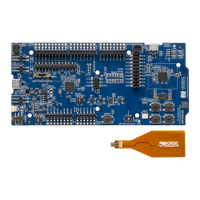
The nRF5340 Audio Development Kit (DK) is a hardware development platform designed to facilitate the development of Bluetooth Low Energy (LE) Audio products. This DK is a versatile tool, capable of functioning as a Universal Serial Bus (USB) dongle for sending or receiving audio data from a computer, a business headset, a broadcast receiver, or a True Wireless Stereo (TWS) earbud. For most applications, using two or more DKs is recommended.
The core components of the DK include the nRF5340 System on Chip (SoC), the nPM1100 Power Management Integrated Circuit (PMIC), and Cirrus Logic's CS47L63 Audio DSP. The CS47L63 Audio DSP is particularly notable for its high-performance DAC and differential output driver, which are optimized for direct connection to external headphone loads, making it suitable for earbuds and direct speaker output. The DK also supports the Low Complexity Communications Codec (LC3), which offers superior audio quality compared to Bluetooth Classic's Low Complexity Subband Codec (SBC) at roughly half the wireless data rate, contributing to reduced power consumption.
Key Features:
- SoC: Nordic Semiconductor's nRF5340 Bluetooth LE or multiprotocol SoC.
- PMIC: Nordic Semiconductor's nPM1100 power management SoC.
- Audio DSP: CS47L63 AD-DA converter from Cirrus Logic, specifically designed for TWS devices.
- Audio Inputs/Outputs: Stereo analog line input and mono analog output.
- Microphone: On-board Pulse Density Modulation (PDM) microphone.
- Connectivity: USB-C for computer connection and battery charging.
- Debugging: Includes a second nRF5340 SoC that functions as an onboard SEGGER debugger.
- Storage: SD card reader (SD card not included).
- User Interface: Five user-programmable buttons and LEDs.
- Power Management: Embedded battery charge system and a rechargeable Lithium-Polymer (Li-Po) battery with 1500 mAh capacity.
- Current Measurement: Features several voltage and current monitors, enabling high-accuracy current measurements via dedicated pins. Nordic's Power Profiler Kit II is recommended for this purpose.
- Operating Temperature: Normal operating temperature range of 10–40°C.
nRF5340 aQFN94 SoC Specifications:
- Application Core:
- 128 MHz or 64 MHz Arm® Cortex®-M33 with TrustZone® technology.
- 1 MB flash and 512 kB low leakage RAM.
- Arm TrustZone CryptoCell™-312 security subsystem.
- Quad Serial Peripheral Interface (QSPI) for external flash memory communication.
- Near Field Communication (NFC)-A tag with wake-on field and touch-to-pair functionality.
- Up to five Serial Peripheral Interface (SPI) master/slave with EasyDMA.
- Up to four Inter-integrated Circuit (I²C) compatible two-wire master/slave with EasyDMA.
- Up to four Universal Asynchronous Receiver/Transmitter (UART) (Clear to Send (CTS)/Request to Send (RTS)) with EasyDMA.
- Audio peripherals: I²C, digital microphone interface (PDM).
- Up to four Pulse Width Modulation (PWM) units with EasyDMA.
- 12-bit, 200 ksps ADC with EasyDMA, featuring eight configurable channels with programmable gain.
- Full-speed (12 Mbps) USB device.
- Network Core:
- 64 MHz Arm Cortex-M33.
- 256 kB flash and 64 kB low leakage RAM.
- Bluetooth 5.2, IEEE 802.15.4-2006, 2.4 GHz enabled transceiver.
- SPI master/slave with EasyDMA.
- I²C compatible two-wire master/slave with EasyDMA.
- UART (CTS/RTS) with EasyDMA.
nPM1100 PMIC Specifications:
- Battery Charger: 400 mA linear Li-ion/Li-Po battery charger with thermal protection.
- Automatic trickle, constant current, and constant voltage charging.
- Battery thermal protection.
- Discharge current limitation.
- Buck Regulator: 1.8 V-3.0 V, 150 mA step-down buck regulator.
- Automatic transition between hysteretic and PWM modes.
- Forced PWM mode for clean power operation.
- Input Regulator: USB compatible current limit of 100 mA and 500 mA.
- 4.1 V-6.7 V input voltage range for normal operation.
- LED Drivers: For charger state indication.
- Battery Operating Range: 2.3 V-4.35 V battery operating input range.
Usage Features:
- Configurable Roles: The DK can be configured to act as a USB dongle, business headset, broadcast receiver, or TWS earbud, offering flexibility for various audio applications.
- Audio Codec Support: Utilizes the LC3 codec for high-quality, low-data-rate audio, which is crucial for power-efficient wireless audio.
- Development Platform: Provides a comprehensive hardware platform for developing and testing Bluetooth LE Audio products.
- Debugging Capabilities: The integrated SEGGER debugger and various test points (TPs) facilitate easy debugging and development.
- User Interaction: Five user-programmable buttons and LEDs allow for customizable control and feedback.
- External Flash Memory DFU: Supports Device Firmware Update (DFU) using external flash memory, requiring an additional flash memory shield. The MX25R6435F SPI NOR Flash is used, with specific pin definitions for SCK, MOSI, MISO, and CS.
Maintenance Features:
- Environmental Protection: The device should not be disposed of with household waste and should be recycled at appropriate facilities. Batteries should also be recycled.
- Battery Safety:
- Battery replacement should only be performed by qualified professionals.
- Using an incorrect battery type can lead to fire or explosion.
- Disposing of batteries in fire, crushing, or cutting them can cause an explosion.
- Exposure to extremely high or low air pressure/temperatures can cause explosions or leakage of flammable liquids/gas.
- Operating Conditions: The DK must be operated within the internal battery's charge and discharge temperature range (+10°C to +60°C) and stored/transported within its storage temperature range (-10°C to +45°C). The power supply adapter must meet PS1 requirements.
- Radio Frequency Notice: Operates in the 2.4 GHz ISM radio frequency band with a maximum transmitted power of +3 dBm (2 mW).
- Solder Bridges: A range of solder bridges are available for enabling or disabling specific functionalities, though changes are not typically needed for normal use. These bridges control aspects like digital microphone connections, PMIC mode, current measurements, and various interface signals.
- Hardware Limitations (Rev 1.0.0): The CS47L63 AD-DA converter (U2) may occasionally fail to start due to higher-than-expected inrush current during boot-up.
- Workaround: Restart the DK or attach the battery before connecting the USB cable. If the issue persists, contact Nordic Semiconductor for a replacement. This issue is fixed in Rev 1.0.1.
The nRF5340 Audio DK offers a robust and flexible platform for developing advanced audio applications, leveraging the capabilities of the nRF5340 SoC, nPM1100 PMIC, and CS47L63 Audio DSP.

 Need help?
 General

 To Next Page