Operation Description
35
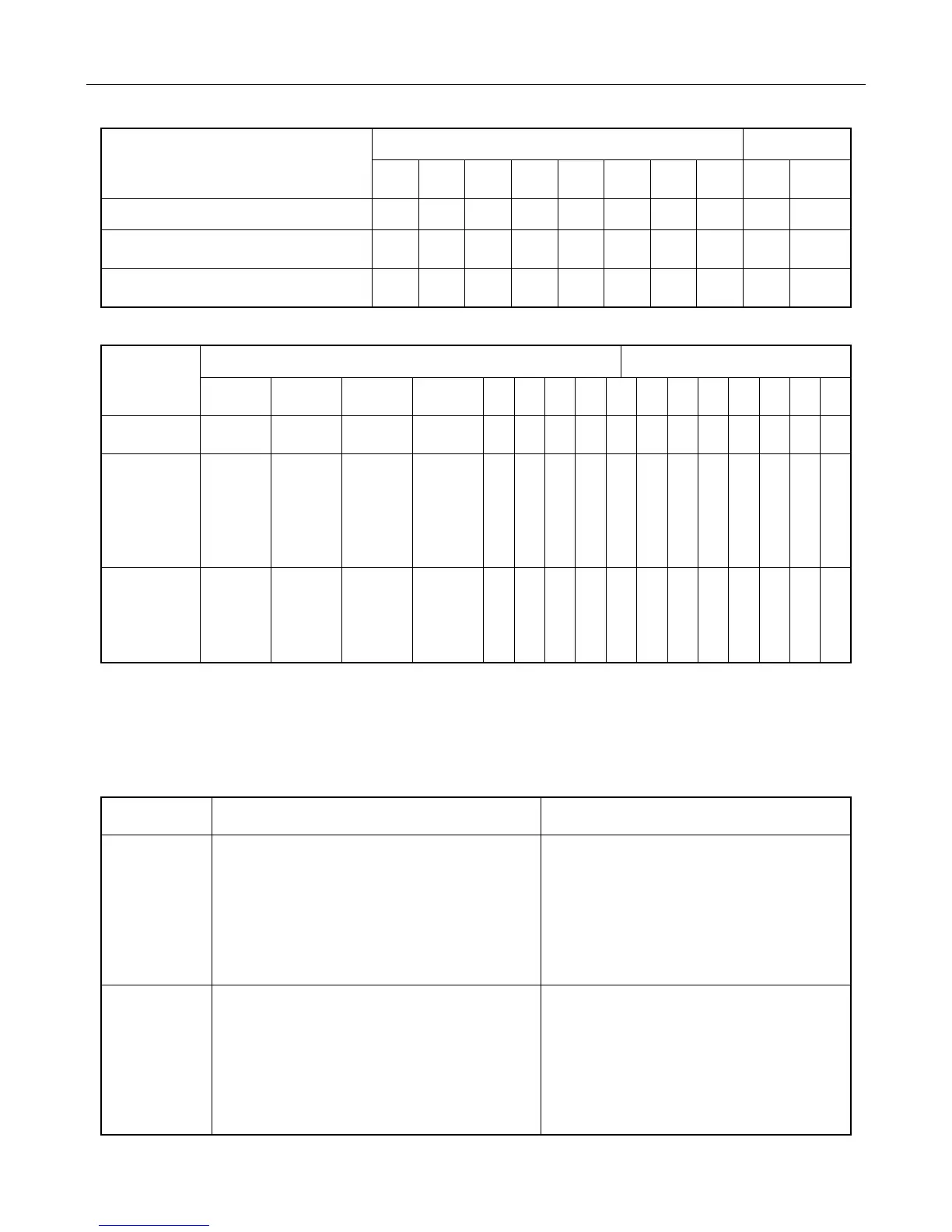
Table 2-2 Running-in time for each stage (8F+2R shift bottom unit: h)
Forward Shift Reverse Shift
Tractor stopper
Low
gear 1
Low
gear 2
Low
gear 3
Low
gear 4
H-1 H-2 H-3 H-4 R-1 R-2
Idle 0.5 0.5 0.5 0.5 0.5 0.5 0.5 0.5 0.5 0.5
When loading 1 ton on a trailer, road
transportation should be used.
4 4.5 5 5 2.5
Operating on sandy soil with a plow,
working depth 14cm.
5 5 5 5 4
Table 2-3 Running-in time for each stage (8F+8R shift bottom unit: h)
Forward Shift Reverse Shift
Tractor
stopper
Low gear
1
Low gear
2
Low gear
3
Low gear
4
H-1 H-2 H-3 H-4 R-1 R-2 R-3 R-4 R-5 R-6 R-7 R-8
Driving
without load
0.5 0.5 0.5 0.5 0.5 0.5 0.5 0.5 0.5 0.5 0.5 0.5 0.5 0.5 0.5 0.5
When loading
1 ton with a
trailer, road
transportation
should be
used.
4 4.5 5 5 2.5
Operating on
sandy soil
with a plough,
working depth
14cm
5 5 5 5 4
2.16 Tractor Common Faults and Troubleshooting
2.16.1 Chassis Faults and Troubleshooting
2.16.1.1 Clutch Faults and Troubleshooting
Table 2-4 Clutch Faults and Troubleshooting
Fault Fault Reasons Troubleshooting
Clutch
slipping
(1) Oil stain on friction lining and pressure
plate.
(2) Friction lining worn or burnt.
(3) Belleville spring press reduced.
(4) Free pedal travel too small, or no free
travel.
(5) Clutch plate severely deformed.
(1) Wash with solvent, locate the cause and
do troubleshooting.
(2) Replace the friction lining.
(3) Replace the butterfly spring.
(4) Readjust the free travel of the pedal
according to the requirements.
(5) Replace the clutch plate.
The
separation of
clutch is not
disengaging,
and there is
noise when it
is engaged.
(1) Free pedal travel is too large, or the
operation travel too small.
(2) The clutch plate is warped.
(3) Disengaging lever heads are not on the
same plane.
(1) Adjust the free stroke of the pedal
according to requirements.
(2) Replace the driven disk.
(3) Adjust according to the requirements.



 To Next Page