– 58 –
– Avoid the impact of cooking pans against the edge of the
glass.
– Ensure the device ventilation is installed in accordance with
the instructions of the manufacturer.
– Do not place or leave empty cooking pans on the hob.
– Avoid contact of sugar, synthetic substances or aluminium
foil with the hot zones. These substances can crack or aect
the vitro ceramic surface while it cools down: switch o the
appliance and remove them immediately from the hot zones
(beware: risk of burns)
– Risk of burns! Do not place items on the hob.
– Never place a hot pan on the control zone.
– If there is a drawer under the built-in device, ensure there is
adequate distance (2 cm) between the contents of the drawer
and the bottom of the device to provide good ventilation.
– Do not put ammable objects (for example, sprays) in the
drawer under the hob. If the drawer contains a cutlery holder,
this must be made from heat-resistant material.
2.4 Precautions to be taken in the event of a
fault with the device
– Upon discovering a fault, turn o the device and turn o the
electrical supply.
– Immediately switch o the electrical power to the device if a
crack or split is discovered in the vitro-ceramic glass, then
notify the after-sales service.
– Repairs must only be carried out by specialised personnel.
Never open the device yourself.
WARNING: If the glass cooking surface is broken,
turn off the device to prevent possible electric
shock.
2.5 Other precautions
– Ensure the cooking pan remains in the middle of the cooking
zone at all times. The bottom of the cooking pan must cover
as much of the cooking zone as possible.
– A magnetic eld can aect electronic equipment. People with
a pacemaker must rst consult the distributor or a doctor.
– Do not use synthetic or aluminium cooking pans: these can
melt on the cooking zones while they are still hot.
– Never use water to put out a re. Turn o the cooking zone.
Gently cover ames with a cover, re blanket, or something
similar.
The use of unsuitable pots and pans, or the use
of removable pan warming accessories that
are unsuitable for use with induction hobs, is
not covered by the guarantee conditions. The
manufacturer cannot be held responsible for any
damage caused to the hob and its surroundings that
result from this.
3 DESCRIPTION OF THE DEVICE
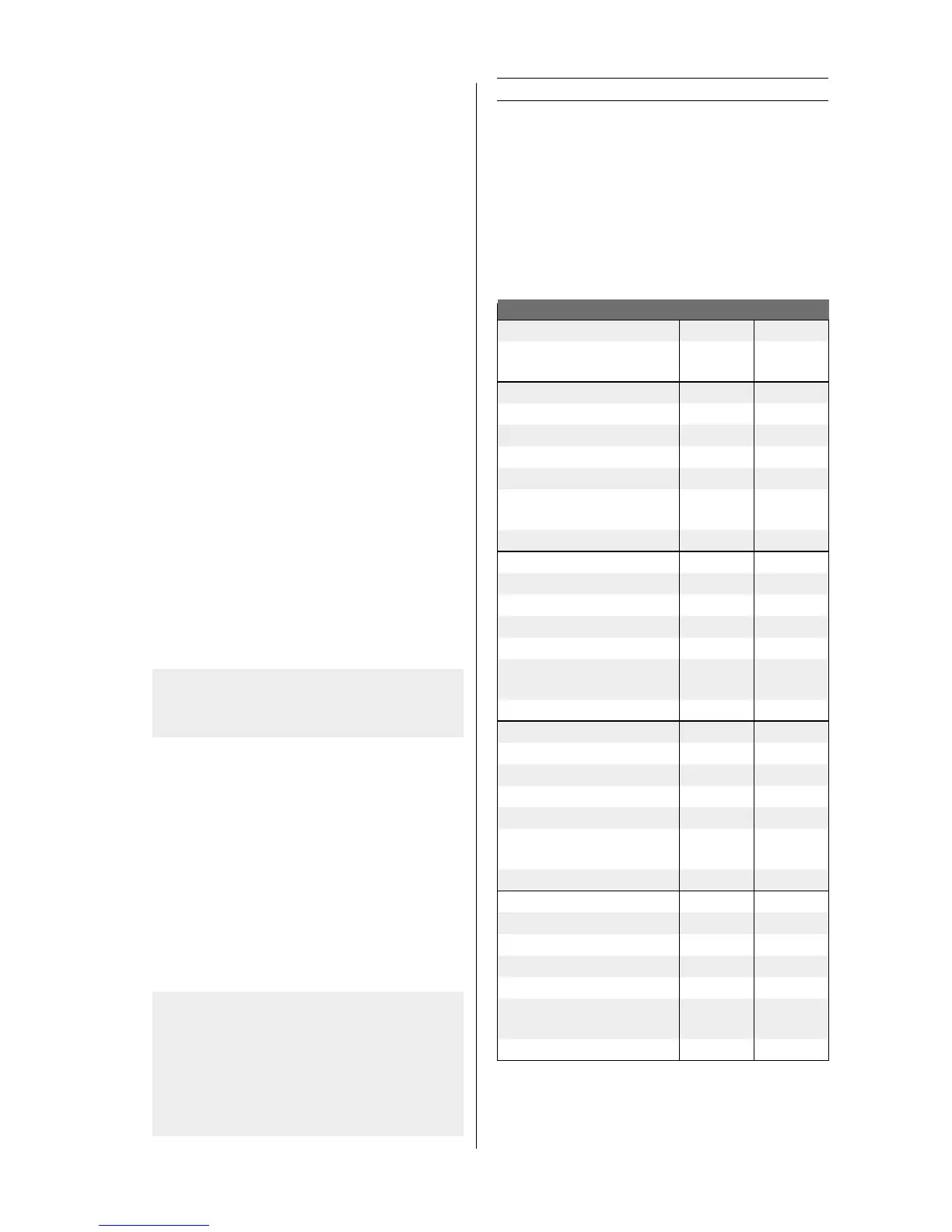
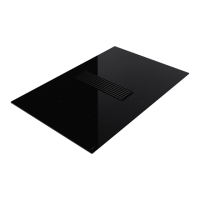
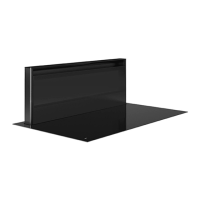
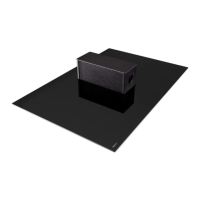
The device is an induction cooking plate with integrated
worktop extraction. The induction hob has 4 cooking zones
with an integrated ventilation tower located at the back of the
hob for the removal of cooking fumes. The hob and cooker
hood can be operated separately. You will nd an explanation
of the operation of the device further in this manual.
3.1 Technical specifications of the induction
hob
Type 1801 1811
Total power 7400 W 7400 W
Energy consumption of the
EChob cooking plate**
170.5 Wh/kg 187.4 Wh/kg
Cooking zone in front left 240x200 mm 240x200 mm
Minimum detection Ø 90 mm Ø 100 mm
Nominal power* 1600 W 2100 W
Extra Power* 1850 W 2600 W
Super Power* 3700 W
Standardised category of
cookware**
B Ø 150 mm
Consommation d’énergie ECcw** 161.3 Wh/kg 182.8 Wh/kg
cooking zone at the back left 240x200 mm 240x200 mm
Minimum detection Ø 90 mm Ø 100 mm
Nominal power* 2100 W 2100 W
Extra Power* 3000 W 2600 W
Super Power* 3700 W
Standardised category of
cookware**
B Ø 150 mm
Consommation d’énergie ECcw** 161.3 Wh/kg 182.8 Wh/kg
Cooking zone at the back right 240x200 mm 240x200 mm
Minimum detection Ø 90 mm Ø 100 mm
Nominal power* 1600 W 2100 W
Extra Power* 1850 W 2600 W
Super Power* 3700 W
Standardised category of
cookware**
A Ø 180 mm
Consommation d’énergie ECcw** 181.9 Wh/kg 190.6 Wh/kg
cooking zone in front right 240x200 mm 240x200 mm
Minimum detection Ø 90 mm Ø 100 mm
Nominal power* 2100 W 2100 W
Extra Power* 3000 W 2600 W
Super Power* 3700 W
Standardised category of
cookware**
C Ø 210 mm
Consommation d’énergie ECcw** 177.6 Wh/kg 188.1 Wh/kg
* the power transfer may vary, dependent on the sizes and the materials of
the cooking pans
** calculated following the methods for measuring the performance (EN
60350-2)


 To Next Page