5
OPERATING PRINCIPLE
Although the hydraulic oil section of the hydraulic hammer is sealed completely,
water can enter into the area where the piston (N) impacts the tool (HH) when
the hammer is used underwater.
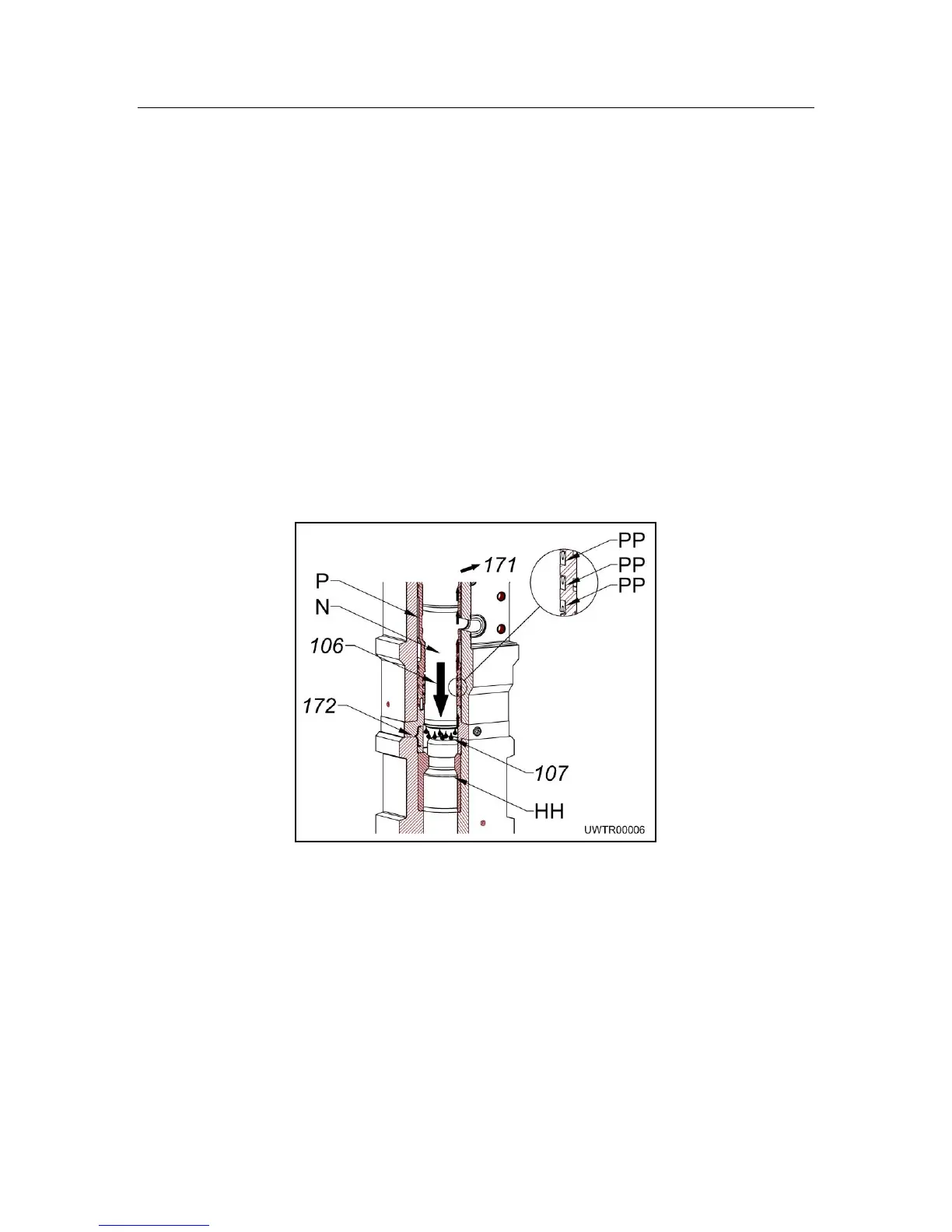
The hammer must be modified for underwater operation. If not, water (107)
trapped in the striking chamber (172) will be forced against the piston seals (PP)
as the piston strokes (106) down to impact the tool. The water pressure is
extremely high and greater than the seals can withstand. The seals are distorted
out of their grooves. This causes the piston to be forced against the sleeve (P).
This, in turn, can damage the piston and both sleeves. The water forced past the
seals enters the carrier hydraulic system (171) and can damage pumps and
other components.
To keep water from entering the striking chamber of the hammer when
submersed, the hammer must be supplied with compressed air, see the following
pages for air compressor size and connections required).



 To Next Page