50
420012001500 - 03182024 - Rev. 04
NOTES:
1. Due to its efficient design, the boiler produces condensate (water) as a
normal by-product. This condensate is acidic, with a pH level between
2 and 4.5. This condensate must be drained away from the boiler and
disposed in accordance with all local regulations.
2. Condensate line must be pitched at least ¼” per foot to properly drain.
If this cannot be done, or a very long length of condensate hose is
used, increase the condensate line to a minimum of 1” ID and place
a tee in the line after the condensate neutralizer to properly reduce
vacuum lock in the drain line.
3. Use corrosion-resistant materials to drain condensate. Use the included
flflexible plastic hose and flflexible tube, PVC, or CPVC pipe. PVC or
CPVC pipe must comply with ASTM D1785, F441, or D2665. Cement
must comply with ASTM D2564 for PVC pipe or F493 for CPVC pipe. For
Canadian applications, use CSA or ULC certifified flflexible tube, PVC or
CPVC pipe, fifittings, and cement.
4. If using flflexible tube, place an overflflow tee in the tube line to
prevent condensate backing up into the boiler if the tube should kink.
Ensure the overflflow tee is positioned near a drain or in a location that
will not damage the surrounding area.
5. Do not reduce the size of the condensate line. The line must at
minimum equal the diameter of the line included with the appliance.
6. A frozen condensate line could result in a blocked vent condition.
It is very important to protect the condensate line from freezing
temperatures or any type of blockage. In installations that may
encounter sustained freezing conditions, the use of heat tape is
recommended to avoid freezing of the condensate line. It is also
recommended to bush up the condensate line size to 1” and terminate
condensate discharge as close to the unit as possible. Longer
condensate runs are more prone to freezing. Damages due to frozen or
blocked condensate lines ARE NOT covered by warranty.
7. Support of the condensate line may be necessary to avoid blockage of
the condensate flow.
8. Local building codes may require an in-line neutralizer to be installed
(not included) to treat the condensate. See Figure 58. If required
by local authorities, a condensate filter of lime crystals, marble, or
phosphate chips will neutralize slightly acidic condensate.
Follow all the installation instructions included with the neutralizer.
If a neutralizer is installed, periodic replacement of the limestone
(or neutralizing agent) will be required. The rate of depletion of the
limestone varies with usage of the boiler. During the first year of boiler
operation, check the neutralizer every few months for depletion.
9. Route the drain line to a nearby floor drain, laundry tub, or condensate
pump. If the boiler condensate outlet is lower than the drain, you must
use a condensate removal pump (kit p/n 554200 available from NTI).
NOTE: If a nearby laundry tub is used as a disposal for waste water from
the washing machine, draining the condensate into this tub allows the
soapy water discharge to neutralize the acidic condensate.
10. An error will appear on the boiler display if condensate line is blocked.
The boiler will not operate with a blocked condensate line. It is
extremely important to have this condition repaired by a qualified
service technician.
11. Damages due to frozen or blocked condensate lines or leaks ARE NOT
covered by warranty.
NOTE: To clean out condensate trap, see Maintenance section.
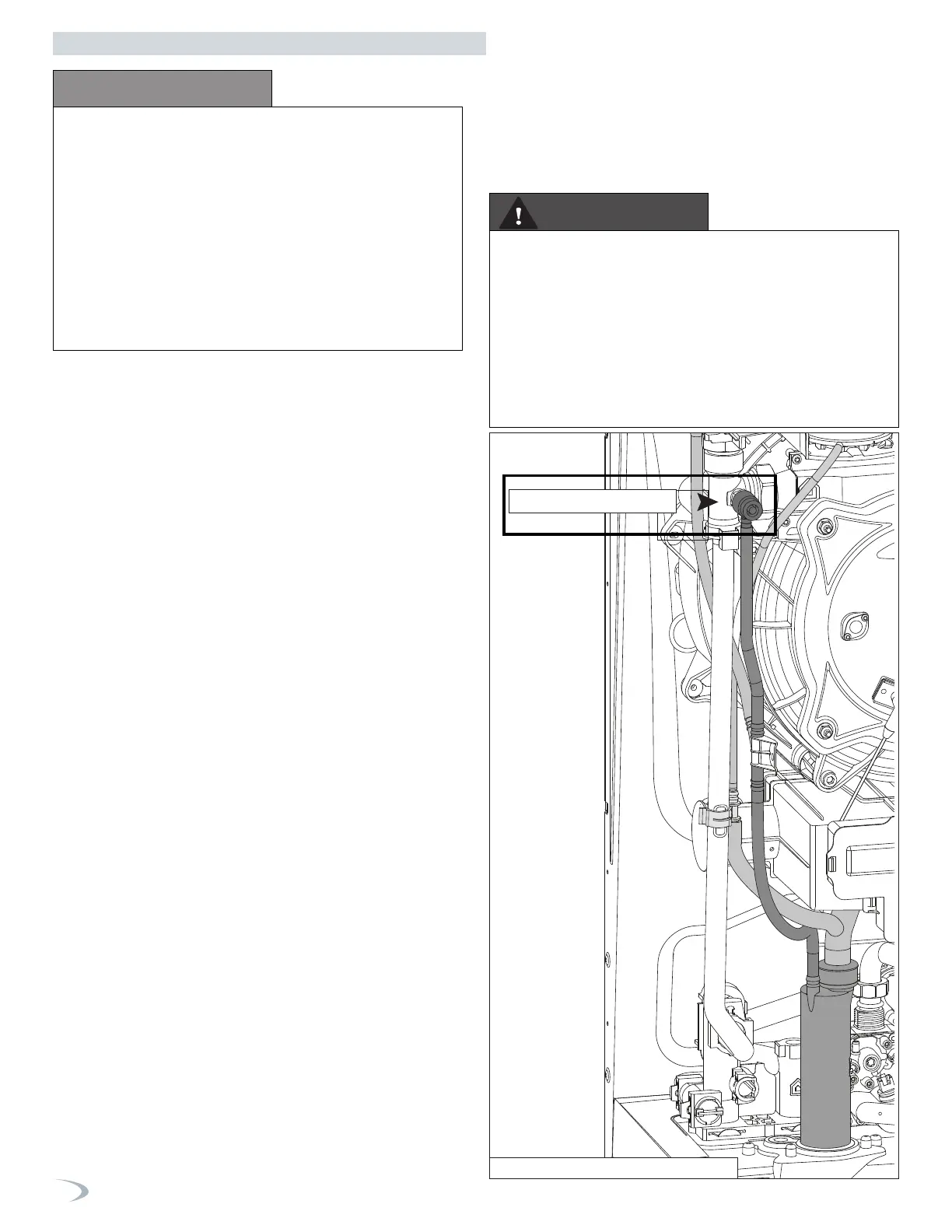
Boiler Manual Air Vent
This condensing high efficiency boiler has a condensate removal
system. Condensate is water vapor derived from combustion products,
similar to that produced by an automobile when it is initially started. It
is very important that the condensate line is sloped down away from
the boiler and to a suitable drain.
The condensate line must remain unobstructed. If allowed to freeze in
the line or obstructed in any other manner, condensate can exit from
the boiler tee, resulting in potential water damage to property.
When installing a condensate pump, select one approved for use with
condensing boilers and furnaces. The condensate pump should have
an overflow switch to prevent property damage from spillage.
Condensate from the boiler will be slightly acidic (pH from 2 to 4.5).
Check with your local gas company to determine if combustion
condensate disposal is permitted in your area. Install a neutralizing
filter if required by local codes.
CAUTION
THE CONDENSATE TRAP MUST BE FILLED WITH WATER BEFORE
THE BOILER IS USED. The siphon is filled with water during the boiler
and heating system purging procedure. See Purging Procedure in this
manual for further instructions.
Ensure the siphon contains water. If the siphon does not contain water
it must be filled. Open the manual air vent on the main heat exchanger
until filling is complete. See Figure 57. Check the system pressure with
a pressure gauge.
INSUFFICIENT WATER IN THE TRAP CAN CAUSE FLUE GAS TO BE
EXPELLED. Failing to ensure the condensate trap is full of water could
result in property damage, severe personal injury, or death.
WARNING
Figure 57 - Condensate Trap Filling
Part 6 - Installing the Condensate Drain


 To Next Page
 Loading...