About this Manual:
This guide describes the installation and startup procedures of the Servo System so that it can
be efficiently put in actual operation in a short time.
This guide provides detailed descriptions of key points for efficiently starting up the Servo Sys-
tem as follows:
• Check the wiring by efficiently using the monitor function.
• Perform gain adjustments properly.
• Find the causes of alarms quickly and take the appropriate countermeasures.
• Take appropriate countermeasures for position deviation that might be caused by
noise.
This guide applies to the following OMRON products:
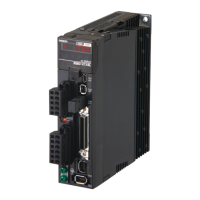
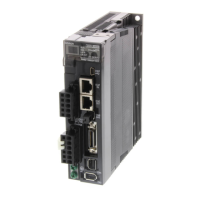
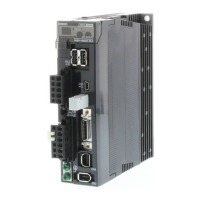
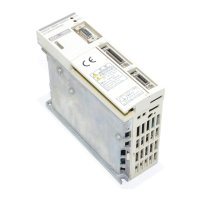
• OMNUC U Series
• OMNUC H Series
• OMNUC M Series
• OMNUC R Series
It is recommended that the following manuals be referred to when actually performing the work.
Item Catalog No. Model
OMNUC U Series I501 R88D-UA Analog Input with Power Supply
I502 R88D-UP Pulse-train Input with Power Supply
OMNUC H Series I508 R88D-HT/HS
OMNUC M Series I511 R88D-MT
OMNUC R Series I503 R88D-RA Analog Input with Power Supply
I505 R88D-RP Pulse-train Input with Power Supply
I504 R88D-RB Analog Input without Power Supply
I506 R88D-RR Pulse-train Input without Power Supply
Finally, please read this guide carefully and be sure you understand the information provided
before attempting to install and startup the Servo System. The guide includes the sections de-
scribed below.
Chapter 1 provides a summary of the Servo System and all gains used for the Servo System
loops.
Chapter 2 describes wiring checks, possible system startup errors, and countermeasures
against position deviation when constructing the Servo System.
Chapter 3 describes the probable causes of Servo Driver alarms that may occur and the counter-
measures required to deal with them.
Chapter 4 describes the types and generation of noise and provides countermeasures against
noise.
The Appendix provides an example of the configuration of the Servo Driver’s main circuitry.
WARNING Failure to read and understand the information provided in this manual may
result in personal injury or death, damage to the product, or product failure.
Please read each section in its entirety and be sure you understand the
information provided in the section and related sections before attempting any of
the procedures or operations given.
!

 Need help?
 General

 To Next Page