Ref1109 User Manual • • • 5
1.4 The OT200 Ceiling Hoist
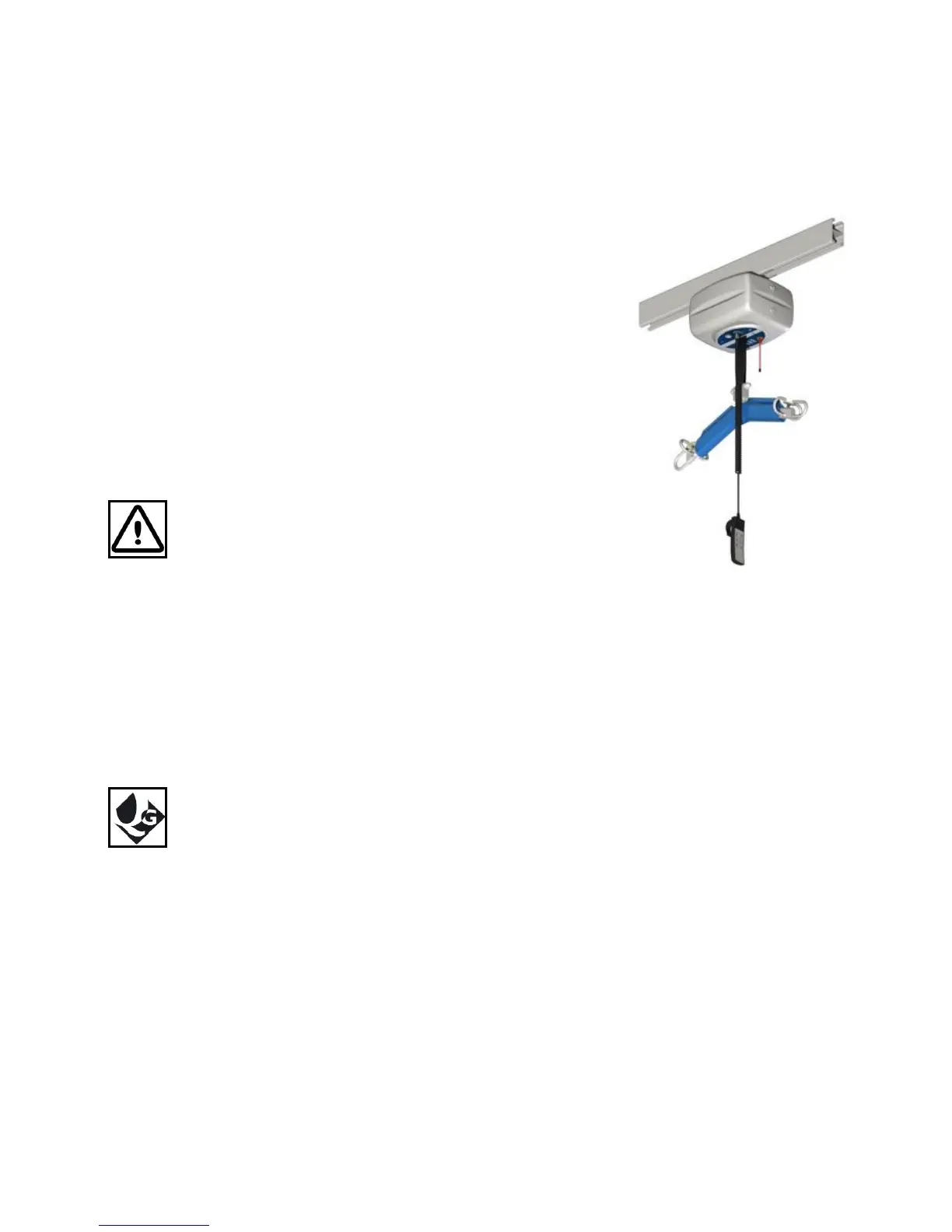
The OT200/OT400 is a ceiling hoist for passive transfers of caretakers.
The caretaker can be lifted with the OT200 and it is possible to transfer
the caretaker by means of a rail that is attached to the ceiling. The
OT200 can be delivered with a mechanical (balanced) or powered
hanger bar. The OT200 can also be equipped with an electrical drive for
transportation along the rail.
The OT200/OT400 can be used for the following transfers:
• From a (wheel)chair to a bed and vice-versa.
• From a (wheel)chair to a toilet and vice-versa.
• From a (wheel)chair to a shower-bath-toilet chair and vice-versa.
• From the floor to a (wheel)chair or bed.
The OT200/OT400 cannot be used to help caretakers with
standing up or walking (usually an active hoist like the James
will be used for these purposes).
The OT200 /OT400 complies with the following standards (by KBOH):
• The user can be lifted from a sitting or lying position and will hang in a (semi) sitting position. After
transportation of the hoist, the user can be placed back on the supporting element in a sitting or lyi
ng
position.
• The hoist can be used in combination with wheelchairs, without having to remove foot, leg or arm
supports.
• The hoist can be used in combination with an accessible bed, shower window or dressing table at
working height. Next to this the hoist can be used for transfers to and from the floor.
With this the OT200 also complies to the demands set by the European Standards, ISO 10535
and the GQ-quality mark T-02, cluster UTT.
Under normal conditions, and with the exception of slings and batteries, the expected life span of the
hoist is 10 years (100.000 transfers), provided the hoist is maintained as instructed.
Special circumstances, like using the OT200 in humid environments or environments with aggressive
vapours can shorten the life time of the hoist.


 To Next Page