To Next Page
J
Julia SmithAug 5, 2025
What surge protection does OPTI-UPS UPS provide?
- DdonaldsonlarryAug 5, 2025
The OPTI-UPS UPS features built-in data-line surge suppression on the rear panel to provide comprehensive system protection.

What surge protection does OPTI-UPS UPS provide?
The OPTI-UPS UPS features built-in data-line surge suppression on the rear panel to provide comprehensive system protection.
Why OPTI-UPS UPS has user replaceable battery?
The special user-replaceable battery design of this OPTI-UPS UPS offers considerable cost savings and extends the UPS's lifespan almost indefinitely.
Details what the warranty covers regarding material and workmanship defects.
Information on how to determine the accurate warranty period and conditions.
Specifies that the warranty is valid only for the first consumer purchaser.
Lists conditions and damages that are not covered by the product warranty.
Details limitations on implied warranties such as merchantability and fitness for purpose.
Specifies that liability is limited to repair or replacement cost, excluding consequential damages.
Explains how state laws may affect warranty rights, particularly regarding implied warranties and damages.
Details warranty limitations in Australia, subject to the Trade Practices Act and Fair Trading Acts.
Lists essential safety precautions for operating the UPS, including handling batteries and electrical connections.
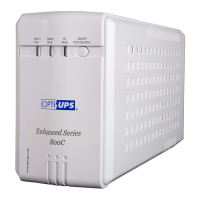
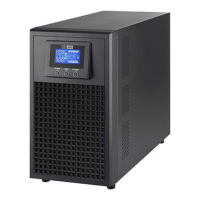
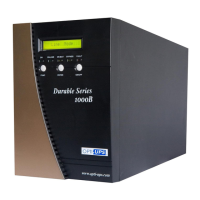
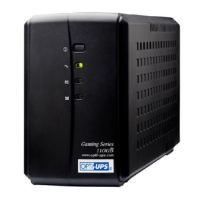
Provides a general description of the line-interactive UPS models and their purpose.
Explains the UPS's ability to automatically detect and match the incoming line frequency (50 or 60 Hz).
Describes the UPS's voltage regulation capabilities using buck and boost functions to maintain stable output.
Highlights the user-friendly design for replacing the UPS battery, extending its lifespan.
Details the advanced interface for monitoring UPS status and analyzing power problems via computer.
Explains how to control UPS and connected equipment shutdown/startup using software on a schedule.
Describes the built-in data-line surge suppression for protecting network or modem connections.
Illustrates the front and rear panels of different UPS models, showing controls and ports.
Details the four functions of the On/Off/Test/Silence button: turning UPS on/off, silencing alarms, and performing self-tests.
Explains the different audible alarms: backup mode, low battery, and overload conditions.
Describes the meaning of the front panel LEDs for different UPS models and operating modes (AC, Battery, Fault).
Explains the function of the rear panel communication port for connecting to a host computer.
Details how to use the data-line surge suppression for network or modem protection.
Instructs on connecting the AC power cord to the UPS input socket and mentions circuit breaker/fuse protection.
Describes the two types of output outlets: Bypass (surge protection only) and UPS (surge protection and battery backup).
Guides users on examining the UPS carton for damage and checking the included accessories.
Provides instructions for suitable placement of the UPS, considering environment, ventilation, and clearance.
Explains how to calculate the total VA requirements of connected equipment to ensure UPS compatibility.
Provides instructions for connecting the UPS to power and initial power-up procedure, including battery charging recommendation.
Details how to connect computer equipment to the UPS output outlets for different UPS models.
Guides users on how to operate the UPS and perform functional tests to verify backup capability.
Provides recommendations for charging the battery during extended storage periods to maintain its health.
Lists detailed electrical specifications including product name, frequency, voltage, VA/W capacity, and input/output ranges.
Details the spike/surge protection capabilities, including continuous voltage and single pulse ratings.
Specifies the types and frequency of audible alarms for different UPS conditions.
Provides battery type, quantity, and recharge time specifications for various UPS models.
Lists the physical dimensions (L x W x H) and weights (Net, Shipping) for each UPS model.
Details the operating and storage specifications for temperature, humidity, and altitude.
Provides a chart listing common problems, their possible causes, and corrective actions for the UPS.
Provides critical safety warnings and precautions for personnel performing battery and fuse replacement.
Step-by-step instructions for replacing the battery in ES550C and ES800C UPS models.
Step-by-step instructions for replacing the battery in ES1000C and ES1500C UPS models.
Step-by-step instructions for replacing the battery in ES1000C-RM and ES1500C-RM UPS models.
Step-by-step instructions for replacing the fuse in ES550C and ES800C UPS models.
 General
| Category | UPS |
|---|---|
| Model | ES1500C |
| Capacity | 1500 VA / 900 W |
| AVR | Yes |
| Waveform Type | Simulated Sine Wave |
| Communication Port | USB |
| Operating Temperature | 0 - 40 °C |
| Output Frequency | 60Hz |
| Battery Type | Sealed Lead Acid |
| Battery Runtime | Varies by load |
| Typical Recharge Time | 6 - 8 hours |
| Storage Temperature | -15 to 45 °C |
| Humidity | 0 - 90 % (non-condensing) |
| Number of Outlets | 8 |