Need help?
Do you have a question about the Orange Pi PC and is the answer not in the manual?
Details CPU (H3 Quad-core Cortex-A7), GPU (Mali400MP2), and Memory (1GB DDR3).
Guide for preparing a TF card on Windows using SDFormatter and Win32 Disk Imager for OS installation.
Guide for preparing a TF card on Linux using fdisk, mkfs, and dd commands for OS installation.
Instructions for downloading the Android OS image and the PhoenixCard tool for TF card preparation.
Steps to format the TF card using PhoenixCard, selecting the appropriate disk and image file before proceeding.
Details the process of burning the Android OS image to the TF card using PhoenixCard after successful formatting.
The Orange Pi PC is an open-source single-board computer designed for a wide range of creative and practical applications. It serves as a versatile tool for individuals who wish to engage with technology beyond mere consumption, enabling them to build, experiment, and control various aspects of their digital and physical environments.
At its core, the Orange Pi PC functions as a compact yet powerful computer capable of running a variety of operating systems, including Android 4.4, Ubuntu, Debian, Raspberry Pi Image, and Banana Pi Image. This broad compatibility allows users to tailor the device to specific needs, whether for general computing tasks, specialized server applications, or embedded projects.
One of its primary functions is to act as a personal computer. Users can connect a monitor, keyboard, and mouse to transform it into a desktop-like environment suitable for web browsing, document editing, and other everyday computing activities. Its ability to run Android also makes it a viable platform for Android-based applications and media consumption.
Beyond a traditional PC, the Orange Pi PC excels as a wireless server. With its onboard network capabilities, it can be configured to host various services, making it suitable for home automation, file sharing, or even small-scale web hosting. This server functionality is particularly appealing to hobbyists and developers looking to create custom network solutions.
For entertainment, the device supports gaming, music, and sounds. Its graphical processing unit allows for the rendering of various games, while its audio output options enable connection to speakers or headphones for an immersive audio experience. High-definition video playback is also a key feature, allowing users to enjoy multimedia content on connected displays.
The Orange Pi PC is also designed to support camera input, making it suitable for projects involving image and video capture. This feature opens up possibilities for surveillance systems, robotics with vision capabilities, or custom photography setups. Its open-source nature means that developers can integrate various camera modules and develop bespoke applications for them.
Furthermore, the device is compatible with Scratch, a visual programming language, which makes it an excellent educational tool for teaching programming concepts to beginners, especially children. This aspect aligns with its goal of encouraging creation and experimentation with technology.
Getting started with the Orange Pi PC involves a straightforward process, typically requiring a few essential accessories. The primary storage medium is a TF card, which needs to be prepared with an operating system image before the first boot. The manual provides detailed instructions for formatting the TF card and flashing the OS image using tools like TF Formatter and Win32 Disk Imager on Windows, or command-line utilities like fdisk and dd on Linux. For Android OS images, a specialized tool called PhoenixCard is recommended.
Once the TF card is prepared, it is inserted into the dedicated slot on the board. The device then requires connections for video output, input peripherals, and power. For video, users can connect an HDMI-compatible TV or monitor using an HDMI-to-HDMI or HDMI-to-DVI cable. If an HDMI display is unavailable, an AV video cable can be used to connect to stimulated monitors, leveraging the device's CVBS output.
Input is handled via USB 2.0 ports. The Orange Pi PC features three USB 2.0 HOST ports and one USB 2.0 OTG port. Keyboards and mice with USB connections can be plugged into these ports. It's important to note that for high-power peripherals like some keyboards and mice, a USB concentrator might be necessary to ensure stable operation.
Network connectivity is provided by a 10/100M Ethernet RJ45 port, allowing for a direct wired connection to a network. While the manual mentions "onboard WIFI" in some contexts, the Orange Pi PC specifically has an Ethernet port, and Wi-Fi functionality would typically require an external USB Wi-Fi adapter if not explicitly stated as onboard for a particular model variant.
Powering the Orange Pi PC is crucial. It requires a DC input of 5V 2A minimum, supplied through a dedicated DC power input port. A critical usage note emphasizes that the USB OTG input should not be used for power supply, as this can cause the board to freeze. Users are advised against using low-powered GSM cellphone chargers, even if they are marked 5V 2A, to ensure stable and sufficient power delivery.
The device also includes a power button (SW4) for safe system shutdown. The manual advises users to use the "OFF" button on the screen or execute sudo halt or sudo shutdown -h commands in the shell to safely turn off the system. Simply cutting off power without a proper shutdown can damage the TF card's file system.
The Orange Pi PC is designed with a focus on user accessibility and expandability, which inherently contributes to its maintenance and longevity. Its open-source nature means that a community of users and developers often contributes to software updates, bug fixes, and new functionalities, extending the device's useful life.
The use of a TF card for the operating system simplifies software maintenance. If an OS becomes corrupted or a user wishes to switch operating systems, the process involves merely re-flashing a new image onto the TF card. This modular approach to storage makes system recovery straightforward and reduces the risk of permanent software damage to the main board.
The board features a 40-pin GPIO header, which is compatible with Raspberry Pi B+ pinouts. This allows for the connection of various low-level peripherals and expansion boards, enabling users to customize and repair components or add new functionalities as needed. The detailed pinout specifications provided in the manual (including GPIO and CSI camera connector pins) are essential for developers and hobbyists for debugging and integration.
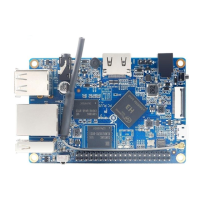
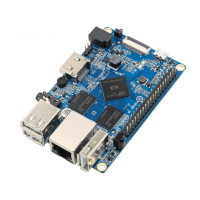
For hardware maintenance, the modular design of the Orange Pi PC means that individual components, while integrated, are often standard. For example, the USB ports, HDMI port, and Ethernet port are common interfaces, making it easier to troubleshoot connectivity issues with standard cables and peripherals. The clear labeling of components in the top and bottom views of the board, as well as the interface instructions, aid in identifying and addressing potential issues.
The device's power requirements are clearly specified, guiding users to select appropriate power adapters. Adhering to these specifications is a key maintenance practice to prevent damage due to insufficient or incorrect power supply. The warning against using the USB OTG port for power is a crucial piece of information for preventing operational issues.
Overall, the Orange Pi PC is built to be a robust and adaptable platform. Its design facilitates easy setup, broad functional utility, and manageable maintenance, making it an ideal choice for both novice enthusiasts and experienced developers looking to create and innovate with single-board computers.
 General
| Processor | Allwinner H3 Quad-core Cortex-A7 |
|---|---|
| GPU | Mali400MP2 GPU @600MHz |
| RAM | 1GB DDR3 |
| USB Ports | 3x USB 2.0 |
| HDMI | HDMI 1.4 |
| Audio Output | 3.5mm Audio Jack |
| GPIO | 40-pin GPIO header |
| Storage | MicroSD card slot |
| Ethernet | 10/100 Ethernet RJ-45 |
| Power Supply | 5V/2A DC input |
| Operating System | Android, Debian |

 To Next Page