24
5.3 Bench Alignment
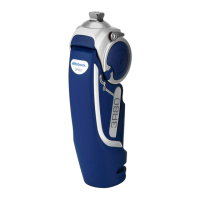
Use 2Z11=KIT
INFORMATION:The connection area of the prosthetic knee joint can be protected against
scratches with the protective film of the 2Z11=KIT during alignment in the workshop and testing
in the trial fitting area.
►
Use the protective film as illustrated in the accompanying document for the 2Z11=KIT.
►
Remove the protective film before the patient leaves the fitting area.
Bench Alignment Process
+ = anterior placement / – = posterior placement (in relation to the alignment reference line)
No. see fig.4
Required equipment:
Alignment apparatus (e.g., 743L200 L.A.S.A.R. Assembly or 743A220 PROS.A. Assembly)
Position the prosthetic foot in the alignment apparatus in accordance with the following values:
a–p positioning, middle of the prosthetic foot to the alignment reference line :
+30mm
Heel height (see section "Determining the Effective Heel Height" – see Page25):
effective heel height (x) + 5mm
External foot rotation:
approx. 5°
Check the prosthetic knee joint according to the section "Checking the Factory Settings" (see
Page27).
Position the alignment reference point (rotation axis) of the prosthetic knee joint in the align
ment apparatus according to the following values:
Height of the alignment reference point in the alignment apparatus:
MTP-floor measurement + 20mm
a–ppositioning of the alignment reference point to the alignment reference line:
0mm
External rotation of the prosthetic knee joint:
approx.5°
INFORMATION: If the length-adjustable 2R45=34 Tube Adapter (max. body weight 125kg)
is used in the alignment of the test prosthesis, the required length for the definitive pros
thesis is easier to determine.
When using the included tube adapter, note the section "Adapting the Length of the Tube
Adapter" (see Page25).
Connect the prosthetic knee joint to the prosthetic foot and chosen adapters according to their
instructions for use and the section "Installing the Tube Adapter" (see Page25).
Mark the socket reference point and tuberosity reference point on the prosthetic socket according
to the section "Determining the Socket Reference Point"(see Page26).
Position the tuberosity reference point of the prosthetic socket at the height of the tuberosity-
floor measurement.
CAUTION! The correct position and flexion of the prosthetic socket is crucial for the
safety of the patient and functionality of the prosthetic knee joint, and avoids premature
wear.
INFORMATION: The 4R118 Adapter Plate (max. body weight 125kg) can be used for fur
ther posterior placement.
Position the prosthetic socket so the socket reference point lies on the alignment reference
line .
Set the determined socket flexion angle β (see section "Determining Socket Flexion" – see
Page26).
Position the lamination anchor or socket adapter so that all prosthetic components between the
socket and prosthetic knee joint can be connected to each other correctly.
Join the prosthetic socket and the prosthetic knee joint using the adapters you selected.
Be sure to follow the adapter instructions for use during adjustment and installation.


 To Next Page