Need help?
Do you have a question about the PAC RP4-HD11 and is the answer not in the manual?
Explains the RP4-HD11's function, retaining factory features like SWC, amplifier, and clock.
Provides critical installation and usage guidelines, including revision info, switch settings, and vehicle specifics.
Details interface, vehicle, and SWC connector pinouts and color codes for wiring.
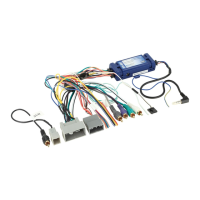
Visual representation of the interface wiring connections for aftermarket radios and vehicle.
Diagram illustrating the SWC connector and its connection to the interface.
Guide to setting the rotary switch on the interface for proper radio compatibility.
Details pre-programmed SWC functions and how to restore default settings.
Table showing default button assignments for various radio brands like Alpine, JVC, Sony.
Guide to setting the rotary switch on the interface for proper radio compatibility during programming.
Step-by-step guide for custom programming SWC functions for different car/radio brands.
Process to recalibrate SWC values when operation is erratic or non-existent.
Instructions for updating the RP4-HD11 firmware using the PAC-UP interface updater.
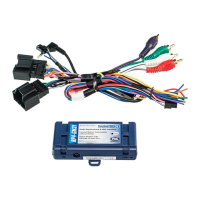
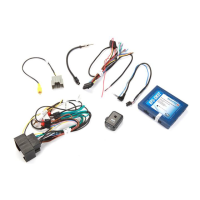
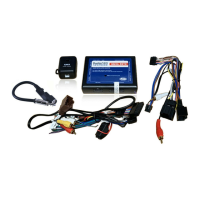
The RP4-HD11 is a sophisticated interface designed to facilitate the replacement of a factory radio in select Honda vehicles equipped with MSCAN databus radios. Its primary function is to ensure the seamless integration of an aftermarket radio while retaining crucial factory features and enhancing the user experience with advanced control options.
The core capability of the RP4-HD11 lies in its ability to maintain factory functionalities that would otherwise be lost when the original radio is removed. This includes the retention of steering wheel controls (SWC), allowing the driver to continue managing audio functions without taking their hands off the wheel. Furthermore, the interface preserves the functionality of the factory amplifier, ensuring that the vehicle's existing audio system continues to operate optimally with the new radio. A significant feature is its capacity to allow for the setting of the factory clock, a function often tied to the original head unit.
Beyond retention, the RP4-HD11 introduces enhanced control possibilities. It supports dual command functionality for SWC buttons, meaning each button can be programmed to perform two distinct radio functions: one with a short press and another with a long press. This significantly expands the utility of the existing steering wheel controls. The interface also provides essential data bus driven outputs, which are critical for aftermarket radio installations. These outputs include accessory power, a vehicle speed sensor (VSS) signal, illumination, a reverse trigger, and a parking brake signal. These signals are vital for the proper operation and safety features of many aftermarket head units, such as navigation systems that require VSS for accurate positioning or video players that need a parking brake signal for safety interlocks.
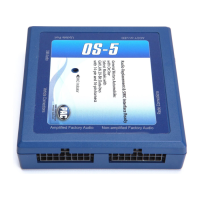
The RP4-HD11 is designed for user-friendly setup and customization. Before installation, the radio select rotary switch on the side of the interface must be set to the correct radio type, ensuring compatibility with the aftermarket head unit. The interface comes pre-programmed with default SWC functions for all supported vehicles, meaning that for most users, no additional programming is required. However, for those who wish to customize their controls or utilize the dual command functionality, the device offers an intuitive programming mode.
Programming SWC functions involves a simple sequence of pressing the program button on the interface and then the desired button on the steering wheel. The LED indicator on the interface provides visual feedback during this process, confirming successful button presses and programming steps. If a steering wheel button is not present or a function is not desired, the user can easily skip that function during programming by pressing and releasing the program button. The interface also includes a mechanism to restore default SWC settings by simply pressing and releasing the program button once and waiting for a specific LED flash sequence.
For vehicles equipped with factory navigation or a 7" touchscreen, specific installation notes are provided to address unique challenges, such as the loss of clock and date setting capabilities from the factory display. The manual offers workarounds for these situations, including battery disconnection procedures to reset the display. The LED on the interface also serves as a diagnostic tool, flashing whenever an SWC button is pressed, confirming that the interface is receiving commands.
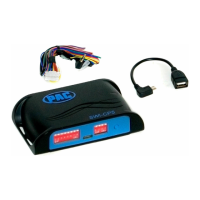
The RP4-HD11 is designed with future-proofing in mind, offering firmware update capabilities. This ensures that the interface can be updated with new features, bug fixes, or compatibility improvements as they become available. Users can update the device using a PAC-UP interface updater (sold separately) by following a straightforward procedure that involves disconnecting the interface, setting the rotary switch to a specific position, connecting the updater, and then reconnecting to the vehicle. This allows the device to remain current with evolving vehicle technologies and aftermarket radio models.
In cases where SWC operation becomes erratic or non-existent, the interface supports a re-calibration process. This re-calibration is specifically for the Answer, Hang Up, and Voice buttons, as other buttons are data-driven and do not require re-calibration. The re-calibration process involves holding the programming button until the LED blinks, then pressing the SWC buttons in a specific order. This ensures that the interface accurately learns the SWC values, allowing for proper button function assignment. If no buttons are pressed during re-calibration, the default SWC values are restored. This maintenance feature helps resolve common issues and ensures reliable performance of the steering wheel controls over time.
 General
| Device Type | Radio Replacement Interface |
|---|---|
| Steering Wheel Control Retention | Yes |
| Installation | Plug-and-Play |
| Amplifier Turn-On | Yes |
| Output Channels | 4 |
| Power Supply | 12V DC |
| Compatibility (OS) | Not applicable |
| Compatibility | Select Honda/Acura Vehicles |
| Outputs | RCA |
| Connectivity | RCA |

 To Next Page