
 To Next Page
T
Theresa GomezSep 18, 2025
Why I cannot use voice paging on my Panasonic KX-TGD890 Cordless Telephone?
- JjohnmorenoSep 18, 2025
You cannot use voice paging on your Panasonic Cordless Telephone if other units are in use.

Why I cannot use voice paging on my Panasonic KX-TGD890 Cordless Telephone?
You cannot use voice paging on your Panasonic Cordless Telephone if other units are in use.
Why I cannot hear a dial tone on my Panasonic Cordless Telephone?
If you cannot hear a dial tone on your Panasonic Cordless Telephone, check that the base unit’s AC adaptor and telephone line cord are properly connected. Also, disconnect the base unit from the telephone line and connect the line to a known working telephone to test the line.
Why is my Panasonic KX-TGD890 beeping and flashing?
If your Panasonic Cordless Telephone handset beeps and/or flashes, the battery charge is low. Fully charge the batteries.
Why caller information is not displayed on my Panasonic Cordless Telephone?
To display caller information on your Panasonic Cordless Telephone, ensure you subscribe to Caller ID service. If you have additional telephone equipment, plug the unit directly into the wall jack. If you use a DSL/ADSL service, connect a DSL/ADSL filter between the base unit and the telephone line jack. Disconnect other equipment that may be interfering.
Why is my Panasonic Cordless Telephone not automatically editing caller ID numbers?
If the caller list/incoming phone numbers are not edited automatically on your Panasonic Cordless Telephone, turn on the Caller ID number auto edit feature and try again. You need to call back the edited number to activate Caller ID number auto edit.
Why does my Panasonic KX-TGD890 say 'invalid'?
The handset is not registered to the base unit. Register the handset.
Why is caller information not announced on my Panasonic KX-TGD890 Cordless Telephone?
If caller information is not announced on your Panasonic Cordless Telephone, adjust the ringer volume, turn on the Talking Caller ID feature, and select a different setting for the number of rings for the answering system.
Why is the telemarketing call block key not displayed on my Panasonic KX-TGD890 Cordless Telephone?
If the dedicated key for Telemarketing call block is not displayed on your Panasonic Cordless Telephone, lift the handset from the charger. Turn off the auto talk feature.
Why is there noise on my Panasonic KX-TGD890 headphone during calls?
If you hear noise during a call on the headphone of your Panasonic Cordless Telephone, move closer to the handset. The connection may be subject to interference from obstructions such as walls or electronic devices.
Why is my Panasonic Cordless Telephone base unit beeping?
The base unit of your Panasonic Cordless Telephone beeps when you have new messages. Listen to the new messages.
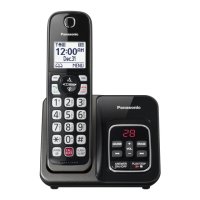
Displays model number (KX-TGD890, KX-TGD892) and product name.
Guides users to the 'Getting Started' section for initial use.
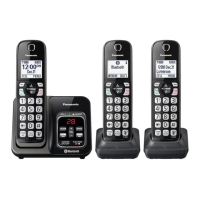
Details base unit and handset part numbers and quantities for each model.
Lists supplied accessories with part numbers and quantities for models.
Lists optional accessories like batteries, range extenders, and key detectors.
Explains how to expand the system with optional handsets.
Describes expanding the phone system by pairing Bluetooth headphones.
Explains the meaning of various symbols used on the equipment.
Provides essential safety warnings and precautions for product operation.
Outlines safe operating practices and maintenance for the equipment.
Discusses RF energy shielding and usage in healthcare facilities.
Details safe installation practices and recommended locations for the unit.
Provides guidelines for battery usage, handling, charging, and disposal.
Lists basic safety precautions to reduce the risk of fire, shock, and injury.
Guides on optimal placement of the base unit for best performance and avoiding interference.
Advises on keeping the product away from environmental factors like heat and dust.
Provides instructions for cleaning and maintaining the product's outer surface.
Recommends erasing private information before disposing of the product.
Lists technical specifications including Bluetooth version, frequency range, and power.
Step-by-step guide for connecting the base unit and charger to power and phone line.
Instructions for correctly installing rechargeable batteries into the handset.
Details how to remove batteries and the process for charging them.
Important notes regarding AC adaptor connection, power failure, and battery charging warmth.
Explains the icons used to indicate the battery status on the handset display.
Identifies and describes the function of each button on the handset.
Outlines the expected operating time for Ni-MH batteries in different modes.
Explains the feature that reduces handset power consumption automatically.
Lists and defines icons displayed on the handset screen during operation.
Guides on setting the display language and voice announcement language.
Instructions for setting the current date, time, and AM/PM format.
Steps to record a personalized greeting message for the answering system.
Covers dialing mode and setting up low battery alerts.
Step-by-step guide to pair a Bluetooth headphone with the handset.
Instructions on how to manually connect or disconnect a paired Bluetooth headphone.
Procedure to remove stored Bluetooth headphone information from the handset.
Allows customization of the displayed name for paired Bluetooth headphones.
Guides on how to change the default Bluetooth PIN for pairing.
General information and important notes for operating a Bluetooth headphone.
Steps for making phone calls using a paired Bluetooth headphone.
How to answer incoming calls using a connected Bluetooth headphone.
Instructions on switching call audio between the handset and headphone.
How to adjust the receiver and ringer volume for the Bluetooth headphone.
Basic steps for dialing numbers and initiating calls from the handset.
Instructions on how to answer incoming calls using the receiver or speakerphone.
How to set the ringer volume for both the handset and base unit.
Explains features like Hold, Mute, and Flash available during a call.
How to use Call Waiting and Caller ID features with your phone service.
For users with rotary/pulse service, how to enable tone dialing.
Feature to improve clarity by reducing background noise during calls.
Adjusts voice clarity for a more natural sound during conversations.
How to record a two-way conversation during an outside call.
Allows joining existing calls or setting up multi-party conference calls.
How to make and answer intercom calls between handsets, and auto intercom feature.
Explains the feature that allows automatic call answering via voice detection.
Steps to enable or disable the voice command answering feature.
How to adjust the sensitivity level for triggering the voice command feature.
Procedure for answering calls using the voice command feature.
How to block current calls and add numbers to the call block list.
Instructions for storing individual phone numbers to block.
How to add numbers from the caller list to the call block list.
Methods for blocking specific numbers or ranges of numbers.
How to block incoming calls where the caller ID is not provided.
Option to control if the first ring sounds for incoming calls.
Instructions for viewing, editing, unblocking numbers, and unblocking all entries.
How to view and reset the count of blocked calls.
Screens incoming calls using a greeting message and access code.
Stores numbers that have passed automated call block for future access.
How to set the automated call block mode (block or unblock).
Procedure to change the 3-digit access code for automated call block.
Allows specific callers to bypass automated call block by name.
Options for using your own or pre-recorded greeting messages for automated calls.
Feature to screen telemarketing calls by asking callers to state their name.
Notifies the user about potential scam calls based on the number of rings.
Step-by-step instructions for adding new contacts with names and numbers.
How to save numbers from the redial list into the phonebook.
Saving incoming caller information directly into the phonebook.
Organize contacts into groups for easier searching and assigning ringer IDs.
Customizing group names and assigning unique ringer tones for identification.
How to search and make calls using entries stored in the phonebook.
Procedure for modifying existing names, numbers, or group assignments.
Instructions for deleting individual entries or all entries from the phonebook.
Feature to dial stored numbers (like access codes) during an active call.
Assigning phone numbers to dial keys for quick one-touch dialing.
Explains how to access features via scrolling menus or direct command codes.
Configure alerts for new voice messages via outgoing calls or base unit beeps.
Customize ringer volume and tone for incoming calls and intercom.
Set the unit's date, time, memo alarms, and time adjustment features.
Configure settings for announcing caller names or numbers.
Set up audible alerts for low battery status on the handset.
Configure voicemail access, tone detection, and related settings.
Adjust LCD contrast, handset names, and display name settings.
Configure voice command answering and auto intercom features.
Settings for keypad tones, editing caller ID, and auto talk functionality.
Configure telephone line settings and manage call sharing options.
Manage Bluetooth headphone pairing, registration, connection, and PIN settings.
Configure settings related to the key detector accessory.
Features for one ring scam alerts, automated call blocking, and general call blocking.
Change display/announcement languages and access customer support information.
Instructions for programming alarm times, types (once, daily, weekly), and snooze function.
How to activate silent mode, set time periods, and bypass specific caller groups.
Guides on setting up the baby monitor feature for handset or outside monitoring.
How to adjust the sensitivity level for triggering the baby monitor feature.
Instructions on how to respond to a baby monitor alert call.
Configure settings related to the key detector accessory.
Explains how Caller ID displays information for incoming calls and missed calls.
How to enable and use the feature that announces caller information.
Explains when the stored phonebook name is announced with caller ID.
How to view the caller list and call back entries.
Procedure to edit phone numbers in the caller list, including area codes.
Automatically formats caller ID numbers based on previous edits.
How to erase selected or all caller information from the list.
Explains the answering system's function, memory capacity, and important settings.
Instructions to enable or disable the answering system on the base unit and handset.
Details on recording your own greeting or using pre-recorded messages.
Procedure to erase custom greetings and revert to pre-recorded messages.
How to listen to the currently set greeting message.
Steps to access and listen to new or all recorded messages via base unit or handset.
Controls available during message playback, such as volume, skip, and stop.
Features for alerting users to new messages via audible beeps or phone calls.
How to activate/inactivate the remote access code for secure message retrieval.
Instructions for operating the answering system remotely via phone.
Customize call screening, ring count, recording time, and greeting-only options.
Information on using voicemail service from your phone provider.
Detailed steps for securely mounting the base unit on a wall.
Guidance on how to install the charger, likely for wall mounting.
Lists common error messages and their corresponding causes and solutions.
Addresses problems with general use, display, menu, battery, calls, and Bluetooth.
Solutions for common problems encountered with Bluetooth headphone connectivity.
Troubleshooting steps for issues like not recording messages or remote operation failures.
Guidance on what to do if the Bluetooth PIN is forgotten.
How to remove the 'Voicemail msg. via phone co.' notification.
Precautions and procedures to follow in case of liquid damage to the unit.
Compliance information regarding FCC rules, REN, and hearing aid compatibility.
Information on compatibility with hearing aids and cochlear implants.
Instructions for connecting the base unit and charger.
Steps for installing, charging, and removing the handset battery.
Explains function keys and navigator key usage on the handset.
How to change the display language and voice announcement language.
Procedure for setting the date and time on the handset.
How to record a custom greeting for the answering system.
Pairing, connecting, operating, and making/answering calls with a Bluetooth headphone.
Quick guide for making calls, using redial, phonebook, and answering system.
Addresses common user questions regarding Bluetooth, volume, noise, and accessories.
Provides website links and contact information for support and accessories.
Details the product's limited warranty coverage, terms, and conditions for US customers.
Lists conditions and situations not covered by the product's limited warranty.
An alphabetical listing of topics and their corresponding page numbers for quick reference.
Initial steps to take if the product is not functioning correctly, including checking connections and battery.
Recommended record-keeping for warranty assistance, including serial number and purchase details.
 General
| Brand | Panasonic |
|---|---|
| Model | KX-TGD890 |
| Category | Cordless Telephone |
| Language | English |