6
3.0 Technical Specicaons
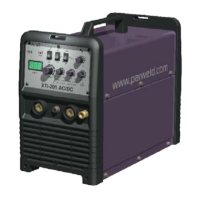
XTI-201 AC/DC
Input voltage 230V +/- 10%
Frequency 50/60Hz
Input current
20A max
15 e
Fuse rang 16A
Output OCV 66
Output load
voltage
10-26V
Output Current 10-200A DC
Control Plug wiring
The link between pins 1 and 2 should only be ed if
you are using a remote current control. Wire colours
shown refer to the Parweld ERGO TIG torch wiring.
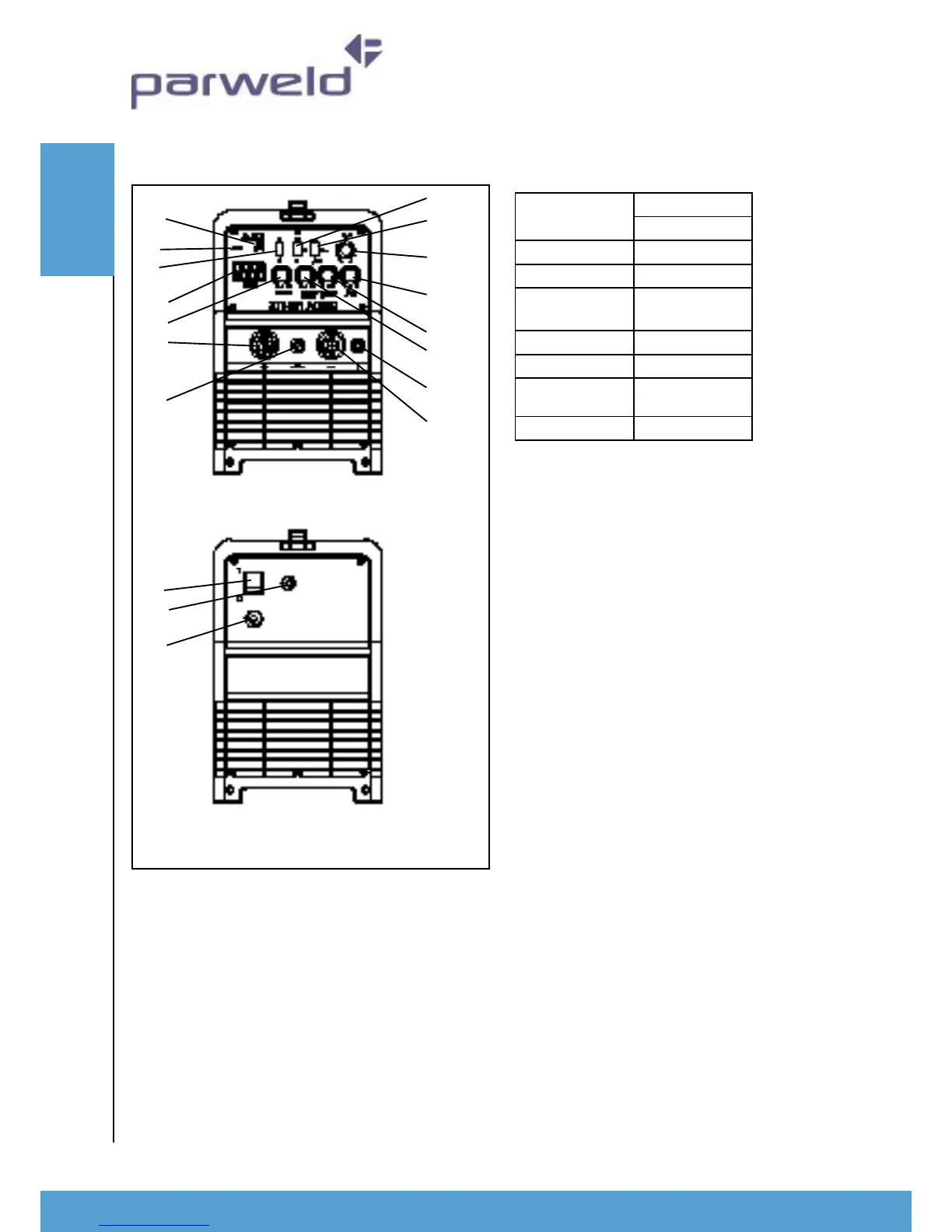
4.0 Descripon of Controls
1) ON OFF Switch for switching on or o the mains
supply to the machine. Note the output of the
machine is permanently on in MMA mode unless the
on/o switch is in the o posion.
2) Fault light This indicates a fault or over temperature
condion with the machine refer to the fault nding
secon for further informaon
3) Power light This indicates mains power is applied
to the machine and that the machine is currently
switched on when the light is illuminated
4) TIG mode, this toggles between LIFT-ARC mode and
HF start TIG.
5) Process selector. This switch has 3 posions the top
posion selects MMA welding and will latch on the
output when in this posion. The centre posion is
TIG welding with 2 touch trigger control (momentary).
The boom posion is TIG welding with 4 touch
control (latching)
6) Output power switch. This switch has 3 posions
the top posion selects DC output in TIG or MMA
mode. The centre posion selects AC output in MMA
or TIG mode and the boom posion allows a gas test
or purge to be performed when TIG welding.
7) Cleaning Control. This control allows the balance
of the AC wave to be altered so increasing or reducing
the cleaning eect when AC TIG welding.
8) Post Gas, this allows control of the post gas ow at
the end of a weld when in TIG mode. It is adjustable
from 3 to 10 seconds.
9) Downslope/Arc force. This control is dual funcon
in TIG mode it controls the downslope me for the
welding current aer the trigger is released from 0 to
10 seconds.
In MMA mode it allows adjustment of the welding Arc
2.0 Product Descripon
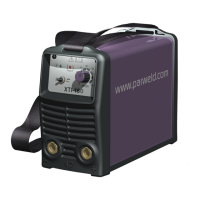
This welding machine is manufactured using advanced
inverter technology. The input voltage is reced to
DC and then inverted
to high frequency AC voltage. before being converted
back to DC for the output .This allows the use of a
much smaller transformer and so allowing weight
saving and improved power eciency.
1
16
17
6
7
8
9
10
11
14
3
5
2
4
11
12
13
15
CONTROLS



 To Next Page