EasyManua.ls Logo

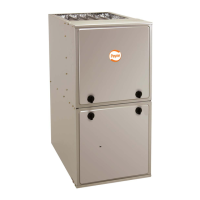
Payne Deluxe PG9MAB - User Manual

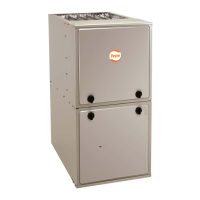
Payne Deluxe PG9MAB
18 pages
Print Icon
To Next Page IconTo Next Page
Loading...
1
PG9MAB
Service and Maintenance Instructions
For Sizes 040--120, Series B
D e l u x e 4 --- W a y
Multipoise Fixed Capacity
Condensing Gas Furnace
NOTE: Read the entire instruction manual before starting the
installation.
TABLE OF CONTENTS
PAGE
SAFETY CONSIDERATIONS 1.........................
GENERAL 2.........................................
ELECTROSTATIC DISCHARGE (ESD) P RECAUTIONS 2...
CARE AND MAINTENANCE 3.........................
Cleaning and/or Replacing Air Filter 3....................
Blower Motor and Wheel Maintenance 4..................
Cleaning Burners 6...................................
Cleaning Heat Exchangers 6............................
Primary Heat Exchangers 6............................
Secondary Heat Exchangers 7..........................
Flushing Collector Box and Drainage System 7.............
Servicing Hot Surface Igniter 9..........................
Electrical Controls and Wiring 10........................
Checking Heat Tape Operation (If Applicable) 10...........
Winterizing 12......................................
WIRING DIAGRAM 12................................
TROUBLESHOOTING 12..............................
Status Codes 12.....................................
Component Tests 13..................................
ELECTRICAL SHOCK, FIRE, OR EXPLOSION
HAZARD
Failure to follow safety warnings exactly could result in
dangerous operation, personal injury, death, or property
damage.
-- Before servicing, disconnect all electrical power to furnace.
--When servicing controls, label all wires prior to
disconnecting. Reconnect wires correctly.
-- Verify proper operation after servicing.
!
WARNING
SAFETY CONSIDERATIONS
Recognize safety information. This is the safety--alert symbol .
When you see this symbol on the furnace and in instructions or
manuals, be alert to the potential for personal injury.
Understand the signal words DANGER, WARNING, and
CAUTION. These words are used with the safety--alert symbol.
DANGER identifies the most serious hazards which will result in
severe personal injury or death. WARNING signifies a hazard
which could result in personal injury o r death. CAUTION is used
to identify unsafe practices which may result in minor personal
injury or product and property damage. NOTE is used to highlight
suggestions which will result in enhanced installation, reliability, or
operation.
ELECTRICAL SHOCK, FIRE, OR EXPLOSION
HAZARD
Failure to follow this warning could result in possible
damage to this equipment, personal injury, or death.
The ability to properly perform maintenance on this
equipment requires certain expertise, mechanical skills,
tools, and equipment. If you do not possess these, do not
attempt to perform any maintenance on this equipment
other than those procedures recommended in the User’s
Manual.
!
WARNING
FIRE OR EXPLOSION HAZARD
Failure to follow this warning could property damage,
personal injury, or death.
Never store anything on, near, or in contact with the furnace,
such as:
1. Spray or aerosol cans, rags, brooms, dust mops, vacuum
cleaners, or other cleaning tools.
2. Soap powders, bleaches, waxes or other cleaning
compounds, plastic or plastic containers, gasoline, kerosene,
cigarette lighter fluid, dry cleaning fluids, or other volatile
fluids.
3. Paint thinners and other painting compounds, paper bags,
or other paper products.
!
WARNING
Question and Answer IconNeed help?

Do you have a question about the Payne Deluxe PG9MAB and is the answer not in the manual?

Summary

SAFETY CONSIDERATIONS

Hazard Signal Words Defined

Defines signal words DANGER, WARNING, and CAUTION for hazard identification.

Electrical, Fire, Explosion Hazards

Warns of severe consequences from electrical shock, fire, or explosion during operation.

Flammable Storage Fire Hazard

Warns of fire or explosion hazards from storing flammables near the furnace.

GENERAL INFORMATION

Furnace Installation Orientations

Illustrates various furnace installation orientations (upflow, downflow, horizontal).

ELECTROSTATIC DISCHARGE (ESD) PRECAUTIONS

ESD Unit Damage Warning

Caution about potential damage to furnace components from electrostatic discharge.

ESD Servicing Safety Steps

Steps to prevent electrostatic discharge during furnace servicing.

CARE AND MAINTENANCE

Electrical Shock Hazard During Service

Warning to disconnect power before performing maintenance to prevent electrical shock.

Cut Hazard from Sharp Edges

Warning to use care and wear protective gear due to sharp metal edges.

Air Filter Cleaning and Replacement Guide

Instructions for cleaning or replacing the furnace air filter.

Blower Motor and Wheel Maintenance

Motor Lubrication Requirements

Notes that blower and inducer motors are pre-lubricated and require no additional lubrication.

Blower Assembly Removal Procedure

Steps involved in removing the blower assembly from the furnace for maintenance.

Blower Motor and Wheel Maintenance (Continued)

Blower Wheel Balance Hazard

Caution that dropping or bending the blower wheel can affect its balance.

Heating Speed Setting Hazard

Caution that improper heating speed selection can shorten heat exchanger life.

Blower Door Switch Electrical Hazard

Warning about electrical shock when manually closing the blower access panel door switch.

Cleaning Burners

Wiring Error Furnace Damage Warning

Caution that wiring errors can cause furnace component damage.

Igniter Wire Electrical Safety

Warning about electrical shock if igniter wires are not securely placed.

Gas Valve Orientation Hazard Warning

Warning about fire, explosion, and unit damage related to gas valve orientation.

Gas Leak Testing Fire Hazard

Warning about fire or explosion hazards during gas leak testing.

Cleaning Heat Exchangers

Primary Heat Exchanger Cleaning

Procedure for cleaning the primary heat exchangers.

Secondary Heat Exchanger Service Limitations

Note that secondary heat exchangers cannot be serviced or inspected.

Flushing Collector Box and Drainage System

Collector Box Cleaning Hazard Warning

Warning against using sharp objects on secondary heat exchangers during cleaning.

Flushing Collector Box and Drainage System (Continued)

Collector Box and Heat Exchanger Cleaning Caution

Warning against using sharp objects to clean collector box or secondary heat exchangers.

Servicing Hot Surface Igniter

Gas Leak Testing Safety

Warning about fire or explosion hazards during gas leak testing.

Igniter Burn Hazard Warning

Warning about burn hazard from hot igniter surfaces.

Igniter Fragility Damage Caution

Caution that the igniter is fragile and can be easily damaged.

Electrical Controls and Wiring

Igniter Wire Electrical Safety Warning

Warning about electrical shock if igniter wires are not securely placed.

Multiple Electrical Supply Hazard

Warning about electrical shock hazard from multiple electrical supplies.

Checking Heat Tape Operation

Heat Tape Inspection and Verification

Checks heat tape for physical damage and power supply.

Furnace Operation and Winterizing Hazards

Operation Without Filter or Panel Hazard

Warning about furnace component failure or property damage from improper operation.

Freezing Condensate Damage Hazard

Warning that freezing condensate can damage the furnace.

Antifreeze Type Caution

Warning against using ethylene glycol as antifreeze.

WIRING DIAGRAMS

TROUBLESHOOTING OVERVIEW

Status Codes for Furnace Diagnosis

Explains how to refer to status codes for troubleshooting furnace problems.

Wire Contact Damage Hazard Warning

Warning about unit damage from limit switch or rollout switch wires contacting metal.

Component Test Procedure

Component Test Electrical Safety

Warning about electrical shock and operational hazards during component testing.

Component Test Sequence Steps

Outlines the sequence of component tests performed by the furnace control.

Furnace Service Status Codes

LED Status Code Interpretations

Lists LED codes and their corresponding status meanings for troubleshooting.

Component Test Initiation

Initiating the Furnace Component Test

Provides steps to initiate the furnace control component test sequence.

TROUBLESHOOTING GUIDE

Check LED Status Light Presence

First step in troubleshooting: checking if the LED status light is on.

Verify 115 V Main Power Input

Checks for the presence of 115V power at the main power input terminals.

Verify Blower Door Switch Status

Checks if the blower access door switch is properly closed.

Identify Rapid LED Flashing Pattern

Identifies a rapid flashing LED status light indicating potential polarity reversal.

Verify 24 V Control Power Supply

Checks for the presence of 24V power at the control board's secondary terminals.

Verify 115 V Power to Door Switch

Verifies if 115V power is reaching the door switch.

Identify Slow LED Blinking Patterns

Checks for slow blinking LED status lights indicating specific error codes.

Determine Two-Digit Status Code

Instructs on how to determine the two-digit status code from LED flashes.

Check Thermostat Signal Response

Checks if the control board is receiving and responding to thermostat signals.

Check for Previous Status Codes

Inquires about previous status codes to aid in diagnosing intermittent issues.

Test Problem by Bypassing Thermostat

Tests if the issue persists when bypassing the thermostat signals with a jumper wire.

Furnace Service Status Codes (Detailed)

Status Code 11: No Previous Code

Explains that no previous status code is stored or has been erased.

Status Code 12: Blower On After Power Up

Describes blower operation immediately after power-up or during a heat call.

Status Code 13: Limit Circuit Lockout

Explains limit circuit lockout due to open switches and auto-reset conditions.

Status Code 14: Ignition Lockout

Explains lockout due to repeated ignition failures and auto-reset.

Status Code 21: Gas Heating Lockout

Explains gas heating lockout and checks for gas valve issues.

Status Code 22: Abnormal Flame-Proving Signal

Describes abnormal flame proving signals and potential causes.

Status Code 23: Pressure Switch Did Not Open

Explains issues when the pressure switch does not open correctly.

Status Code 24: Secondary Voltage Fuse Open

Explains issues when the secondary voltage fuse is open.

Status Code 31: Pressure Switch Did Not Close;Reopen

Explains issues when the pressure switch fails to close or reopen.

Status Code 33: Limit Circuit Fault

Explains limit circuit faults and potential causes like restricted vents or filters.

Status Code 34: Ignition Proving Failure

Explains ignition proving failures and troubleshooting steps.

Status Code 45: Control Circuitry Lockout

Explains control circuitry lockout and auto-reset conditions.

SERVICE TRAINING OPTIONS

Packaged Service Training Programs

Describes available packaged service training programs for increasing product knowledge.

Classroom Service Training Benefits

Describes classroom service training for hands-on experience and confidence building.
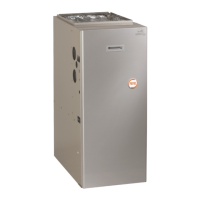
Payne Deluxe PG9MAB Specifications

General IconGeneral
BrandPayne
ModelDeluxe PG9MAB
CategoryFurnace
LanguageEnglish

Related product manuals