PelPro Pellet Stove • 7104-171A • 4/20/18
pelprostoves.com 23
Maintaining Your Stove
Having Trouble?
Visit the Troubleshooting
section of this manual.
Maintaining Your
Stove
Electrical Components
• Identify and remove any debris
• Verify all connections are secure
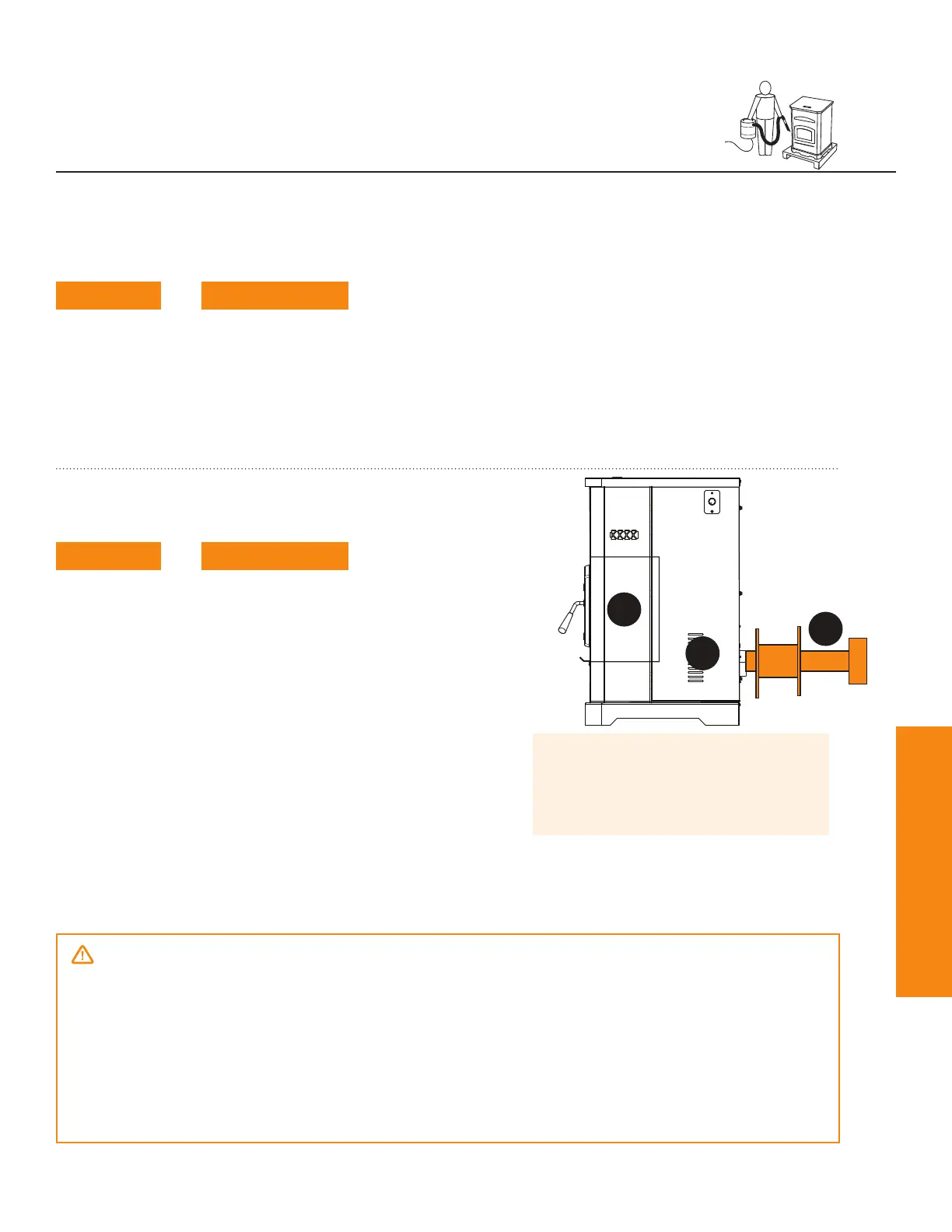
Exhaust Blower
• Remove left side panel to access and remove
exhaust blower
• Vacuum any debris from the fan blades and blower
housing
Zone 3 - Venting
Termination Cap
• Remove termination cap
• Brush out to remove dust and hard buildup
Vent Components
• Soot, creosote, and y ash will collect in the
exhaust venting system and restrict the ow
of the ue gases. This build up will occur more
quickly in horizontal sections and elbows.
• Use the appropriate sized chimney brush to
remove ash and buildup from the venting
Outside Air Kit
• Ensure there are no obstructions in the outside
air kit cap
ANNUALLY AS NEEDEDOR
ANNUALLY AS NEEDEDOR
Caution!
When wood pellets are burned at a low temperature, they produces organic vapors which combine with moisture
to form creosote vapors.
Creosote vapors condense in the relatively cool chimney ue of a newly-started or a low-temperature re. As a
result, creosote residue accumulates on the ue lining. When more heat is called for, this residue can be ignited,
which creates an extremely hot re in the chimney ue; this may damage the chimney or even destroy your home.
Your chimney should be inspected once every few months during the heating season to determine if a creosote
or soot buildup has occurred. If creosote or soot has accumulated, it should be removed to reduce the risk of
a chimney re.
1
Zone
1
Zone
3
Zone
3
Zone
2
Zone
2
Zone


 To Next Page