14DBP-001 20
Suspensions & Brakes
This section contains information that must be followed to ensure the correct functioning of the
axles and wheel brakes.
TIGHTENING WHEEL NUTS
Wheel lugs and nuts should be inspected: Before Use, After Refitting, & Every 6 Months
On wheels that have been replaced or refitted, the nuts can loosen after short periods of
operation. It is therefore necessary to check the tightness of the nuts after the first loaded run,
after refitting and again after approximately 1000 km (620 Miles) Every 6 months or 25,000km
(15,500miles).
To tighten the nuts, use a suitable wheel brace, and tighten them progressively and diagonally.
Check the torque using a Torque Wrench, DO NOT OVERTIGHTEN.
Torque setting should be 575Nm (424lbs/ft)
CHECKING THE HUBCAPS - Every 6 Months
Missing or damaged hubcaps must be replaced immediately to avoid dirt penetrating into the hub
which might result in damage to the bearings.
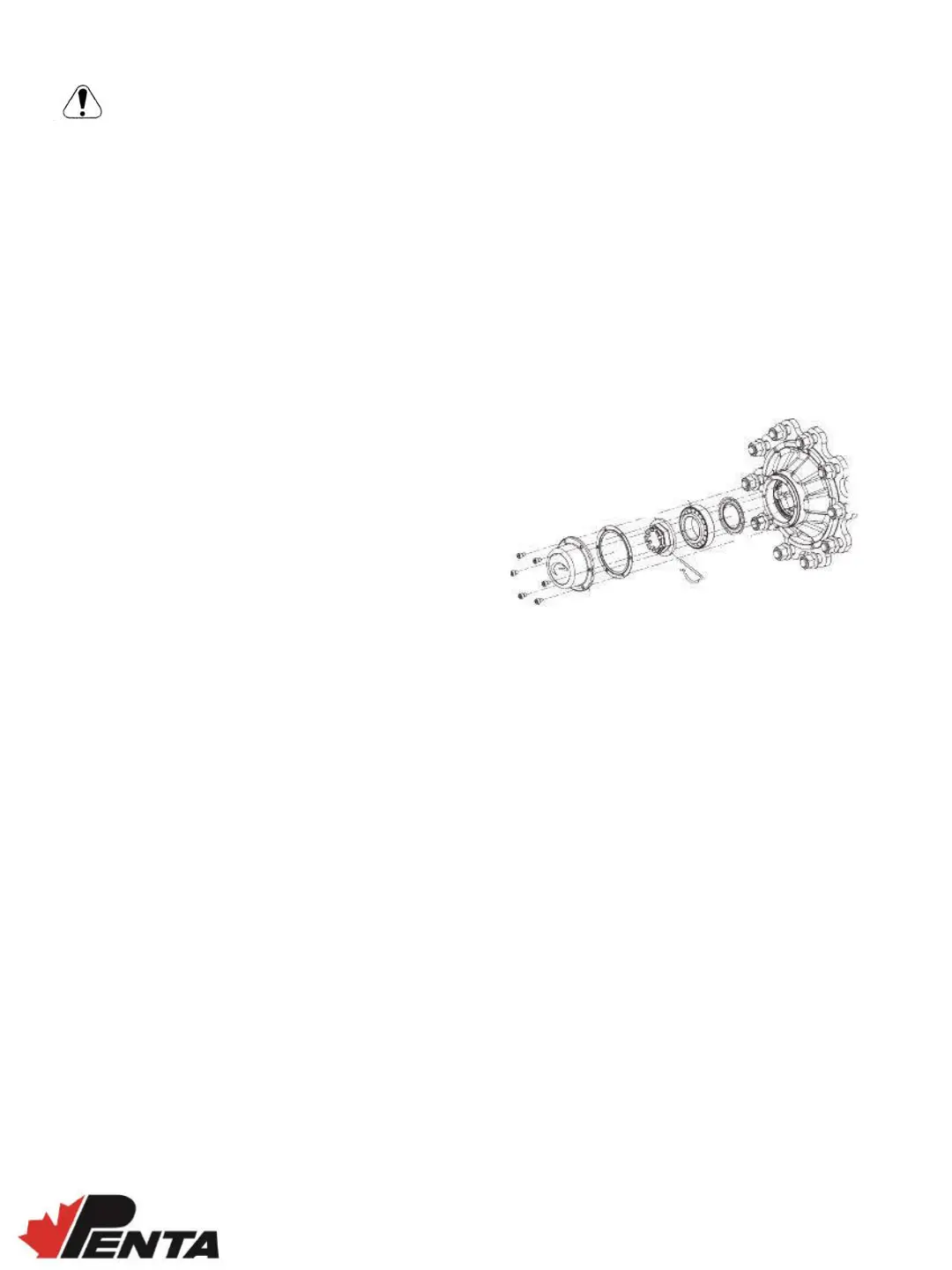
Check that the hub caps (1) are in place and in perfect condition.
For press fit hubcaps, check visually that they are fully home.
For hubcaps attached using screws,
fit a new gasket if necessary when the
hubcap is removed and retighten the screws regularly
CHECKING THE WHEEL BEARING PLAY
Every 6 Months
Wheel bearings are subject to wear: their lifetime depends on the operating conditions, the load,
the speed, the adjustment and lubrication, etc.
To check the wheel bearings:
- Use a suitable Jack and lift the wheel off the ground.
- Turn the wheel in both directions slowly to check for any rough points or friction.
- Turn the wheel at high speed to check for unusual noises, such as grating or knocking.
If the bearing is damaged or worn, the bearing and seals should all be replaced
Adjusting the wheel bearings
Lift the axle until the wheel is no longer resting on the ground.
Large wheels should be removed so that the play is easier to feel and to make it easier to adjust
the bearings. Remove the hubcap.
- Remove the cotter pin or hair-pin clip from the spindle.
- Tighten the castle nut (right-hand thread) to take up the internal play (the conical roller bearings
should then be firmly held between the hub seatings, the pressure ring, spindle and castle nut).
The rotation of the hub or wheel feels to be slightly stiff.
- Slacken the castle nut until there is no longer any friction between the castle nut and the outer
bearing and the hole for the pin is aligned with a notch in the castle nut.
- Tap the hub gently using a mallet to shake down the assembly.
- Check that the hub rotates more freely.
- Always err on the side of too free rather than too tight.
- When the hub has been adjusted, fit a new split cotter pin or re-fit the hair-pin clip.
- Refit the hubcap.
- When the wheel has been refitted, turn it slightly. It should come to rest with a slow rocking
movement due to the imbalance.



 To Next Page