
 Need help?
Do you have a question about the Pentair HYPRO 1532C-6SP and is the answer not in the manual?
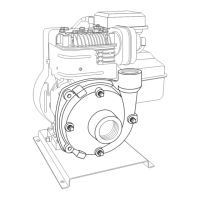
The Pentair Hypro Self-Priming Cast Iron Centrifugal Pumps are robust and efficient devices designed for high-capacity liquid transfer. These pumps are particularly well-suited for agricultural applications, handling tasks such as transferring water, liquid fertilizers, and other chemicals compatible with the pump's materials. Their self-priming capability makes them ideal for de-watering applications, simplifying the process of removing unwanted liquids from various sites. The pumps are designed to make quick work of common farm jobs, including filling nurse tanks and watering seedbeds, ensuring efficient operation and time-saving benefits for users.
These centrifugal pumps operate by creating a vacuum that draws liquid into the pump chamber, where an impeller then centrifugally forces the liquid out through the discharge port. The self-priming feature means that once the pump casing is filled with liquid, it can automatically re-prime itself after initial setup, even if there are air pockets in the suction line. This eliminates the need for manual priming each time the pump is started, enhancing convenience and operational efficiency. The pumps are typically powered by gas engines or hydraulic motors, providing versatile power options to suit different operational environments and power availability. The mechanical seal, a critical component, relies on the pumped liquid for lubrication, underscoring the importance of never running the pump dry.
Before operating the pump, several preparatory steps are crucial to ensure safe and effective performance. The unit should be placed as close to the water source as possible to minimize suction lift, which optimizes pumping performance and aids in priming. For permanent installations, the pump should be mounted on a stable, level foundation capable of supporting its weight and providing stability during operation. A basket strainer is highly recommended on the suction side, especially when transferring solutions that may contain debris or solids. This prevents foreign objects from lodging in the pump or damaging the impeller, which is vital given the pump's high flow capacity. The suction line should rise continuously from the water source to the pump to avoid air traps that can hinder priming. All connections must be tight and free of air leaks to maintain suction vacuum and prevent collapse of the hose. The discharge line should be secured before starting the pump to prevent whipping, which could cause personal injury or property damage.
For gas engine models, it is imperative to fill the engine with oil prior to starting, as units are not shipped with oil. The fuel tank should be filled with fresh, clean automotive fuel, and never while the engine is running. Engine oil levels should be checked on a stable, level surface, and the appropriate oil type should be used based on ambient air temperatures. The priming chamber must be completely filled with liquid before operation to protect the mechanical seal. To start the pump, the engine switch is turned to "ON," the fuel cock to "ON," and the throttle lever is set to a slightly open position. Choke settings vary depending on engine temperature: fully closed for cold engines, half-closed for warm engines, and fully open for hot engines. The engine is then started by pulling the recoil starter quickly and forcefully. After starting, the engine should idle for 3 to 5 minutes to warm up, and then the throttle lever can be opened to the upper zone for pumping. Once the pump primes, a load on the engine will be noticeable, and RPMs can be adjusted for the specific pumping application.
Stopping the pump for a short time involves throttling the engine down and turning the switch to "OFF." For storage, the fuel cock should be turned to "OFF," allowing the engine to idle until the fuel in the carburetor is depleted and the engine stops. This prevents gumming and corrosion within the pump's internal components.
Regular maintenance is essential for the longevity and optimal performance of the Hypro pumps. Periodically inspecting the pump and system components, along with routine maintenance, is critical. To prevent freezing damage, the pump should be drained of liquid and then flushed with a permanent-type automobile antifreeze containing a rust inhibitor. A 50% mixture with water is recommended for this purpose.
Before any servicing or disassembly, all liquids must be drained and the system flushed. The spark plug wire should be removed from the spark plug before working on the pump or engine to prevent accidental starting. Hoses should be checked for wear or damage before each use, and all connections must be tight and secure. The wear plate should be inspected for excessive wear, surface grooves, or impeller contact and replaced if necessary. Mechanical seals, which are crucial for preventing leaks, should be carefully handled during installation to avoid scratching or damaging the carbon face. If the drive sleeve surface is worn, grooved, or pitted, it should be replaced to prevent underperformance or imbalance.
Engine maintenance includes checking the air filter monthly for dust and dirt accumulation, and cleaning it every 6 months. The foam element should be cleaned with detergent and warm water, squeezed dry, and then soaked with engine oil before reinstallation. Engine oil should be changed after the first 20 hours of operation, and then every 100 hours or 6 months thereafter. Used oil must be disposed of responsibly at designated collection points. The spark plug should be checked and cleaned every 6 months or 100 hours, and replaced if damaged or excessively worn.
For extended storage (more than a month or two), the gasoline should be drained, the oil changed, and a small amount of oil or engine-storing chemical squirted into the spark plug hole. The engine should then be rotated slowly until resistance is felt, indicating that both valves are closed. Finally, the spark plug should be installed, and the engine covered to protect it from the elements. This comprehensive maintenance regimen ensures the pump remains in excellent working condition and extends its operational life.
 General
| Model | HYPRO 1532C-6SP |
|---|---|
| Category | Water Pump |
| Type | Centrifugal Pump |
| Max Pressure | 150 PSI |
| Material | Stainless Steel |
| Maximum Pump Speed | 3450 RPM |
| Shaft | Stainless Steel |
| Power Source | Electric |
| Voltage | 230/460 V |
| Phase | 3 Phase |
| Inlet Port | 2 inch |
| Seal Material | Ceramic/Carbon |
| Inlet Size | 2 in |
| Outlet Port | 1.5 inches |
| Outlet Size | 1.5 inches |




 To Next Page