EasyManua.ls Logo

Performance Tool W50054 - User Manual

Performance Tool W50054
8 pages
Print Icon
To Next Page IconTo Next Page
Loading...
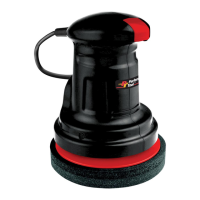
10" Random Orbital Polisher/Buffer
OWNER'S MANUAL
Stock Number: W50054
READ ALL INSTRUCTIONS BEFORE USING THIS TOOL!
It is the owner and/or operator’s respons
ibility to study all WARNINGS, operating, and maintenance instructions contained on the product label and
instruction manual prior to operation of this random orbital buffer. The owner/operator shall retain product instructions for future reference.
The owner and/or operator are responsible for maintenance, maintaining all decals or warning labels and while in use, maintaining the unit in good
working order. If the owner and/or operator are not fluent in English, the product warnings and instructions shall be read and discussed with the opera-
tor’s native language by the purchaser/owner or his designee. Make sure that the operator comprehends its contents. Safety information shall be
emphasized and understood prior to usage. The random orbital buffer shall be inspected per the operating instructions.
Users of this random orbital buffer must fully understand these instructions. Each person operating this random orbital buffer must also be of sound
mind and body and must not be under the influence of any substance that might impair their vision, dexterity, or judgment.
Protect yourself and others by observing all safety information.
Failure to comply with instructions could result in personal injury and/or property damage!
NOTICE: READ BEFORE USING
Most automotive finishes require a softer, plusher buffer bonnet than the terry cloth bonnet provided with this product. Use the clean terry cloth bonnet
provided with this product to apply wax and related chemicals only, do not use it again to remove wax or buff a waxed surface even though it has been
washed. Otherwise, paint damage may occur. Use the clean synthetic wool bonnet to buff waxed finishes. Wilmar Corporation, her successors,
assigns and insurers will not be responsible for damage as a result of failure to heed this notice.
FOR YOUR SAFETY,
please read these instructions carefully and retain them for future use.
®
C
US
LISTED
E242023
14 PU


Questions and Answers

Summary

Introduction

Overview

Provides an overview of the polisher's design and intended use for automotive finishes.

Safety Alerts

Signal Words

Defines signal words like DANGER, WARNING, CAUTION, and NOTICE used in the manual.

Unpacking and Inspection

Initial Inspection

Instructions for unpacking the tool and checking for any transit damage.

Safety Warnings

General Safety

Details hazards associated with chemicals and general work area safety.

Electrical Safety

Covers safe practices for using electrical tools, including plug and cord safety.

Personal Safety

Guidelines for operator safety, including alertness, dress code, and avoiding accidental starting.

Tool Use and Care

Usage Guidelines

Provides guidance on securing the workpiece, using the tool correctly, and general maintenance.

Service Recommendations

Specifies that tool service must be performed by qualified personnel using identical parts.

Specific Safety Rules

Lists critical safety precautions specific to the operation of this polisher/buffer.

Extension Cord Selection

Cord Selection Guide

Provides a table for selecting appropriate extension cords based on amperage and length.

Polisher Features

Component Identification

Lists and illustrates the main components of the polisher.

Operation

Operating the Tool

Instructions on how to switch the tool on and off using the ON/OFF switch.

Applications

Intended Uses

Details the intended uses of the polisher for various high-gloss surfaces and applications.

Surface Preparation

Pre-Operation Prep

Guidance on cleaning and preparing surfaces before polishing or buffing.

Bonnet Care

Bonnet Information

Describes the two included bonnets and how to care for them.

Bonnet Maintenance

Provides instructions for washing and drying the terrycloth and wool bonnets.

Attaching Application Bonnet

Step-by-step guide for fitting the terrycloth bonnet onto the foam pad.

Applying Polish to Bonnet

Instructions on how to apply polish to the terrycloth bonnet for application.

Applying Polish to Surface

Details the correct technique for polishing the surface with the tool.

Attaching Buffing Bonnet

Step-by-step guide for fitting the synthetic wool bonnet onto the foam pad.

Using Buffing Bonnet

Details the correct technique for buffing the surface with the wool bonnet.

Care and Maintenance

General Care

General advice on cleaning, storing, and maintaining the polisher for longevity.

Service

Reiterates that qualified personnel should perform service and use identical parts.

Troubleshooting

Troubleshooting Chart

Provides a chart to diagnose and resolve common problems encountered with the polisher.

Warranty Information

Limited Warranty Terms

Outlines the terms, conditions, exclusions, and limitations of the product's one-year limited warranty.

Overview

The Performance Tool 10" Random Orbital Polisher/Buffer, Stock Number W50054, is an electric power tool designed for polishing, waxing, and buffing various high-gloss surfaces. This owner's manual provides comprehensive instructions for its safe operation, maintenance, and troubleshooting.

Function Description:

The random orbital buffer is engineered to mimic the motion of circular hand polishing, delivering 3,000 operations per minute (OPM) through its durable 0.92 Amp motor. This mechanism makes it suitable for automotive finish maintenance, as well as applications on boats, aircraft, hardwood floors, furniture, and other high-gloss surfaces. The tool is supplied with two types of bonnets: a terrycloth application bonnet for applying wax and polish, and a synthetic wool polishing bonnet for fine buffing and finishing. Dual hand grips are incorporated into the design to provide enhanced control during use.

Important Technical Specifications:

  • Amps: 0.92
  • Volts: 120VAC ~ 60HZ
  • Free Speed: 3,000 RPM
  • Pad Size: 10 inches (implied by "10" Random Orbital Polisher/Buffer")
  • Motor Type: Durable 0.92 Amp motor
  • Operating Mechanism: Random orbital, delivering 3,000 operations per minute (OPM)

Usage Features:

The buffer is designed for ease of use with several key features:

  • Assembly: The Performance Tool orbital buffer is packaged and shipped fully assembled, requiring no initial assembly by the user.
  • Controls: It features an ON/OFF switch located on the right handle for convenient operation. To turn on, the switch is pushed to the "I" position; to turn off, it's pushed to the "O" position.
  • Handling: The tool is designed to be held with both hands, utilizing the dual hand grips for stability and control during operation.
  • Application Bonnets:
    • Terrycloth Application Bonnet: Used for applying wax and polish. It is installed by turning the buffer upside down, resting it on its motor housing, and fitting the bonnet over the foam pad, ensuring the elastic edge is drawn securely over the pad. Polish should be applied evenly to the bonnet, not directly to the surface being polished. For paste polish, approximately a heaping teaspoon is recommended; for liquid polish, a small half-dollar size circle in the center with two concentric rings outside is suggested.
    • Synthetic Wool Polishing Bonnet: Used for fine buffing and finishing. Installation is similar to the terrycloth bonnet.
  • Polishing Technique:
    • Always start and stop the orbital buffer on or against the surface being polished.
    • Begin with larger flat surfaces (e.g., hood, trunk, roof) using broad, sweeping motions in a criss-cross pattern.
    • For curved surfaces (e.g., car doors, quarter panels, fenders), use small circular motions.
    • Crucially, do not press down on the surface with the orbital buffer; allow the machine's random orbital action to do the work.
    • After applying polish, turn the buffer off while holding it against the surface and wait for the pad to stop rotating before lifting the tool.
    • Unplug the buffer when not in use or when installing/removing bonnets.
    • For hard-to-reach areas (e.g., bumpers, side mirrors), polish can be applied by hand.
  • Surface Preparation: Before use, the surface must be clean and dry. A mild soap and water solution is recommended for cleaning, and stubborn dirt should be removed with appropriate cleaning products. Abrasive cleaners should be avoided as they can damage the surface. Cleaning products should be applied to a soft cloth, not directly to the surface.
  • Extension Cord Selection: If an extension cord is necessary, it must be rated for outdoor use (marked "W-A" or "W") and have a conductor size large enough to prevent voltage drop, which could lead to power loss and motor damage. A detailed chart is provided in the manual to guide users in selecting the correct gauge wire and cord length based on amperage and distance.

Maintenance Features:

Proper care and maintenance are essential for prolonging the life of the orbital buffer and ensuring safe operation:

  • Cleaning: The orbital buffer should be cleaned with mild soap and a damp cloth. It should never be immersed in liquid. Contact with solvents, brake fluids, gasoline, or other petroleum-based products should be avoided as they can damage plastic components.
  • Pad Care: The foam pad should be allowed to dry completely after each use. Storing the orbital buffer with the pad facing upwards helps retain its shape and extends its serviceable life.
  • Bonnets Care:
    • Terrycloth and synthetic wool bonnets should be washed by hand in cold water with a mild detergent.
    • Excess moisture should be removed, and bonnets allowed to dry.
    • Bonnets should be removed from the orbital buffer when not in use.
    • Washing bonnets after each use is recommended to prolong their life.
    • Avoid using too much polish on the bonnet, as this can saturate it and reduce its lifespan.
  • Tool Inspection:
    • The buffer's air vents should be kept unclogged and clean to ensure adequate cooling.
    • Dust and dirt should be removed regularly by wiping with a clean, dry cloth.
    • All screws should be checked at regular intervals to ensure they remain tight.
  • Service: Tool service must only be performed by qualified repair personnel using identical replacement parts to prevent electric shock or injury. Unauthorized parts or failure to follow maintenance instructions can void the warranty and create safety risks.
  • Troubleshooting Guide: A comprehensive troubleshooting chart is provided to help diagnose common issues such as the buffer not starting, poor performance, or vibration/abnormal noise, along with possible causes and solutions. For example, if the buffer doesn't start, solutions include checking the power cord connection, fuse/circuit breaker, or replacing a damaged cord, switch, or motor through an authorized service center. Poor performance might be due to wrong gauge extension cord, overheating, or too much polish/worn bonnet, with solutions ranging from checking cord specifications to cleaning/replacing bonnets. Vibration or abnormal noise can be addressed by ensuring the bonnet is secured correctly or tightening loose screws.

Safety Warnings:

The manual emphasizes several critical safety warnings:

  • General Safety: Users must read and understand the entire instruction manual before operating the tool. Failure to comply can result in serious personal injury or property damage.
  • Work Area Safety: Keep the work area clean, well-lit, and free from flammable liquids, gases, or dust. Keep bystanders, children, and visitors away.
  • Electrical Safety: Double-insulated tools with polarized plugs should be used correctly. Avoid body contact with grounded surfaces. Do not expose power tools to rain or wet conditions. Do not abuse the power cord. Use outdoor-rated extension cords when working outside.
  • Personal Safety: Stay alert, use common sense, and do not operate the tool while tired or under the influence of drugs, alcohol, or medication. Dress properly, avoiding loose clothing or jewelry. Ensure the switch is OFF before plugging in. Remove adjusting keys or wrenches before turning the tool ON. Use safety equipment, including eye protection, dust masks, nonskid safety shoes, and hearing protection.
  • Chemical Exposure: The product may expose users to chemicals known to cause cancer, birth defects, or reproductive harm (e.g., dust from sanding, lead). Users are advised to wear approved safety equipment, avoid inhaling vapors and dust, and wash hands after use.
  • Tool Use Specific: Accessories must be rated for the tool's recommended speed. Hold the tool by insulated gripping surfaces. Ensure the tool is disconnected from the power source and the switch is OFF before replacing or adjusting bonnets. Always use both hands to operate the tool. Start and stop the orbital buffer on or against the surface being polished.
  • Intended Use: The tool should not be modified or used for any application other than its designed purpose. Wilmar Corporation strongly recommends contacting them if there are questions regarding its application.

Performance Tool W50054 Specifications

General IconGeneral
BrandPerformance Tool
ModelW50054
CategorySander
LanguageEnglish

Related product manuals