GAUGES PART 4: CONTROLS AND DISPLAYS
– 46 – Y53-6007 (R10/06)
Wait until the coolant temperature is below 122° F (50° C).
Protect your face, hands, and arms by covering the cap
with a large, thick rag to protect you against escaping fluid
and steam. Before you completely remove the cap, care
-
fully and slowly turn the cap part way to allow excess
pressure to escape. Then push down and turn for final
removal.
The cooling system may overheat if the coolant level is
below normal or if there is a sudden loss of coolant (such
as a worn hose splitting). It may also temporarily overheat
during severe operating conditions such as climbing a
long hill on a hot day or stopping after high-speed driving.
If the “Engine Coolant Temperature” warning light comes
on, or you have any other reason to suspect the engine
may be overheating:
• Stop the vehicle, but DON’T TURN OFF THE
ENGINE unless a low water warning device indicates
a loss of coolant.
• With the transmission in neutral, check to be certain
the oil pressure gauge reads normal. Increase the
engine speed to about 1100 - 1200 RPM, maximum.
Return the idle speed to normal after 2 or 3 minutes. If
the warning light doesn’t go off or the temperature
gauge doesn’t begin to drop, then turn the engine off.
If the overheating came from severe operating conditions,
the temperature should have cooled by this time. If it has
not, stop the engine and let it cool before checking to see
if the coolant is low.
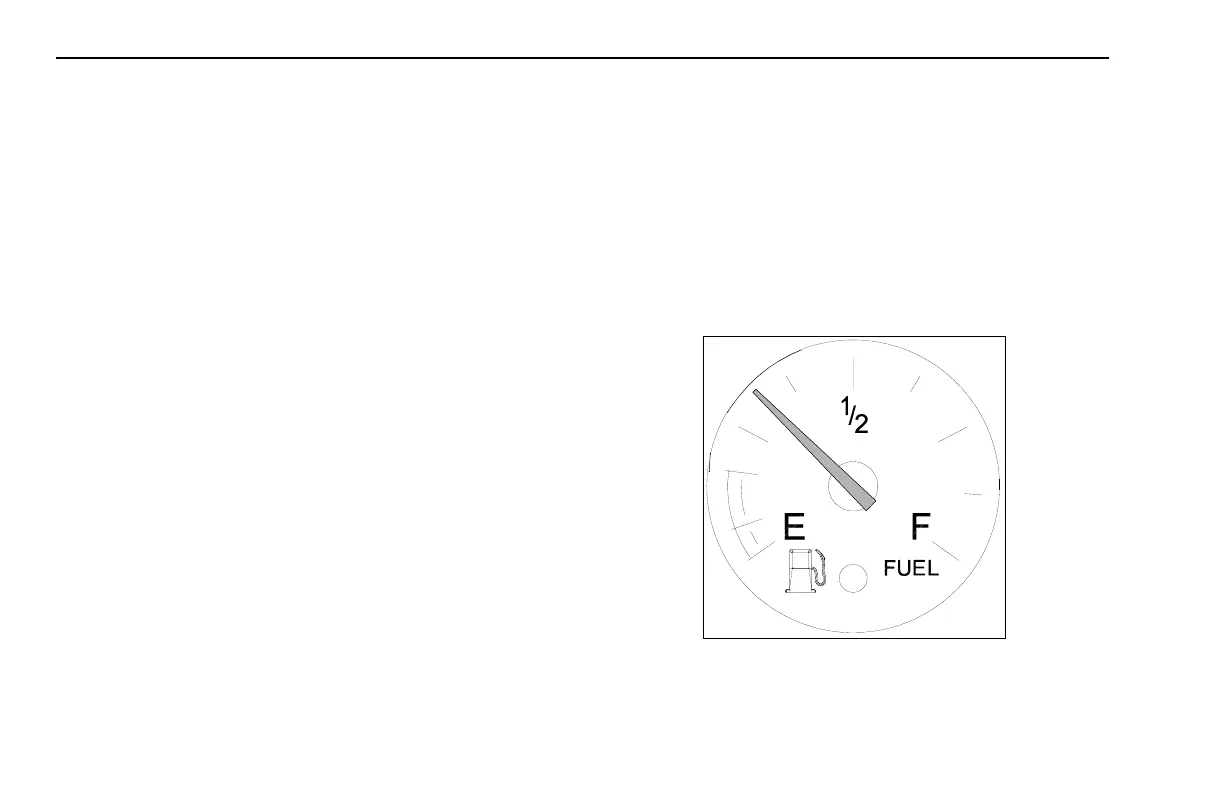
Fuel Gauge
11435


 To Next Page