CAUTIONS
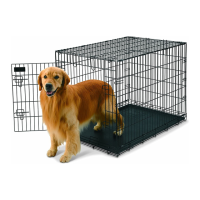
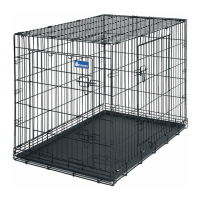
Wire crates are engineered to hold pets safely and securely under normal use for many years of service. Used properly, wire
crates are an invaluable tool for training and safe travel. Please observe the following cautions and guidelines.
READ AND FOLLOW ALL INSTRUCTIONS ACCOMPANYING THIS WIRE CRATE BEFORE USING IT.
• This wire crate is not designed to restrain aggressive breeds of dogs.
• Never use a wire crate as a method of punishment.
• Improper use of this wire crate may result in serious injury or even the death of your pet.
• To avoid choking and other serious injuries, remove all collars, harnesses and other items, such as pet clothing, before placing
the pet in the wire crate.
• Pets should not be left unattended in the crate until and unless you are certain that the pet will respond properly to being left
alone in the wire crate.
• Among other things, a pet not specically trained to be contained in the wire crate may attempt to escape, dig and/or chew out
of the crate, causing serious harm or death to the pet.
• Make sure all corner locks, side wall latches, and top panel latches are engaged and secured before leaving pet inside crate.
• Consult your veterinarian or trainer to determine an appropriate training method and length of time your pet can safely be left
in the crate.
• Pet should have access to food and water at all times while in crate.
• Do not place any other items, such as toys, in the crate with your pet unless your veterinarian or trainer advises you that it is safe
to do so.
• Do not place more than one pet in the crate at a time.
• Petmate
®
is not responsible for any loss caused by improper use of this product or for use of this wire crate by a pet that has
not been properly trained.
• Do not use wire crate without its plastic pan.
• Do not use wire crate with a broken plastic pan. For information on ordering a replacement plastic pan, go to petmate.com
or call 1-877-PETMATE.
• Do not let pet inside wire crate without plastic pan-locking device engaged.
• Do not use crate in place of outdoor runs or long term holding cages. Young animals should be allowed out of their crate
well before the limits of their bladder and bowel control will tolerate. Many adult animals will tolerate crateing during half a
normal workday.
• Do not allow children to play in, on or around the wire crate. Keep crate door closed around children to avoid the hazard of
protruding hinge and latch pins.
• Periodically inspect the plastic pan for cracks, especially after exposing the crate to severe shocks, changes in temperature or
other harsh or challenging conditions.
• If any structural component is discovered to be broken or is missing, stop use of crate immediately.
• Do not attempt to make any repairs or modications to this wire crate. Doing so will void warranty.
• Biting, chewing, licking, ramming or pawing at either the plastic pan or metal wire parts may result in injury to the pet or damage
to the crate. These are excluded under the product’s warranty.
• Exercise caution when closing and opening the crate door to avoid catching pet’s paws, tail or snout in mechanism.
• Avoid heat injury or death: never leave pets in a closed car on a hot day or in direct sun. Car windows have a greenhouse eect
and temperatures can rise to well over 100 degrees inside a closed car within minutes! Similarly, never leave a pet unattended
in its wire crate in direct sunlight.
• Wire crate should be cleaned routinely for the hygiene of the pet.
Contact Petmate
®
toll free within the U.S. at 877-PETMATE with questions about proper crate training, product use, warranty or
replacement parts.


 To Next Page