Meridian 5
CC170C
W8 LCD
C
C
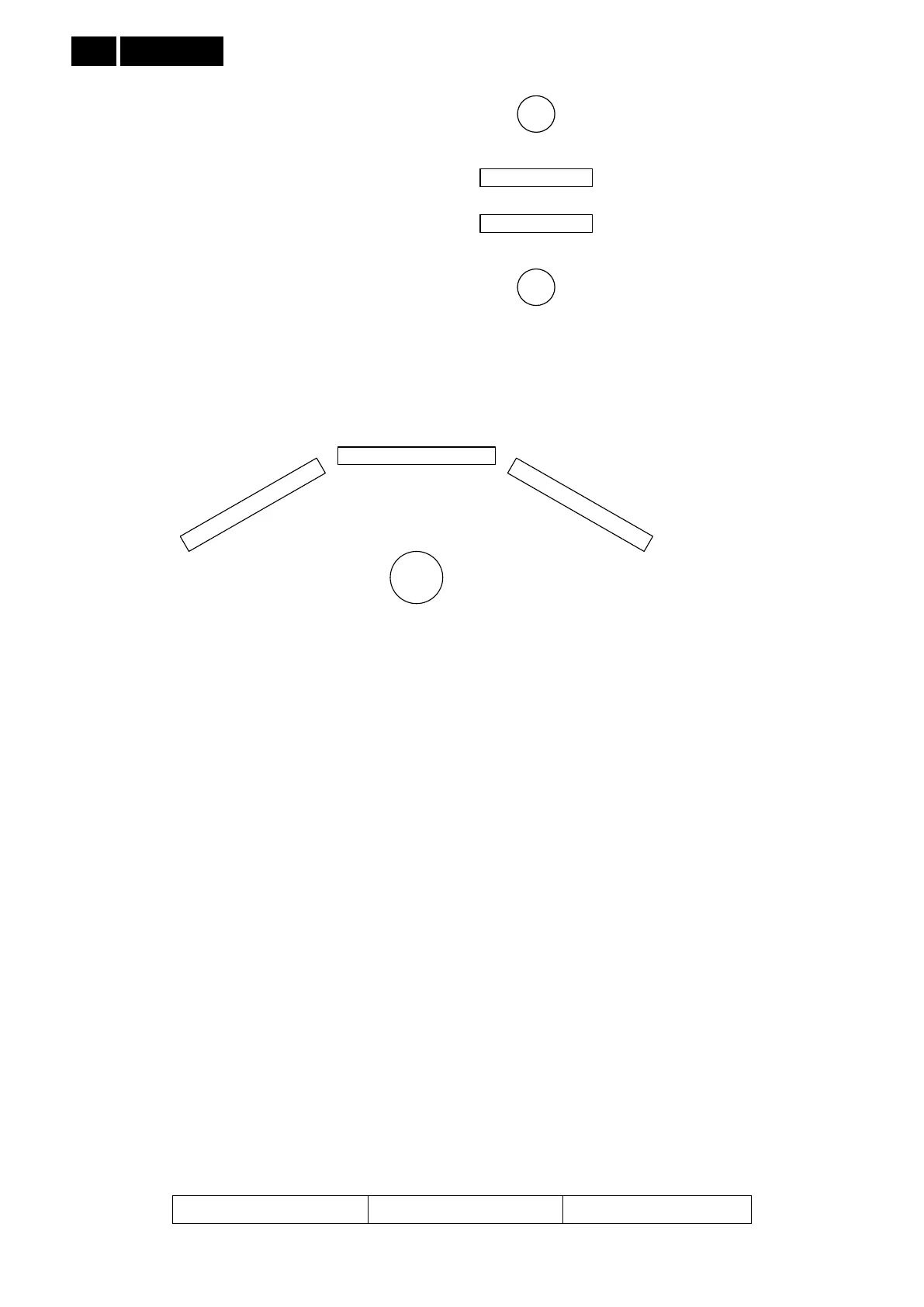
Monitor 1
Monitor 2
Top view
User 1
User 2
Fig. 2: 2 monitors standing back to back.
The monitors may influence each other. So Monitor 1 may produce unexpected brightness-switches in monitor 2
(and vice versa). Furthermore, user 1 could perhaps (via monitor 1) influence the powersensor readout on monitor 2.
Monitor 1
Monitor
2
Monitor
3
Fig. 3: set up of multiple monitors under an angle
3.19 Smart Power (option , refer to Quick specification table)
To reduce the power by adjusting backlight , contrast and color.
Algorithm is provided by Supplier.
4. Visual Characteristics
4.1 Test Conditions
Unless otherwise specified, this specification is defined under the following conditions.
(1) Input signal : As defined in 3.3, follow panel resolution, signal sources must have 75 ohm output
impedance.
(2) Luminance setting : controls to be set to 250 nits /200nits with full screen 100 % duty cycle white signal
(3) Warm up: more than 30 minutes after power on with signal supplied.
(4) Ambient light: 400 -- 600 lux.
(5) Ambient temperature: 20 ± 5 C
4.2 Brightness
Follow panel specification
4.3 Color Temperature Adjustment
There are three factory preset white color 9300K, 6500K, sRGB.
Apply full white pattern, with brightness in 100 % position and the contrast control at 50 % position.
The 1931 CIE Chromaticity (color triangle) diagram (x ,y) coordinate for the screen center should be:
Product specification


 To Next Page