Need help?
Do you have a question about the Philips 55PUS8809 and is the answer not in the manual?
Introduction to the Android TV operating system and its features.
Explanation of Ultra HD display technology and its benefits.
Functionality for pausing live TV and recording broadcasts.
Essential safety instructions before operating the TV.
Guidance on installing the TV stand or mounting it on a wall.
Power cable connection and handling instructions.
Connecting the TV to an antenna for signal reception.
Connecting the TV to a wired or wireless network.
Wireless screen mirroring from smartphones or tablets.
General advice for optimal connection quality.
Using HDMI ARC for audio return channel functionality.
Using a CI+ CAM module for premium channel access.
Connecting a Home Theatre System for enhanced audio output.
Basic operations for turning the TV on, off, or standby.
Setting a timer for the TV to automatically switch to standby.
Explanation of all remote control buttons and their functions.
Using the on-screen pointer for navigation and selection.
Controlling the TV using voice commands and search.
Using the remote's keyboard for text input.
Introduction to operating the TV using hand gestures.
Specific hand movements for controlling TV functions.
Accessing the main menu to navigate TV features and apps.
Using the search function to find content on the TV and internet.
Steps for installing applications from the App Gallery or Google Play.
Using the Chrome browser to access the internet on the TV.
Erasing stored internet data, logins, and browsing history.
Methods for switching between TV channels and using the channel list.
Accessing channel-specific settings like audio and subtitles.
Viewing TV schedules, setting reminders, and tuning to programmes.
Requirements for watching 3D content, including glasses and media.
Starting and stopping 3D viewing, including manual activation.
Important health and safety precautions for 3D viewing.
Requirements for playing games on the TV, including internet and gamepads.
Optimizing TV settings for the best gaming performance.
Setting up and playing two-player games with split screens.
Viewing media files from USB flash drives or hard drives.
Streaming media from mobile devices using Wi-Fi Miracast.
Opening and playing video files, including playback options.
Instructions for pausing, resuming, and stopping live TV broadcasts.
Recording the current programme or scheduling future recordings.
Introduction to using Skype for video and voice calls on the TV.
Steps to sign in to Skype and configure the camera.
Making video or voice calls to Skype contacts or phone numbers.
Overview of streaming TV programmes between TVs in the home.
Steps for setting up and streaming channels or recordings between TVs.
Sharing TV content or internet links via social networks.
Accessing frequently used TV settings for easy adjustment.
Adjusting picture settings like style, colour, and sharpness.
Configuring sound settings like style, bass, and treble.
Configuring Ambilight styles, brightness, and related features.
Configuring system-wide settings like child lock and clock.
Enabling features for users with visual or hearing impairments.
Setting up TV channels via antenna or cable connections.
Installing satellite channels and configuring satellite settings.
Updating TV software from USB or via the internet connection.
Information on energy efficiency, eco-label, and product disposal.
List of all available TV ports and connection types.
Supported multimedia connections and playback formats.
Guidance for resolving common TV issues.
Accessing on-screen help and downloading user manuals.
Important safety instructions to prevent injury and damage.
Guidelines for cleaning and maintaining the TV screen.
Legal terms and conditions for using the TV product.
Information on trademarks and licenses for technologies.
 General
| Screen shape | Flat |
|---|---|
| Response time | - ms |
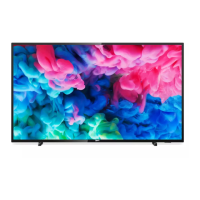
| Display diagonal | 55 \ |
| Display brightness | 450 cd/m² |
| Native aspect ratio | 16:9 |
| LED backlighting type | - |
| Supported video modes | 1080p |
| Display diagonal (metric) | 139 cm |
| Screen format adjustments | Zoom |
| Motion interpolation technology | PMR (Perfect Motion Rate) 1000 Hz |
| RMS rated power | 30 W |
| Number of speakers | 2 |
| Auto volume leveler | Yes |
| PC in (D-Sub) | No |
| HDMI ports quantity | 4 |
| DVI-D ports quantity | 0 |
| USB 2.0 ports quantity | 3 |
| Component video (YPbPr/YCbCr) in | 1 |
| Consumer Electronics Control (CEC) | EasyLink |
| Package depth | 198 mm |
| Package width | 1338 mm |
| Package height | 934 mm |
| Package weight | 31700 g |
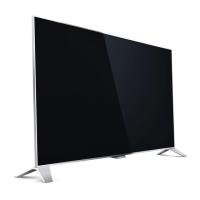
| Product color | Silver |
| Panel mounting interface | 400 x 400 mm |
| AC input voltage | 220 - 240 V |
| AC input frequency | 50 - 60 Hz |
| Power consumption (off) | 0.3 W |
| Power consumption (typical) | 135 W |
| 3D type | Active |
| Ambient lighting type | 3-sided |
| Annual energy consumption | 187 kWh |
| Tuner type | Analog & digital |
| Analog signal format system | NTSC, PAL, SECAM |
| Digital signal format system | DVB-C, DVB-S, DVB-S2, DVB-T, DVB-T2 |
| Video apps | YouTube |
| Lifestyle apps | Facebook, Skype, Twitter |
| Audio formats supported | AAC, MP3, WMA |
| Image formats supported | BMP, GIF, JPG, JPS, PNG, PNS |
| Video formats supported | 3GP, AVC, AVI, H.264, MKV, MPEG1, MPEG2, MPEG4, VC-1, WMV9 |
| Subtitle formats supported | MKV, SMI, SRT, SUB, TXT |
| Operating temperature (T-T) | 5 - 35 °C |
| Cables included | AC |
 Weight and Dimensions
| Depth (with stand) | 230 mm |
|---|---|
| Width (with stand) | 1280 mm |
| Height (with stand) | 768 mm |
| Weight (with stand) | 25400 g |
| Depth (without stand) | 38 mm |
| Width (without stand) | 1240 mm |
| Height (without stand) | 713 mm |
| Weight (without stand) | 24800 g |


 To Next Page