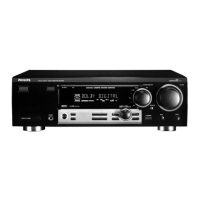
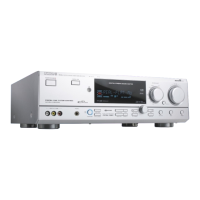
POWER MODULE PWR207
(6 x 75W / 7 x 75W)
TABLE OF CONTENTS
Class-D Amplifier circuit description ................................................. 8-1
Exploded view + mechanical parts ................................................... 8-2
Speaker (SPK I) & SW-out (SPK II) Boards - Circuit & layouts ........ 8-3
Mains & ECO Stby Board - Circuit diagram ...................................... 8-4
Mains & ECO Stby Board - Component & Chip layouts ................... 8-5
Supply Board - Circuit diagram ......................................................... 8-6
Supply Board - Component & Chip layouts ...................................... 8-7
Amplifier Board - Clock Generator & connector - circuit .................. 8-8
Amplifier Board - Amplifier circuit ...................................................... 8-9
Amplifier Board - Chip side view ..................................................... 8-10
Amplifier Board - Component side view .......................................... 8-11
Electrical parts list - Mains, Supply, Speaker & SW-out ................. 8-12
Electrical parts list - Amplifier board ............................................... 8-13
8-1
8-1
6-channel class-D amplifier
Basic operation of a class-D amplifier
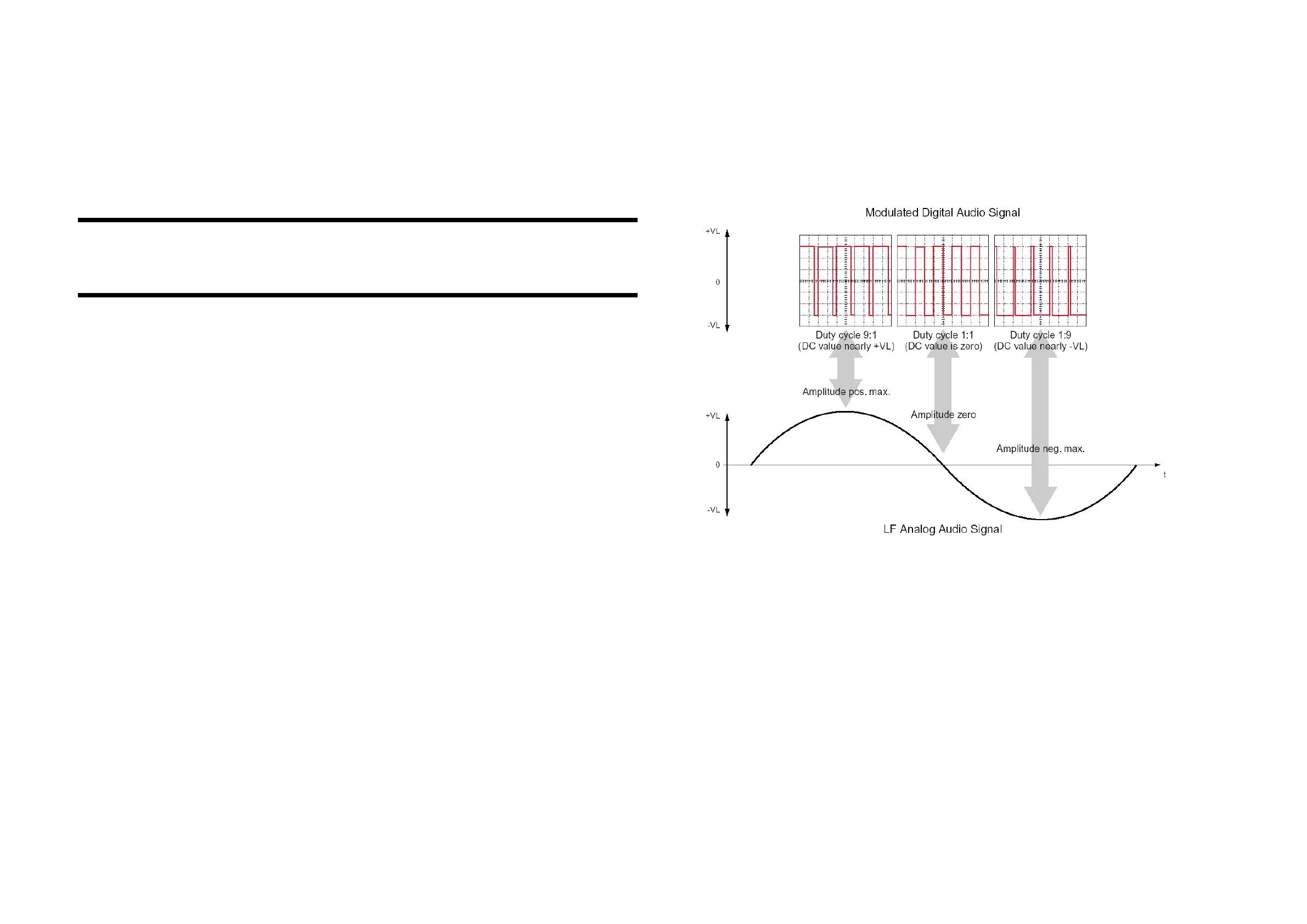
Basically, the output stage of a class-D amplifier outputs a continuous square wave swinging between positive and negative power supplies
with a fixed frequency (“clock” frequency) far beyond the audible range. The duty cycle of this square wave is modulated with the audio signal.
The output is followed by a low-pass filter which eliminates the clock frequency and allows only the audio signal going to the speaker. See
simplified drawing below.
Compared to a conventional power amplifier the benefits of the Class-D amplifier are:
• higher effiency
• lower power dissipation
• smaller heatsink required
• smaller mains transformer required
The main disadvantage of this concept is:
• The amplifier is operating with a high-frequency square wave at high amplitude and currents. This requires special precautions to prevent
excessive electromagnetic ratiation (EMC).



 To Next Page