Instructions for Use | Therapy Modes and Controls
Spontaneous Modes 22
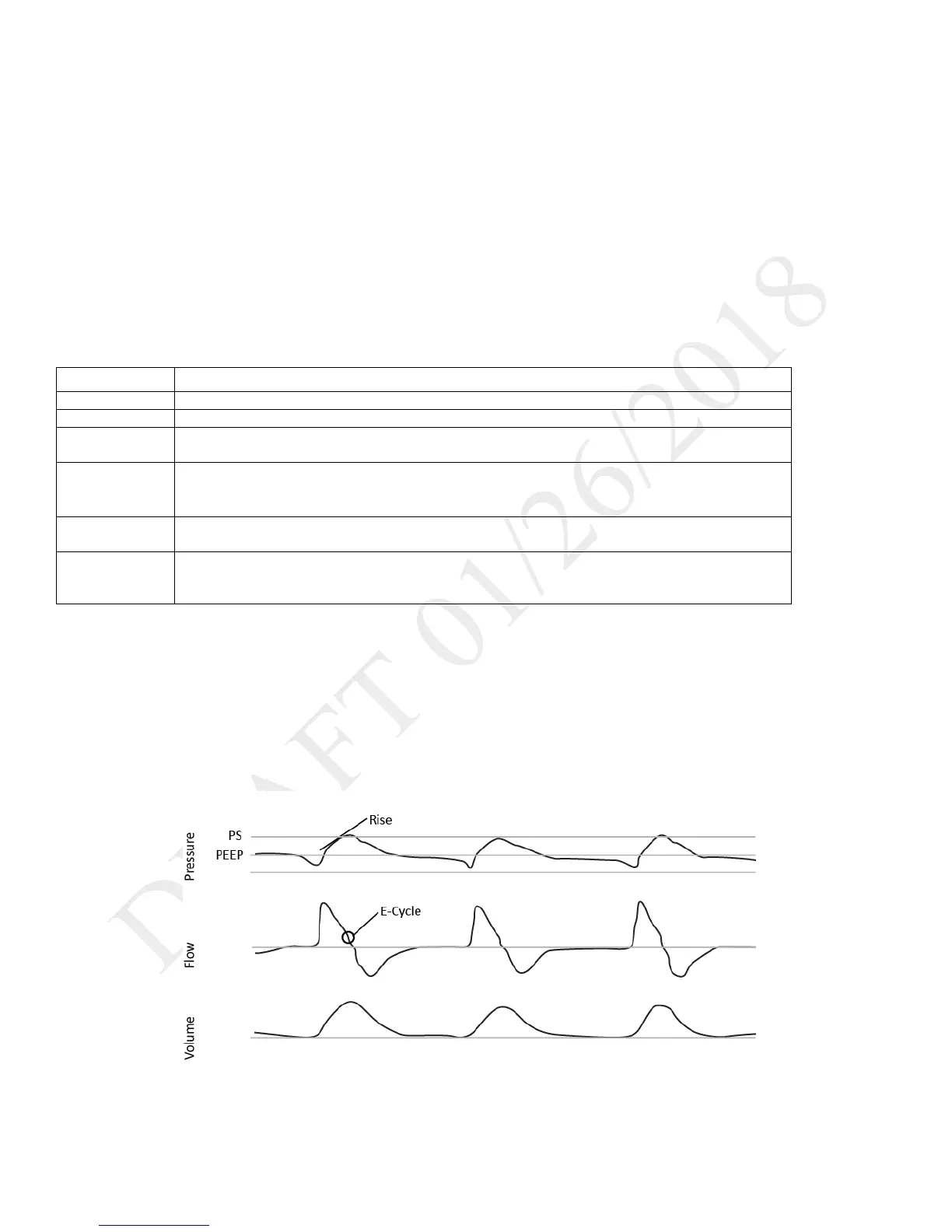
PSV: Pressure Support Ventilation
DESCRIPTION:
PSV mode is patient-triggered, pressure-limited, and flow-cycled. With this strategy, breaths are assisted by a set inspiratory pressure that is
delivered until inspiratory flow drops below a set threshold.
In the PSV mode, the ventilator delivers spontaneous, pressure-supported, breaths and user-initiated mandatory breaths. The ventilator functions
as a demand flow system, with the patient triggering breaths and determining their timing and volume. The ventilator can support the breaths with
the set pressure support.
The Pressure Control setting defines the applied pressure above PEEP. The patient determines the breath timing. As in other dual limb modes, you
also set PEEP, inspiratory trigger, and O
2
. It is recommended that you set backup ventilation in PSV mode.
SETTINGS:
Target pressure that the device delivers during the inspiratory phase of a spontaneous breath
Positive end expiratory pressure
Time required for the ventilator to change from the expiratory pressure setting to the inspiratory
pressure setting when the breath is triggered.
• Sensitive Auto-Trak (passive circuits only)
•
Flow Trigger (Passive, Active PAP, Active Flow, or Dual Limb circuits)
This control is available when the trigger type is Flow Trigger. The flow trigger initiates when the
patient’s inspiratory effort creates a flow equal to or greater than the flow trigger sensitivity setting.
Sensitivity
This control is available when the trigger type is Flow Trigger
As flow begins to decrease during inspiration, if the patient flow is less than the flow cycle set point, the
device cycles to expiration.
SETTABLE ALARMS:
• Circuit disconnected
• High tidal volume
• Low tidal volume
• High minute ventilation
• Low minute ventilation
• High respiratory rate
• Low respiratory rate
ILLUSTRATION:


 To Next Page