P
P
H
H
O
O
E
E
N
N
I
I
X
X
U
U
N
N
L
L
I
I
M
M
I
I
T
T
E
E
D
D
L
L
L
L
C
C
-
-
-
-
-
-
-
-
-
-
-
-
-
-
-
-
-
-
-
-
-
-
-
-
-
-
-
-
-
-
-
-
-
-
-
-
-
-
-
-
-
-
-
-
P
P
H
H
X
X
-
-
2
2
0
0
0
0
-
-
-
-
-
-
-
-
-
-
-
-
-
-
-
-
-
-
-
-
-
-
-
-
-
-
-
-
-
-
-
-
-
-
-
-
-
-
-
-
-
-
-
-
-
-
-
-
-
-
-
-
-
-
-
-
-
-
-
-
-
-
U
U
S
S
E
E
R
R
S
S
G
G
U
U
I
I
D
D
E
E
P
P
G
G
.
.13
LOADING DRY ICE
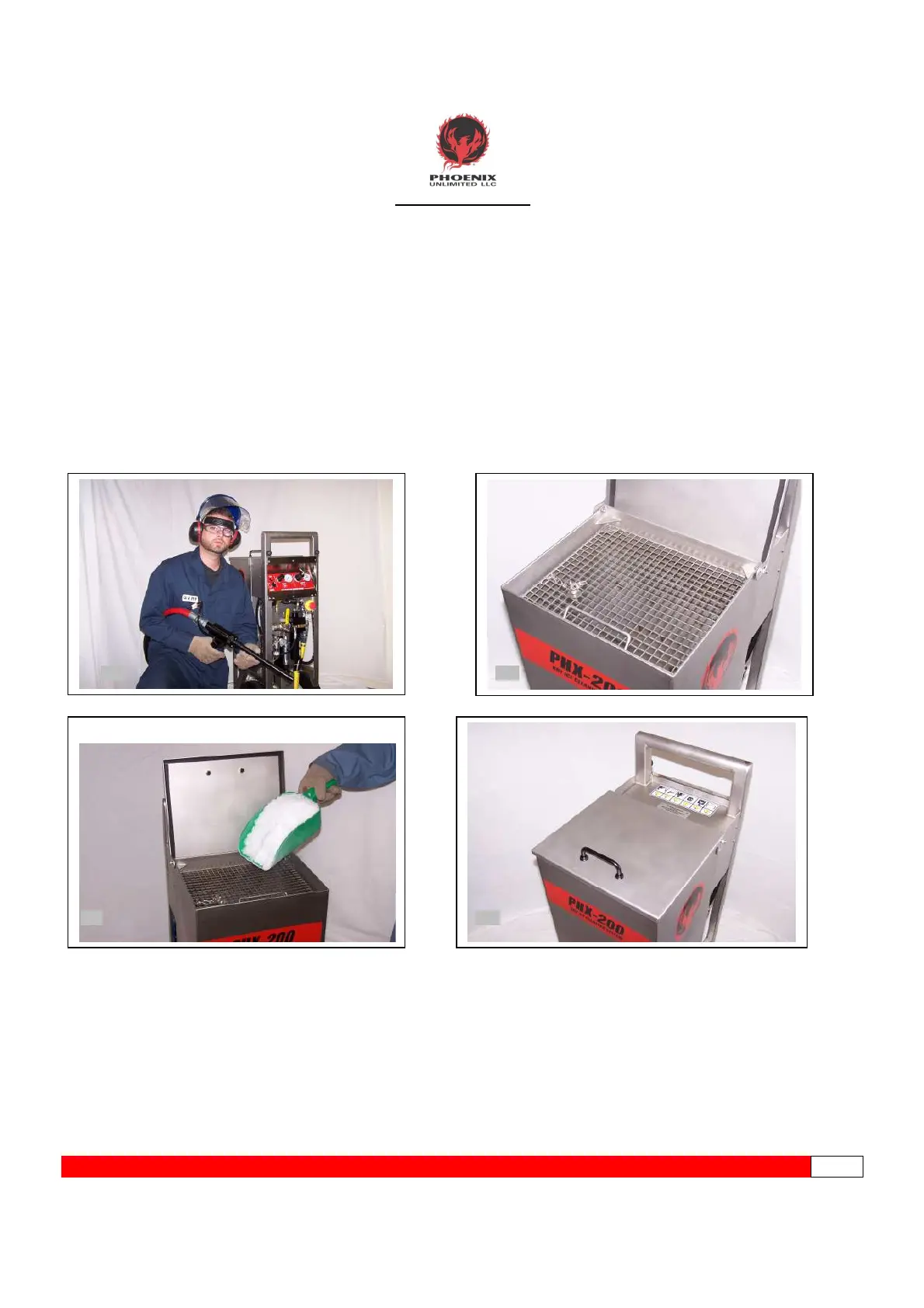
1. Before you begin loading dry ice, it is important that you have the protective gear previously
mentioned in the “Safety Precautions and Warnings” section (page 6). This includes basic items
such as earplugs or muffs (or both), eye protection, face shield, heavy-duty gloves, long sleeves,
long pants, and safety shoes. (pic 1)
2. Lift hinged metal lid to expose hopper. BE AWARE OF AND KEEP CLEAR OF PINCH POINTS
(pic 2)
3. Use a sturdy scoop or similar device to load dry ice pellets into the hopper. (pic 3) Be careful not
to inhale concentrated CO
2
gas during the loading process, as it will temporarily rob you of
oxygen. If overexposed, get fresh air immediately. Signs of overexposure include dizziness, cold
sweats, headaches, nausea, and heavy breathing.
4. Close the lid on the hopper. This will prevent airborne contaminants from inadvertently falling
through the pellet screen to the ice and ultimately ending up on the surface you are cleaning or
damaging internal airlock parts. (pic 4)
Pic 1 Pic 2
Pic 4Pic3


 To Next Page