This document is a Quick Installation Guide for the Layer 3 Gigabit/10 Gigabit Managed Ethernet Switch from the XGS-6311, GS-6311, and MGS-6311 Series. The guide provides essential information for setting up, configuring, and managing these network switches.
Function Description
The devices are Layer 3 Gigabit/10 Gigabit Managed Ethernet Switches, designed for network management and data forwarding. They support both out-of-band management (via console interface) and in-band management (via Telnet, HTTP, or SNMP). The switches allow for initial configuration through the console and subsequent remote management via a web interface. Key functions include IP address configuration, port speed settings (e.g., 1000BASE-X for SFP+ ports), and saving configuration changes. The Layer 3 capability indicates advanced routing and network segmentation features beyond basic Layer 2 switching.
Important Technical Specifications
The series includes various models with different port configurations and power options:
- XGS-6311-12X: Layer 3 12-Port 10GBASE-X SFP+ Managed Ethernet Switch. This model is primarily focused on high-speed fiber connectivity.
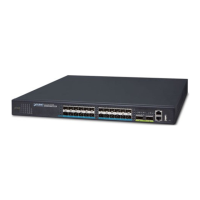
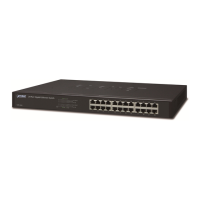
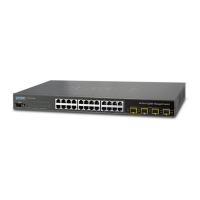
- GS-6311-24T4X: L3 24-Port 10/100/1000T + 4-Port 10G SFP+ Managed Ethernet Switch. This model combines Gigabit Ethernet copper ports with 10G SFP+ fiber uplinks.
- GS-6311-16S8C4XR: L3 16-Port 100/1000X SFP + 8-Port Gigabit TP/SFP + 4-Port 10G SFP+ Managed Ethernet Switch with 36-72V DC Redundant Power. This model offers a mix of SFP, Gigabit TP/SFP combo, and 10G SFP+ ports, along with redundant DC power for enhanced reliability.
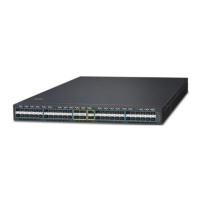
- GS-6311-48T6X: L3 48-Port 10/100/1000T + 6-Port 10G SFP+ Managed Ethernet Switch. This is a high-density model with numerous Gigabit Ethernet copper ports and 10G SFP+ uplinks.
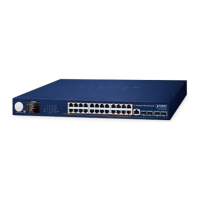
- GS-6311-24HP4X: L3 8-Port 802.3bt PoE + 16-Port 802.3at PoE+ 4-Port 10G SFP+ Managed Ethernet Switch. This model features high-power PoE (802.3bt) and standard PoE+ (802.3at) ports, suitable for powering various network devices, along with 10G SFP+ uplinks.
- GS-6311-48P6X: L3 48-Port 10/100/1000T 802.3at PoE + 6-Port 10G SFP+ Managed Ethernet Switch. Another high-density PoE model with 802.3at PoE on all 48 Gigabit copper ports and 10G SFP+ uplinks.
- MGS-6311-10T2X: L3 8-Port 2.5GBASE-T + 2-Port 10GBASE-T + 2-Port 10GBASE-X SFP+ Managed Ethernet Switch. This model focuses on multi-Gigabit Ethernet (2.5GBASE-T and 10GBASE-T) copper ports, complemented by 10GBASE-X SFP+ fiber ports.
- MGS-6311-8P2X: L3 8-Port 2.5GBASE-T 802.3at PoE + 2-Port 10GBASE-T + 2-Port 10GBASE-X SFP+ Managed Ethernet Switch. This model combines 2.5GBASE-T PoE (802.3at) copper ports with 10GBASE-T copper and 10GBASE-X SFP+ fiber ports.
All models are Layer 3 switches, implying advanced routing capabilities. The default IP address for the VLAN1 interface is 192.168.0.254/24. The default username and password for both console and web access are "admin".
Usage Features
-
Out-of-Band Management (Console):
- Used for initial switch configuration or when in-band management is unavailable.
- Requires a serial cable connection from a PC's COM port (DB9) or USB-to-RS232 converter to the switch's RJ45 console port.
- Terminal emulation software (e.g., Tera Term, PuTTY) is needed, configured with specific serial port settings: Baud: 9600, Parity: None, Data bits: 8, Stop bits: 1, Flow control: None.
- Allows configuration of the IP address for the VLAN1 interface using commands like
config, interface vlan 1, and ip address 192.168.1.254 255.255.255.0.
- Provides commands like
show ip interface brief to verify current IP settings.
- Supports setting 1000BASE-X for 10G SFP+ ports using commands like
interface ethernet 1/0/1 and media-type fiber-1g.
- The console provides a "help" command for assistance with commands and parameters.
-
In-Band Management (Web Interface):
- Accessible via a web browser (Google Chrome, Mozilla Firefox, Apple Safari) after configuring an IP address through the console.
- The manager PC must be on the same IP subnet as the switch (e.g., 192.168.0.x for a switch IP of 192.168.0.254).
- Login requires the username "admin" and password "admin" (or changed credentials).
- The web interface provides a "Switch Menu" on the left for accessing various commands and statistics.
- Configuration changes made via the web interface can be applied using an "Apply" button.
- Configurations are saved to FLASH memory by clicking "Save" on the top control bar, which is equivalent to the
write command in the console.
Maintenance Features
-
Configuration Saving:
- The running configuration resides in RAM. To make it persistent across reboots, it must be saved to FLASH memory.
- This can be done via the console using the
write command or through the web interface by clicking the "Save" button.
-
Password and IP Address Recovery:
- If the IP address has been changed or the admin password forgotten, the device can be reset to default settings.
- This is achieved by pressing the hardware-based reset button on the front panel for approximately 10 seconds.
- After rebooting, the switch will revert to the default IP address of 192.168.0.254 and the default login password "admin". The device can then be accessed from a PC within the 192.168.0.xx subnet.
-
Customer Support:
- PLANET provides online FAQ resources and a support team for assistance.
- User manuals for specific models are available online, accessible by selecting the switch model name.
-
Security:
- Users are advised to change and memorize the default password after the initial setup for security reasons.
The document emphasizes the importance of understanding both out-of-band and in-band management methods for comprehensive device control and troubleshooting. It also highlights the need for proper configuration saving to prevent loss of settings.

 Need help?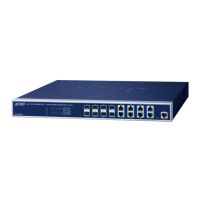




 To Next Page
 General