9
HOW YOUR SURECHLOR 4000 SALT WATER
CHLORINATOR WORKS.
Common salt (Sodium Chloride) is made up of two elements, sodium and chlorine.
When your Poolrite Surechlor 4000 is installed a measured amount of salt is
dissolved in the pool water to make it slightly salty (about 15% of the salt found in sea
water). When the filter system is operating this pool water also flows through the clear
Electrolytic Cell where a very low voltage electric current is passed through the salty
water which causes chlorine to be produced. This chlorine instantly dissolves in the
pool water. Some ozone and other gasses are also produced as a by-product of the
process.
Put very simply, this dissolved chlorine starts to destroy bacteria, viruses and algae
almost instantly and in doing so reverts back to dissolved salt. This cycle
continues with more new chlorine being generated from the salty water in the cell, the
pool being sanitised and the chlorine reverting back to dissolved salt.
As your Surechlor 4000 is operating each day during normal operation of the
filtration system, solid particles are trapped by the filter while your Surechlor 4000
sanitises the water to make it safe, clear and sparkling.
MAINTENANCE OF POOL WATER CHEMISTR
Y
CHLORINE LEVEL
Using a 4 in 1 test kit, test the pool water daily at first then at least once a week
to ensure sufficient chlorine level is being maintained. A free chlorine reading of 1.5
mg/l (ppm) and above is adequate when taken near the skimmer.
Should the level fall below 1.5 mg/l (ppm) check salt level and/or increase the daily run-
ning time of filter and Surechlor.
pH CONTROL
Check the pH of your pool at least once a week after your Surechlor is first installed.
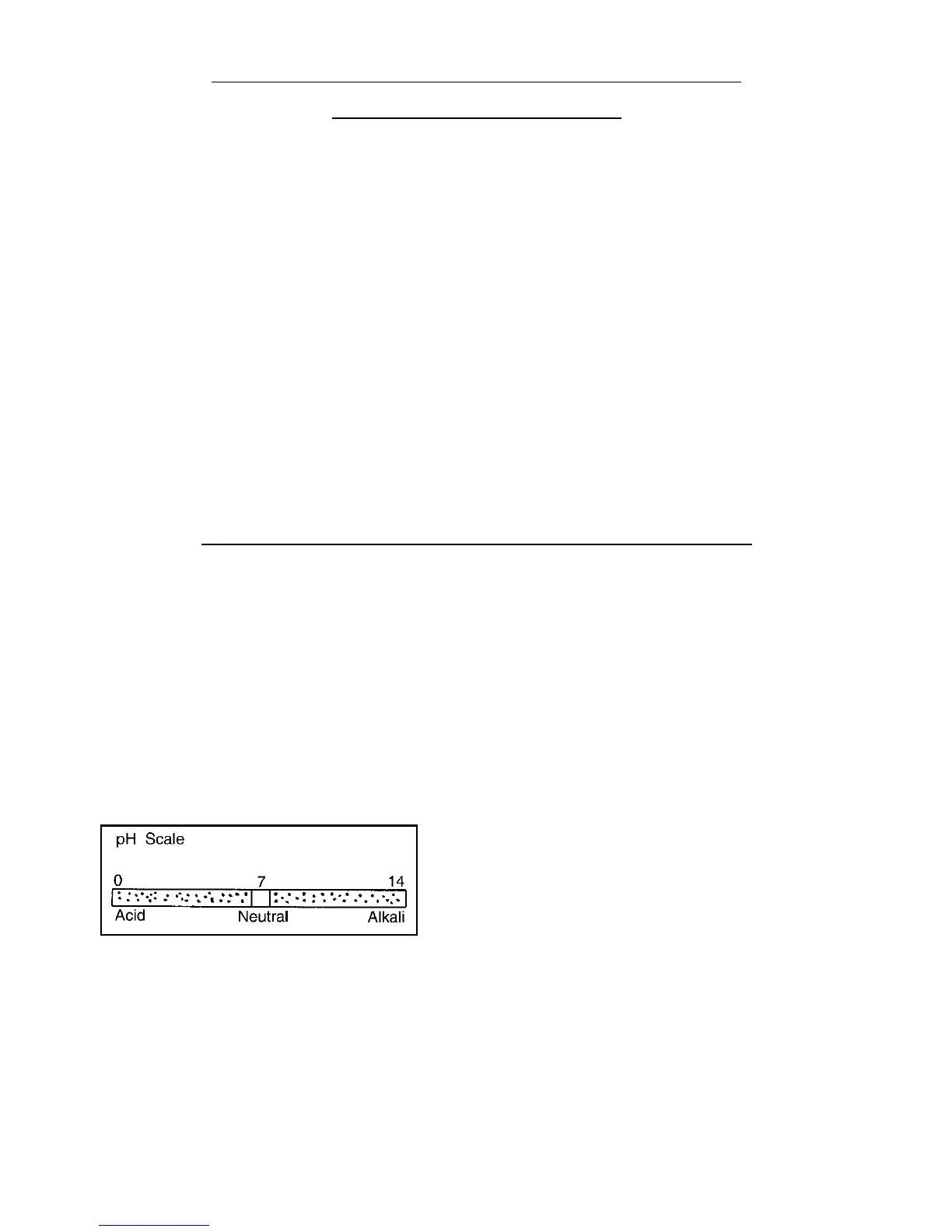
The pH of your pool is a measure of the balance between acidic and alkaline
products in the water. It is measured on a scale of 0 to 14.
A pH level of 0.0 is pure acid.
A pH level of 7.0 is neutral.
A pH level of 14.0 is pure alkali.
The recommended range for swimming pool water is 7.2 to 7.6 for concrete pools, and
you should refer to your builder’s recommendations for other types of pools.
Controlling the pH of your pool is vital to the correct operation of the Surechlor and the
effectiveness of the chlorine produced to kill algae and bacteria and the
comfort of bathers. Correct pH also effects the life of metals, cement products and
plaster finishes in the pool.
If a pH test indicates a low pH then add sodium bicarbonate (pH buffer) to raise the pH.
If the pH is high then add acid (hydrochloric or dry acid) to lower the pH.


 To Next Page