EasyManua.ls Logo

Powercom 1500AP - User Manual

Default Icon
16 pages
Print Icon
To Next Page IconTo Next Page
Loading...
U P S
Line Interactive Sine Wave
1000VA 3000VA
USER‘S MANUAL

Questions and Answers

Summary

Important Safety Instructions

Introduction and Overview

Intelligent Microprocessor Control

Explains the UPS's microprocessor-based line-interactive design and its protection capabilities.

Battery Management

Describes UPS battery status indications and self-test functions for battery health.

Monitoring Software

Details the use of UPSMON Pro software for monitoring and managing the UPS.

1. Presentation

1.1 Front LED Panel

Overview of front panel LEDs: ON/TEST, OVERLOAD, BACKUP, REPLACE BATTERY, BUCK/BOOST AVR, LINE NORMAL indicators.

1.1.8 Load Capacity Bar

Displays the power drawn by the connected loads as a percentage of UPS capacity.

1.1.9 Battery Capacity Bar

Shows the present battery charge level as a percentage of total battery capacity.

1.1.10 OFF Button

Describes the OFF button for powering down the UPS and connected loads.

1.2 Rear Panel

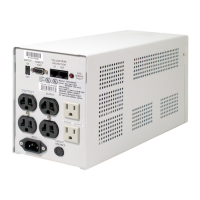
Illustrates and describes the connectors and features on the rear panel of the UPS.

2. Installation

2.1 Placement

Provides guidelines for selecting an appropriate and safe location for the UPS unit.

2.2 Software Monitoring

Explains how to use UPSMON Pro software and interface kits for monitoring.

2.3 Connect External Battery Pack (Optional)

Details the procedure for connecting an optional external battery pack.

2.4 Charge the Battery

Instructs on how to charge the UPS battery, recommending 8 hours for initial use.

2.5 Connect to Utility

Guides on connecting the UPS to the main utility power source.

2.6 Connect the Loads

Explains how to connect the equipment to be protected by the UPS.

2.7 Vertical and Wall-mounted Types

Refers to illustrations for installing vertical and wall-mounted UPS units.

2.8 Rack-mounted Types

Refers to illustrations for installing rack-mounted UPS units.

2.9 Stack Types

Refers to illustrations for installing stackable UPS units.

3. Operation

3.1 Switch On

Details the procedure for turning on the UPS and connecting equipment.

3.2 Switch Off

Explains how to properly turn off the UPS and connected loads.

3.3 Silence Alarm

Describes how to silence the audible alarm during backup mode.

3.4 Self-test

Guides on performing a self-test to check UPS operation and battery condition.

3.5 Load Capacity Bar

Explains the load capacity bar, indicating power draw relative to UPS capacity.

3.6 Battery Capacity Bar

Describes the battery capacity bar, showing the current battery charge level.

3.7 Cold Start

Explains how to start the UPS using only battery power when utility power is absent.

3.8 Shutdown Mode

Describes the shutdown mode where the UPS stops supplying power, awaiting utility return.

3.9 Green Mode

Details how to enable/disable Green Mode for power saving and its behavior.

4. Alarm

4.1 Backup (Slow Alarm)

Explains the slow alarm that sounds when the UPS is in backup mode.

4.2 Low Battery (Rapid Alarm)

Describes the rapid alarm indicating low battery levels and potential shutdown.

4.3 Fault (Continuous Alarm)

Explains the continuous alarm indicating a fault condition or UPS failure.

5. Software and Interface Port

5.1 Power Monitoring Software

Discusses the UPSMON Pro software for monitoring and orderly shutdown.

5.2 Interface Kits

Explains the purpose and use of interface kits for UPS monitoring.

5.3 Computer Interface Port Characteristics

Outlines the functions and capabilities of the UPS's computer interface port.

5.4 Computer Interface Port Pin Configuration

Details the pin configuration and electrical characteristics of the computer interface port.

6. Maintenance and Storage

6.1 Maintenance

Provides instructions for keeping the UPS unit clean and in good working order.

6.2 Storage Conditions

Guides on proper storage conditions for the UPS unit, including battery charging.

6.3 Extending Storage Life

Offers advice on how to maintain the UPS battery during extended storage periods.

7. Battery and Battery Cabinet

7.1 Battery Life

States the typical lifespan of the UPS battery under normal usage.

7.2 Battery Cabinet and UPS Installation

Provides steps for installing the UPS and connecting an external battery cabinet.

Appendix A Troubleshooting

Appendix B Specification

Powercom 1500AP Specifications

General IconGeneral
BrandPowercom
Model1500AP
CategoryUPS
LanguageEnglish

Related product manuals