17
Stimulation Protocols
Stimulation protocols, accessible to doctors from PowerDot Doctor App, based on their intended use, can be divided into 3 main
groups:
1. NMES Rehabilitation Protocols
Disuse Atrophy
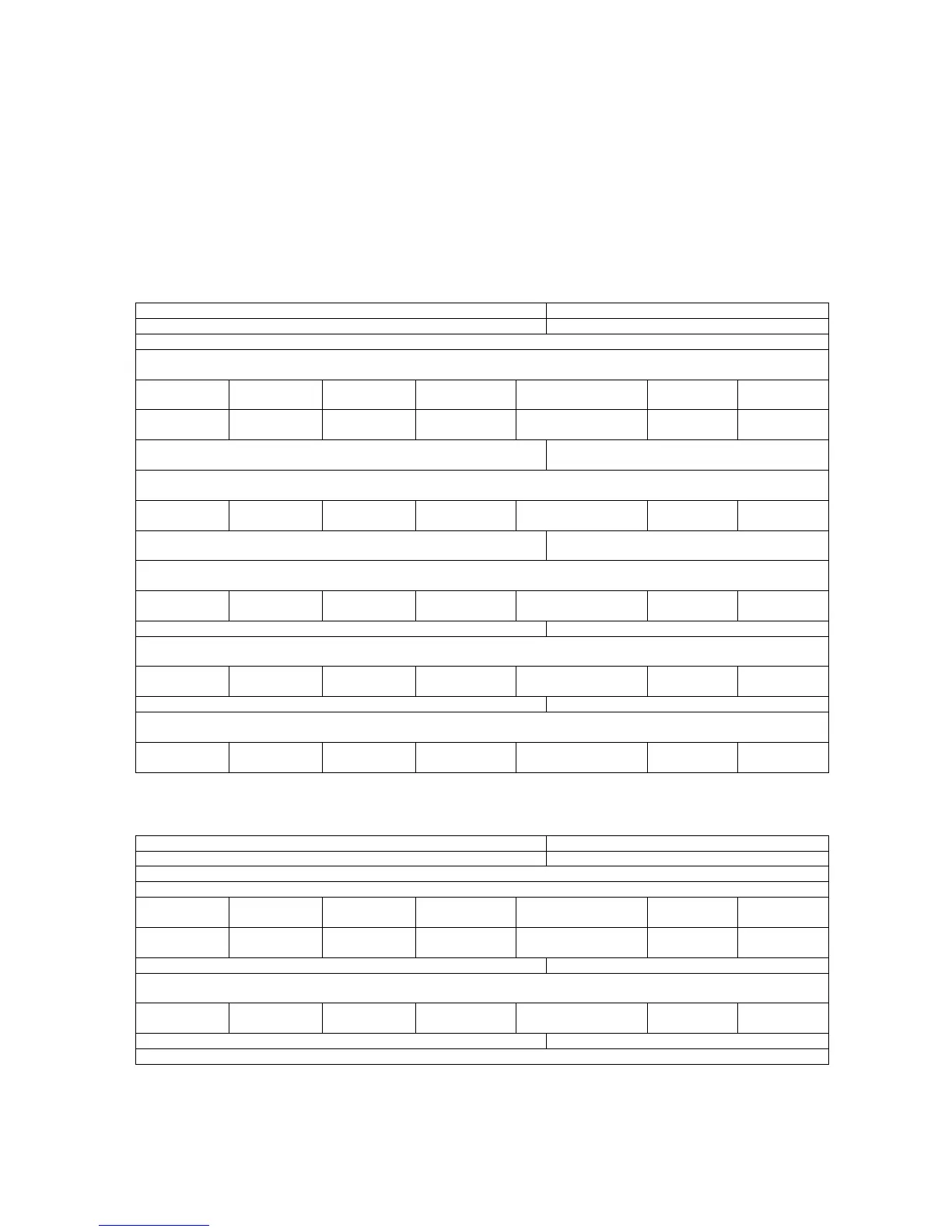
Protocol Name Indication For Use
Disuse Atrophy*
Retarding disuse atrophy
Description
Targeting slow twitch (Type I) muscle fibers to facilitate increases in muscle volume after long periods of immobilization or
diminished movement.
Contraction, sec
(allowed range)
Contraction, Hz
(allowed range)
Rest, sec
(allowed range)
Rest, Hz
(allowed range)
Ramp Up/Down, sec
(allowed range)
Pulse Width, uS
(allowed range)
Duration, min
(allowed range)
5
(3-8)
40
(30-50)
5
(3-8)
4
(0-6)
2/0.5
(0.5-3)
208
(160-320)
25
(15-30)
Reinforcement Post Disuse Atrophy*
Stimulation of healthy muscles in order to improve
or facilitate muscle performance
To be used on previously atrophied muscles that have gained the volume. Increases strength and stability by targeting fast twitch
(type II) muscle fibers.
4
(3-6)
80
(60-100)
8
(5-12)
4
(0-6)
1.5/0.75
(0.5-3)
320
(208-432)
20
(15-30)
Reinforcement Post Disuse Atrophy (Agonist/Antagonist)
Stimulation of healthy muscles in order to improve
or facilitate muscle performance
To be used on previously atrophied muscles that have gained the volume. Increases strength and stability by targeting fast twitch
(type II) muscle fibers. Agonist/Antagonist sequencing.
4
(3-6)
70
(60-100)
4
(3-6)
4
(0-6)
1.5/0.75
(0.5-3)
320
(208-432)
15
(10-20)
Prevention of Disuse Atrophy*
Preventing disuse atrophy
Reproduces a series of slow twitch (Type I) targeted contractions comparable to the normal level of activity during a day.
To be used on the immobilized limb after surgery or bone fracture.
5
(3-8)
35
(30-50)
12
(9-18)
4
(0-6)
2/0.5
(0.5-3)
320
(208-432)
45
(30-60)
Prevention of Disuse Atrophy (Agonist/Antagonist)
Preventing disuse atrophy
Reproduces a series of slow twitch (type I) targeted contractions comparable to the normal level of activity during a day.
To be used on the immobilized limb after surgery or bone fracture. Agonist/Antagonist sequencing.
6
(4-8)
35
(30-50)
6
(4-8)
4
(0-6)
2/0.5
(0.5-3)
320
(208-432)
20
(15-30)
Muscle Re-education and Increasing Range of Motion
Protocol Name Indication For Use
Muscle Re-education, Level 1 (Slow Twitch)*
Muscle re-education
Description
Targets re-education and muscle function improvements of slow twitch (Type I) muscle fibers.
Contraction, sec
(allowed range)
Contraction, Hz
(allowed range)
Rest, sec
(allowed range)
Rest, Hz
(allowed range)
Ramp Up/Down, sec
(allowed range)
Pulse Width, uS
(allowed range)
Duration, min
(allowed range)
5
(3-8)
40
(30-50)
5
(3-8)
4
(0-6)
2/0.5
(0.5-3)
208
(160-320)
25
(15-30)
Muscle Re-education, Level 2 (Fast Twitch)*
Muscle re-education
Targets re-education and muscle function improvements of fast twitch (Type II) muscle fibers. Apply/schedule after at least 2 weeks
of usage of Level 1 program.
4
(3-6)
80
(50-100)
8
(5-12)
4
(0-6)
1.5/0.75
(0.5-3)
320
(208-432)
20
(15-30)
Neuro Rehab*
Muscle re-education
Targets facilitation and re-learning of motor skills for stroke patients.


 To Next Page
 Loading...