
 Need help?
Do you have a question about the Pyronix STERLING 10 and is the answer not in the manual?
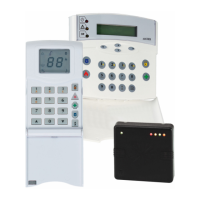
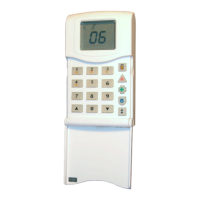
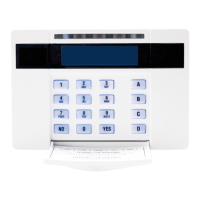
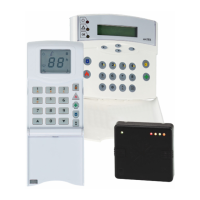
Overview of the Sterling 10 LCD keypad functions and features.
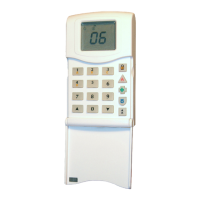
Overview of the Sterling 10 ICON keypad functions and features.
Instructions on how to arm the Sterling 10 alarm panel.
Details on selecting and activating different arming modes (A, B, C, D).
Procedures for silent arming and operating during mains power failure.
Details on arming with omits, disarming, and resetting after alarms.
How to activate Personal Attack and Fire alarms, and manage chime settings.
How to access and view the system's event log.
Instructions for navigating the event log using the ICON keypad.
Explanation of icons used in the event log display.
Procedures for clearing the event log and performing system tests.
Steps for performing system tests on the LCD keypad.
Steps for performing system tests on the ICON keypad.
How to test zone detectors by simulating entry/exit.
Instructions for walk testing using the ICON keypad.
Information on user codes, capabilities, and changing codes.
Steps to change the master user code on the LCD keypad.
Steps to change the master user code on the ICON keypad.
Steps to change limited user codes on the LCD keypad.
Steps to change limited user codes on the ICON keypad.
Procedure to delete a limited user code from the system.
How to handle fault tones related to AC mains failure.
Information on system faults and how to identify them.
How to determine system faults using the LCD keypad.
How to determine system faults using the ICON keypad.
How to customize user text labels on the LCD keypad.
Reference for default labels for system states and zones.
How to adjust the LCD backlight brightness.
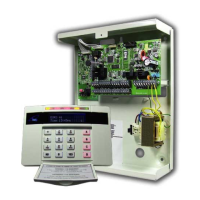
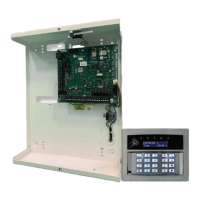
The Sterling 10 is a control panel designed for alarm systems, offering various functions for both master and limited users, and supporting remote keypads (ICON and LCD). The system is designed with user-friendliness in mind, allowing for easy arming, disarming, and management of alarm events.
The Sterling 10 control panel serves as the central unit for an alarm system, providing comprehensive security features. It supports up to seven user codes, with distinct access levels for Master Users and Limited Users. The Master Code (default 1234) grants full access to all user functions and programming features, including the ability to alter other user codes, clear the event log (if enabled by the engineer), perform system tests, and manage walk test facilities. Limited User Codes (2 to 7) are restricted to arming/disarming the panel, enabling/disabling the door chime, and viewing the event log.
The panel offers four distinct arm modes (A, B, C, D), which can be customized by an engineer to suit specific security needs. For instance, Arm Mode A typically arms the whole system when nobody is on the premises, while other modes might disarm specific areas like upstairs, downstairs, or the garage and kitchen, allowing for partial arming. The system can be armed silently, which suppresses the entry and exit timer sounds, useful for discreet operation.
In the event of an alarm, the panel displays the activated zone and requires a user code to reset. If the panel is not reset after an alarm, an engineer or anti-code reset might be required, necessitating contact with the installation company. The system also supports a Duress Arm/Disarm function, where transposing the last two digits of the user code sends a silent Personal Attack (PA) alarm to the Alarm Receiving Centre (if connected), while the panel appears normal.
The Sterling 10 includes dedicated functions for Personal Attack (PA) and Fire alarms. These can be activated directly from the keypad and require a user code to disarm. The panel also features a chime function that generates a three-note sound when an entry/exit zone is activated, which can be turned on or off by users.
A crucial feature of the Sterling 10 is its event log, which stores the last 100 alarm events. This log records Fire, Intruder, Personal Attack, and Tamper alarms, and indicates if any of the eight alarm zones have been triggered or omitted. Both Master and Limited Users can access this log to review system activity. Master Users also have the ability to clear the event log, if this function is enabled by the engineer.
The system automatically detects and indicates four fault conditions: Bell Fuse Failure, Auxiliary Fuse Failure, Telephone Line Failure, and Mains (AC) Failure. These faults are indicated by a flashing icon on the keypad and an error tone, which can be silenced by pressing the function key. The fault indicator remains active until the fault is corrected.
The Sterling 10 is designed for straightforward operation, whether using the LCD or ICON keypad. Arming the panel in Arm Mode A involves simply entering a 4-digit user code. For other arm modes, users enter their code, press the ARM key, and then select the desired arm mode (2 for Mode B, 3 for Mode C, 4 for Mode D). Silent arming follows a similar process, but users press the ARM key followed by the arm mode number.
The panel can be armed with zones omitted, allowing users to bypass specific sensors temporarily. This is achieved by entering the user code, pressing the Function key, and then entering the numbers of the zones to be omitted. Once armed, these zones will not trigger an alarm for that specific arm procedure. Disarming the panel is as simple as entering the building via an entry/exit route and inputting either the Master Code or any User Code on the keypad.
Activating Personal Attack (PA) and Fire alarms is done by pressing specific key combinations on the keypad. For PA, users press the PA key followed by the Function key (LCD) or the PA key followed by the Function key (ICON). For Fire, users press the Fire key followed by the Function key (LCD) or the Fire key followed by the Function key (ICON). Both require a user code to disarm.
The chime feature can be toggled on or off by pressing the Function key followed by the '1' key on the LCD keypad, or the Function key followed by the '1' key on the ICON keypad. The status of the chime is indicated by an icon on the keypad display.
Accessing the event log involves pressing the Function key followed by the '2' key on the LCD keypad, or the Function key followed by the '2' key on the ICON keypad. Users can scroll through the log entries using the up/down arrow keys.
Master Users have additional functionalities. To change user codes, the Master User must first enter their code (to arm the panel) and then re-enter it (to disarm), making these functions available. The process involves navigating through the menu to 'CHANGE CODES', selecting the user number, and entering the new 4-digit code twice. The system provides audio feedback (three tones for acceptance, one low tone for incomplete procedures).
The System Test function, accessible by Master Users, checks the keypad display, strobe, bell, and internal sounder. This is initiated by pressing the Function key and scrolling to 'SYSTEM TEST'. Similarly, the Walk Test Mode allows Master Users to verify the functionality of intruder detectors in different arm modes. During a walk test, activated zones will cause a chime at the keypad or extension speaker.
For LCD keypads, Master Users can also change the display text for users, which helps in identifying the last person to arm/disarm the panel in the event log. This involves navigating to 'CHANGE TEXT', selecting the user, and using the number keys to input new text, with scroll keys for navigation and the Function key to accept. The brightness of the LCD keypad can also be adjusted by Master Users through the 'SET BACKLIGHT' option.
The Sterling 10 incorporates several features that assist in system maintenance and troubleshooting. The automatic detection of fault conditions (Bell Fuse, Auxiliary Fuse, Telephone Line, and Mains AC failures) provides immediate alerts to users. The flashing fault icon and error tone prompt users to address these issues. By accessing the event log, users can identify the specific fault, and the fault indicator remains active until the problem is resolved.
The System Test function is a valuable maintenance tool, allowing Master Users to periodically check the operational status of key alarm components such as the strobe, bell, and internal sounder. This helps ensure that these critical elements are functioning correctly.
The Walk Test Mode is another essential maintenance feature, enabling Master Users or engineers to verify that all intruder detectors are working as expected in each arm mode. This systematic testing helps in identifying any faulty sensors or coverage gaps, ensuring the integrity of the alarm system.
The event log itself serves as a diagnostic tool, providing a historical record of alarm events, tamper faults, and zone activations. This information can be crucial for engineers to diagnose recurring issues, understand system behavior, and perform targeted maintenance.
In cases of AC mains failure, the panel automatically switches to its backup battery, ensuring continuous operation. The system indicates a 'Power Fail' on the display and emits a fault tone, which can be cleared by pressing the Function key. The panel retains full functionality during a mains failure, unless disallowed by the engineer.
The ability for Master Users to change user codes and manage the event log (including clearing it, if enabled) contributes to ongoing system security and data management. Regular code changes enhance security, while clearing the event log can be part of routine maintenance or privacy protocols.
Overall, the Sterling 10 is designed to be a robust and user-friendly alarm control panel, offering a comprehensive set of functions for both daily operation and system maintenance.
 General
| Zones | 10 |
|---|---|
| Keypads | 4 |
| Power Supply | 230V AC |
| Wired Zones | 10 |
| Part Sets | 2 |
| Operating Temperature | -10°C to +40°C |
| Battery Backup | 12V |


 To Next Page


