3
listed on the packing slip are included. If any items are missing or damaged, please
contact Pyxis Customer Service at service@pyxis-lab.com.
1.3 Standard Accessories
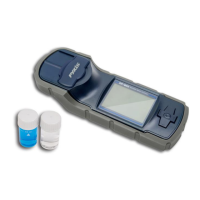
Sample Vials – two 10 ml, round, 0.78 inch (20 mm) pathlength, glass vials,
which can be used for all measurements including turbidity and fluorescence
measurements.
4 AA alkaline batteries
Instrument Manual, also available from www.pyxis-lab.com
1.4 Optional Accessories
Silica desiccant gel pack
100 ppb PTSA standard in a 500 ml brown plastic bottle
1.5 Sample Vial Compartment
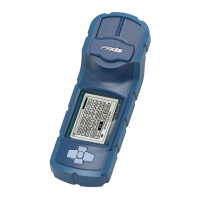
The sample vial compartment is shown in Figure 1, along with a 10-ml sample vial. A
triangle-shaped permanent alignment mark is printed on the sample vial and on the top
of the sample compartment. When the sample vial is inserted into the sample vial
compartment, the mark on the sample vial compartment should be aligned with the
mark on the sample vial.
The sample vial compartment should be kept clean. A small amount foreign material
could significantly affect turbidity and fluorescence measurement results. Use a soft
cloth or lint free paper tissue to clean sample vial compartment periodically. Remove
debris, scale, and deposit promptly.
1.6 Light Shield Door
The light shield door is shown in Figure 2. The light shield cover can be conveniently
slid between the open and closed positions. The light shield door is held firmly at the
rest positions by permanent magnets.
The light shield door should be in the closed position during storage, transportation,
and measurements, especially during the turbidity and fluorescence measurements.
When turned on, Pyxis SP-900 carries out self-diagnosis including checking the
performance of a variety of optical devices. The light shield door shall be at the closed
position to shield interference from ambient light during self-diagnosis.
Care should be taken to avoid water or debris being trapped in the track of the light
shield door.


 To Next Page