IN-520
9
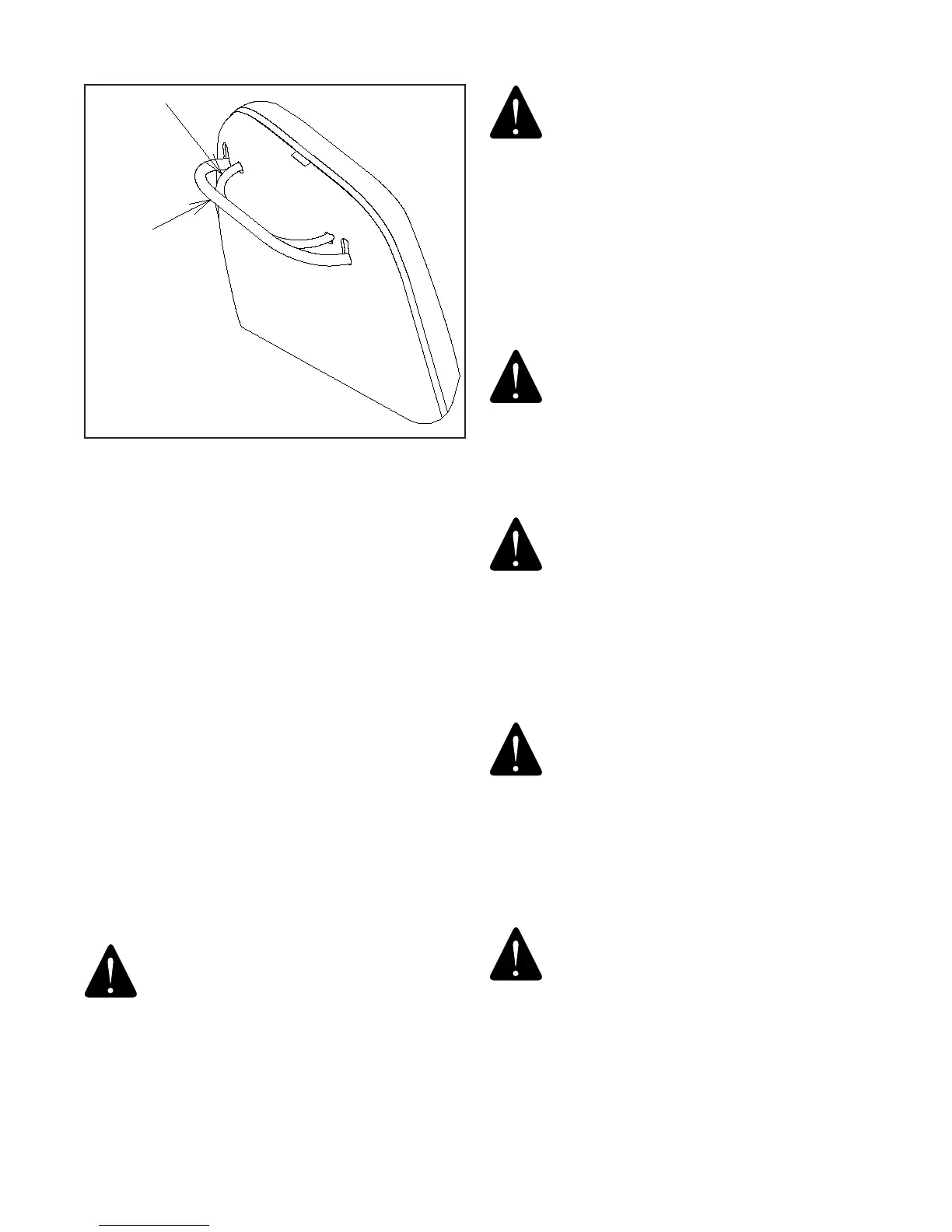
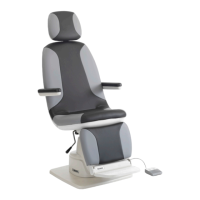
FIGURE 3
RELEASE LEVER
3.3. Revolving/Rotation
3.3.1. The Chair upper structure may be revolved 350°,
with a built-in stop to prevent continuous rotation. The lock
for revolving is controlled by a hand lever with black knob
located below the seat at the center and on either side. Push
the lever backward to release the lock and pull upward to
apply the lock.
3.4. Armrest Movement
3.4.1. The Chair Armrests may be raised to provide better
access to the patient or to permit entrance to or exit from
the Chair.
3.4.2. The movements of both Armrest are identical and
completely independent of each other.
3.4.3. To raise the Armrest simply lift Armrest to the stop
parallel to Chair back.
CAUTION: This exam Chair is designed
for use in a specific position called the
Intended Use Position. Prior to reclining a
patient, ensure the Chair Back is aligned
with the Chair’s power receptacle and
that the Chair Swivel is locked. The safe
working load is reduced if the Chair is
swiveled away from this Intended Use
Position, and may result in insufficient
stability.
GRAB BAR
RELEASE LEVER
PRÉCAUTION : Cette chaise d’examen
est conçue pour utilisation dans une
position spécifique appelée la position
d’utilisation prévue. Avant d’incliner un
patient, assurez-vous que le dossier de
la chaise est aligné avec le réceptacle
d’alimentation de la chaise et que le pivot
de la chaise est verrouillé. La charge
de travail sécuritaire est réduite si la
chaise est tournée hors de sa position
d’utilisation prévue et cela pourrait causer
une stabilité insuffisante.
CAUTION-This exam Chair is designed
for use with a specific maximum patient
weight as a static (non-moving) load.
Sudden weight shifts or impact loads
can exceed the safe static load rating of
this Chair, and may result in insufficient
stability.
PRÉCAUTION : Cette chaise d’examen
est conçue pour utilisation avec un poids
de patient maximum spécifique comme
charge statique (sans mouvement). Les
déplacements de poids soudains ou les
charges dynamiques peuvent excéder
la norme de charge statique sécuritaire
de la chaise, ce qui pourrait causer une
stabilité insuffisante.
CAUTION-This exam Chair is designed
for use with a patient properly positioned
in the Chair. Prior to reclining the Chair,
ensure that the patient is seated in the
Chair and that the patient position does
not move to an extreme position either
toward the head of the Chair or toward
the foot of the Chair, since this may result
in insufficient stability.
PRÉCAUTION : Cette chaise d’examen est
conçue pour utilisation avec un patient
correctement positionné dans la chaise.
Avant d’incliner la chaise, assurez-vous
que le patient est assis dans la chaise et
que la position du patient ne se déplace
pas vers une position extrême soit vers
la tête, soit vers le pied de la chaise,
puisque cela pourrait causer une stabilité
insuffisante.


 To Next Page