OMM-2C application
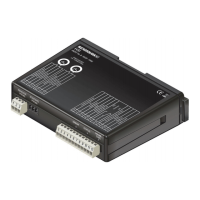
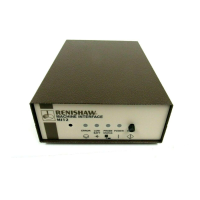
OSI
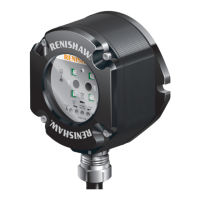
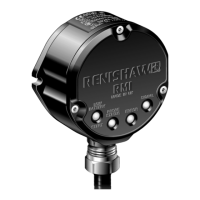
A single, tandem or combination of OMM-2C and
OMM-2 configuration can be connected to the
OSI. Each OMM-2 / OMM-2C is connected to the
interface by a 7-way connector block (as shown in
the wiring diagram on page 3.8).
OSI-D
One OMM-2C is connected to connector ‘A’ of the
interface using a 15-way HD D type connector.
The second OMM-2C is connected to connector
‘B’ of the interface using a 7-way connector block
(as shown in the wiring diagram on page 3.8).
A single OMM-2 can be connected to the OSI-D
using a 7-way connector block (as shown in the
wiring diagram on page 3.8).
When a tandem OMM-2 / OMM-2C configuration
is used, there will be a simultaneous indication
of system status on both receivers (for OMM-2C,
see Chapter 2, “OMM-2C basics”, or for OMM-2
see the OSI with OMM-2 multiple optical probe
interface system installation guide (Renishaw part
no. H-5492-8504).
Tandem OMM-2C can be used in machines with
two separate spindles. It is not necessary to
shield one receiver from the other, and operating
envelopes can overlap.
OMM-2C cable
Cable termination
Suitable ferrules should be crimped onto each
cable wire for a more positive connection at the
terminal box.
Standard cable variants
The OMM-2C standard polyurethane cables are
supplied in 8 m (26 ft) and 15 m (49 ft) lengths.
Please contact Renishaw for other cable lengths if
required.
NOTE: The maximum permissible length of cable
is 30 m (98 ft).
Cable specication
Ø4.75 mm (0.19 in), 12 core, screened cable,
each core consisting of 7 × 0.1 mm wires.
Cable sealing
Coolant and dirt are prevented from entering the
OMM-2C by the cable connector. The OMM-2C
cable can be protected against physical damage
by fitting flexible conduit if required.
NOTE: Do not overtighten cable connector.
Maximum torque is 2 Nm (1.48 lbf.ft.).



 To Next Page