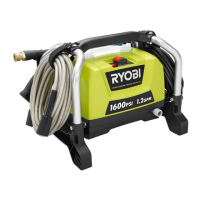
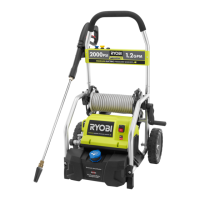
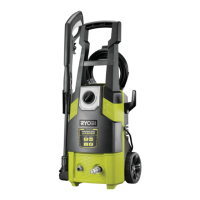
This document is the owner's operating manual for the RYOBI AJP-1600 high-pressure washer. It provides essential information for safe and effective use, including technical specifications, operating instructions, safety regulations, and maintenance guidelines.
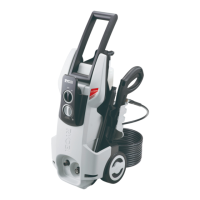
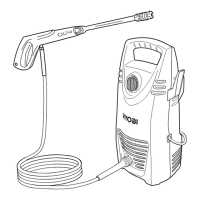
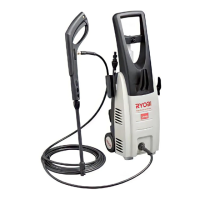
The RYOBI AJP-1600 is a high-pressure washer designed for cleaning vehicles, machines, buildings, facades, and other surfaces in a private sector setting. It operates by generating a high-pressure water jet to remove dirt and grime. The machine is equipped with a pump encased in a shock-absorbing housing, a lance, and a non-slip handle grip for optimal working position and user comfort.
Important Technical Specifications:
- Power rating input: 1700 W
- Rated pressure: 11 MPa
- Allowable pressure: Max. 15 MPa
- Rated flow: 6.67 L/min
- Suction height: 1 m
- Max. water inlet pressure: 1.0 MPa
- Rated temperature: 0 - 60°C
- Weight (including accessories): 7.5 Kg
- Product protection degree: IPX5
Usage Features:
The AJP-1600 is designed for use with cold or lukewarm water (max. 60°C). Using higher temperatures can damage the pump. It is crucial to use only clean water, free from dirt, grit, or chemical products, as these can impair operation and shorten the machine's life.
Connection and Startup:
- Hose Connection: The high-pressure hose is screwed onto the water outlet pipe and the spray handle, turning clockwise. Ensure the hose is completely uncoiled before operation and does not loop while the machine is running.
- Filter Check: Verify that the inlet filter is mounted in the water inlet and is not blocked. This filter is essential to prevent sand, limestone, and other impurities from damaging the pump valves. Failure to fit the filter will invalidate the guarantee.
- Water Inlet Connector: Screw the water inlet connector onto the water inlet.
- Lance Attachment: Insert the lance into the spray handle and turn it to lock. Ensure the spray handle's safety lock is in the OFF position by pulling out the locking lever and locating it on the tab in the handle grip.
- Nozzle/Equipment: Mount the desired nozzle or other equipment.
- Water Supply: Connect the water inlet hose (minimum diameter 13mm) to both the water tap and the machine.
- Power Supply: Connect the machine to power supplies.
Operating the Device:
- Bleeding Air: Open the water inlet. Press the safety lock on the spray handle and pull back the trigger lever to bleed trapped air from the device.
- Switch On: Turn on the machine's switch.
- Standby: Releasing the trigger lever temporarily turns off the device, putting it in standby mode. Pressing the trigger again restarts the machine.
- Complete Shutdown: To completely turn off the machine, press the ON/OFF switch.
- Jet Adjustment: The water jet's shape can be changed from a concentrated to a flat jet by turning the nozzle.
- Turbo Nozzle: Using the lance with a rotating nozzle is particularly effective for very stubborn dirt.
- Positioning: The machine must be set upright on a level, stable surface.
- Handling: The spray lance generates thrust during operation, so it must always be held firmly with both hands. Point the nozzle at the ground.
- Pressure Adjustment: Adjust the distance and pressure of the nozzle to the surface being cleaned. The spray angle can also be adjusted at the nozzle.
- Detergent Use: Fill the detergent tank with an appropriate cleaning agent. Pulling back the nozzle on the lance will switch the device to low-pressure operation, and detergent will be added automatically.
Safety Devices:
- Safety Lock on Spray Handle: The spray handle has a safety lock that prevents operation when activated.
- Motor Pump Protection: The motor is equipped with a circuit breaker switch. If the motor overheats, it will cut out. The machine should be switched off, allowed to cool for 5-10 minutes, and the cause of the fault investigated. If the problem persists, contact a RYOBI service center.
General Safety Regulations:
- Power Supply: The power plug must be connected to a properly installed socket. A residual current device (GFCI) for max. 30 mA is strongly recommended.
- Inspection: Always check the device, mains cable, and plug for damage before use. Damaged parts must be replaced by a qualified electrician.
- Disconnect Power: Always unplug the device before any maintenance, changing nozzles, or when not in use.
- Extension Cables: Use only suitable, watertight extension cables with a minimum cross-section of 1.5 mm² for outdoor use. Uncoil completely to prevent heat damage.
- Cleaning Agents: Use only cleaning agents supplied or recommended by the manufacturer.
- Personal Safety: Do not use the device near other persons or animals unless they are wearing appropriate protective clothing. Do not direct the jet towards persons, animals, live electrical equipment, or the device itself.
- Kickback: The high-pressure jet produces a "kickback" on the spray handle. Maintain a solid footing and a firm grip.
- Vehicle Tires: The high-pressure jet can damage vehicle tires and parts. Maintain a distance of at least 30 cm from the object being cleaned.
- Dry Operation: The electric pump must always have a sufficient water supply. Dry operation causes severe damage to the seals.
- Temperature: Do not use the machine at temperatures below 0°C.
- Asbestos: Do not clean asbestos-containing surfaces with high pressure.
Maintenance Features:
- Disconnect Power: Always disconnect the plug from the socket before performing any maintenance or cleaning.
- Cleaning After Use: Wash off the water hose, high-pressure hose, spray lance, and accessories. Clean connectors of dust and sand. Rinse the detergent spraying attachment after use.
- Repairs: All repairs should be made by a RYOBI authorized distributor using original spare parts.
- Nozzle Cleaning: If the nozzle clogs, causing high pump pressure, it needs immediate cleaning. Stop the machine, disconnect the nozzle, and clean it. The cleaning tool should only be used when the spray lance is detached. Flush the spray lance backwards with water.
- Water Intake Filter Check: Clean the water inlet filters regularly (at least monthly or more frequently depending on use) to prevent clogging. Unscrew the connection coupling for the water inlet hose and clean the exposed inlet sieve under running water. Failure to fit the filter will invalidate the guarantee.
- Machine Vents: Keep the machine clean to allow cooling air to pass freely through the air vents.
Storage:
Before storing, the pump, hose, and accessories should always be emptied of water:
- Stop the machine (ON/OFF switch) and detach the water hose and accessory.
- Restart the machine and activate the trigger. Let it run until no water flows through the spray handle.
- Stop the machine, unplug, and detach the high-pressure hose.
- Long-term Storage (over three months) in a frosty environment: Fill the machine with an antifreeze solution (similar to those used for vehicles).
- Lime Deposits: If the device is not used for extended periods, lime deposits can form in the motor pump, leading to starting difficulties.
- NEVER START UP A FROZEN MACHINE. Frost damage is not covered by the guarantee.
Environmental Protection:
Recycle unwanted materials. Tools, hoses, and packaging should be sorted and disposed of in an environmentally safe way at a local recycling center.
Troubleshooting:
The manual includes a comprehensive troubleshooting guide covering common issues such as the pump not running, no pressure, irregular operating pressure, motor stops, pump drips, loss of pressure, excess noise, oil in expelled water, water leaks, and the motor humming but not starting. For each fault, a cause and a remedy are provided, ranging from checking fuses and cleaning filters to replacing parts or contacting a professional repair shop.
Discarding the Machine:
When the machine is no longer to be used, pull out the plug, make it inoperable, store it out of reach of children, and disassemble it for disposal of individual parts according to local regulations. Do not use parts from the used machine as replacements.


 To Next Page
 General