1. Design Procedure & Combination Ratio
Definition of Combination Ratio, CR
CR =
Sum of Nominal Cooling Capacity of Indoor units
*
100%
Nominal Cooling Capacity of Outdoor unit
Constraints of Allowable Combination Ratio
DVM S systems are normally designed to utilize a CR 50% to 130% to ensure effective load balancing between indoor units
and outdoor unit. As buildings have become more insulated, and usage and occupancy of buildings are highly variable,
more buildings can realize a higher load balancing between IDUs and ODU, thus higher CR (>130%) is often required. If a
system design exceeds 130%, risks associated to increased indoor sound level and reduced comfort le
vels should be
considered. Therefore, when it is necessary to design a combination ratio exceeding 130%, the following conditions must
be complied with: -
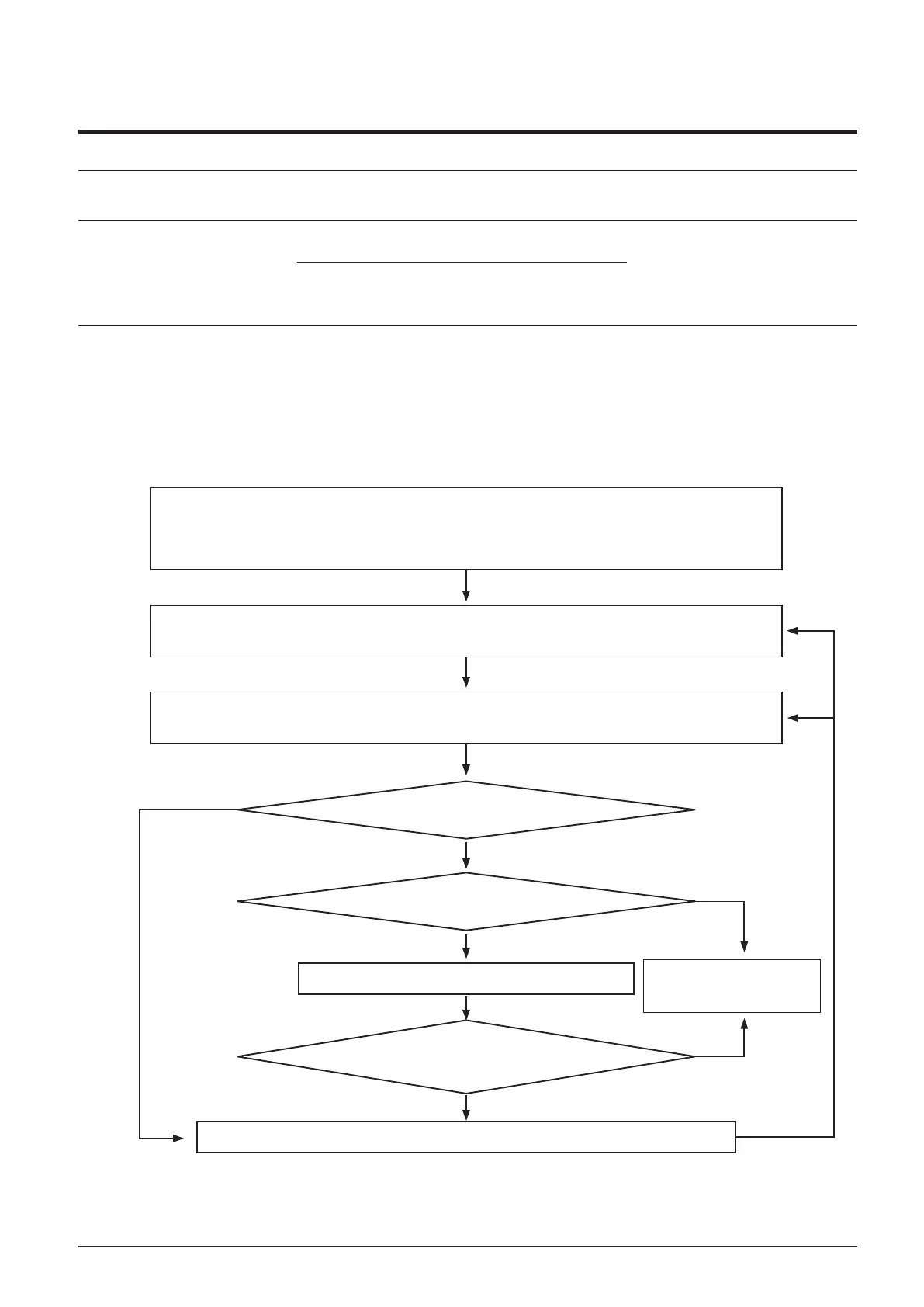
Design & Selection Procedure
Determine DVM Design Condition
• Design temperature
• Calculate cooling and heating loads (Zone peak loads/System Peak load)
• Power supply, piping length and level difference
Select indoor unit for each zone
Max capacity at design condition should be greater than Zone Peak Load
Select outdoor unit
(Max capacity at design condition should be greater than System Peak Load)
Go to the next step to
complete design
Size up outdoor unit or change indoor unit type or capacity
Decide Minimum Operation Ratio in heating mode
Total nos. of indoor units exceed limit?
Calculated CR
@ Minimum Operation Ratio in heating mode?
No
No
Yes
Yes
Fig. 1 Design & Selection Procedure for Extended Combination Ratio
Combination Ratio (Connection Ratio)
No
No
Yes



 To Next Page