20
8. MAINTENANCE
The heater shall be controlled and if necessary cleaned regularly (at least one or two times a year) by
a qualified installer. This is especially important if the appliance is used in hard conditions such as
dusty or wet area or used with a high intensity.
8.1 Main inspection of the appliance
- Check the main state of the installation. Inspect the heater, the thermostat, the wires, the gas
pipe and the combustion products duct.
- Control the CO2 and CO level into the combustion products, as well at high speed that at low
speed (see chapter 6, page 17).
8.2 Appliance servicing
Before begin the servicing, shut the electric and gas supplies.
- Disassemble the burner/premix by unscrewing the 8 hex bolts.
- Check inside the exchanger that it is not dirty or damaged
- Check the state of the burner, if necessary, clean up the electrode helps to fine sandpaper.
Take care to not twist the electrode.
- Check the duct.
- Eventually clean inside the appliance with a vacuum cleaner.
- Clean outside the exchanger, the blades of the main fan with compressed air or a cloth
or a smooth brush. Do never use a metallic brush !
- Reassemble the burner (use new seals).
Once the servicing done, open the electric and gas supplies.
- Check once again the levels of CO
2
and CO of the combustion products.
- Check the proper operation of the heater.
8.3 Ignition electrode
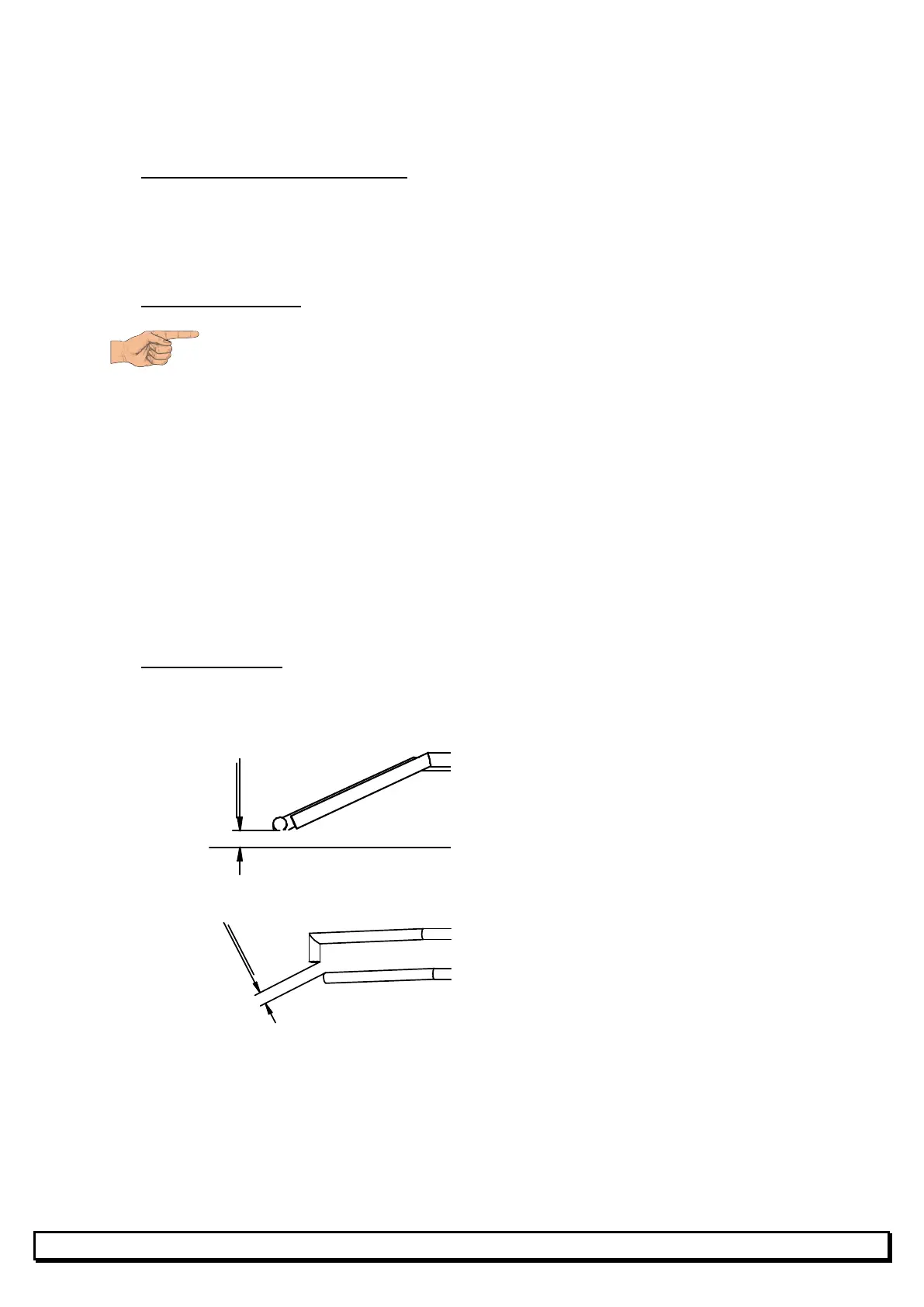
In order to obtain a proper ignition of the burner, it is important that the electrode is set correctly.
- The distance between the electrode and the burner have to be of 5.0 ± 0.5 mm.
5 ±0,5
- The distance between the 2 electrodes have to be of 3.6 ± 0.4 mm
3
.
6
±
0
,
4
- It is important that the sparkling take place between the 2 electrodes and not between one
electrode and the burner. It can conduct to a detonated ignition of the heater.



 To Next Page