12
FRESH AIR INTAKE
In a well-insulated house the air used for the combustion process has to be replaced. This particularly applies to houses
with mechanical ventilation. There are different ways of making sure that air is exchanged. The most important thing is to
ensure that there is a supply of air to the room where the wood stove is located. The external wall vent must be located as
close to the wood stove as possible, and you must be able to close it when you are not using the stove.
National and local building regulations must be followed with regard to connection of a fresh air intake.
CLOSED COMBUSTION SYSTEM
You should use the closed combustion system for the wood-burning stove if you live in a newly-built, airtight home.
External combustion air is connected through a ventilation pipe via the wall or floor.
It must be possible to shut off the ventilation pipe with a valve, when the stove is not in use.
Minimum Ø 100 mm ventilation pipe, maximum length: 6 metres with a maximum of one bend.
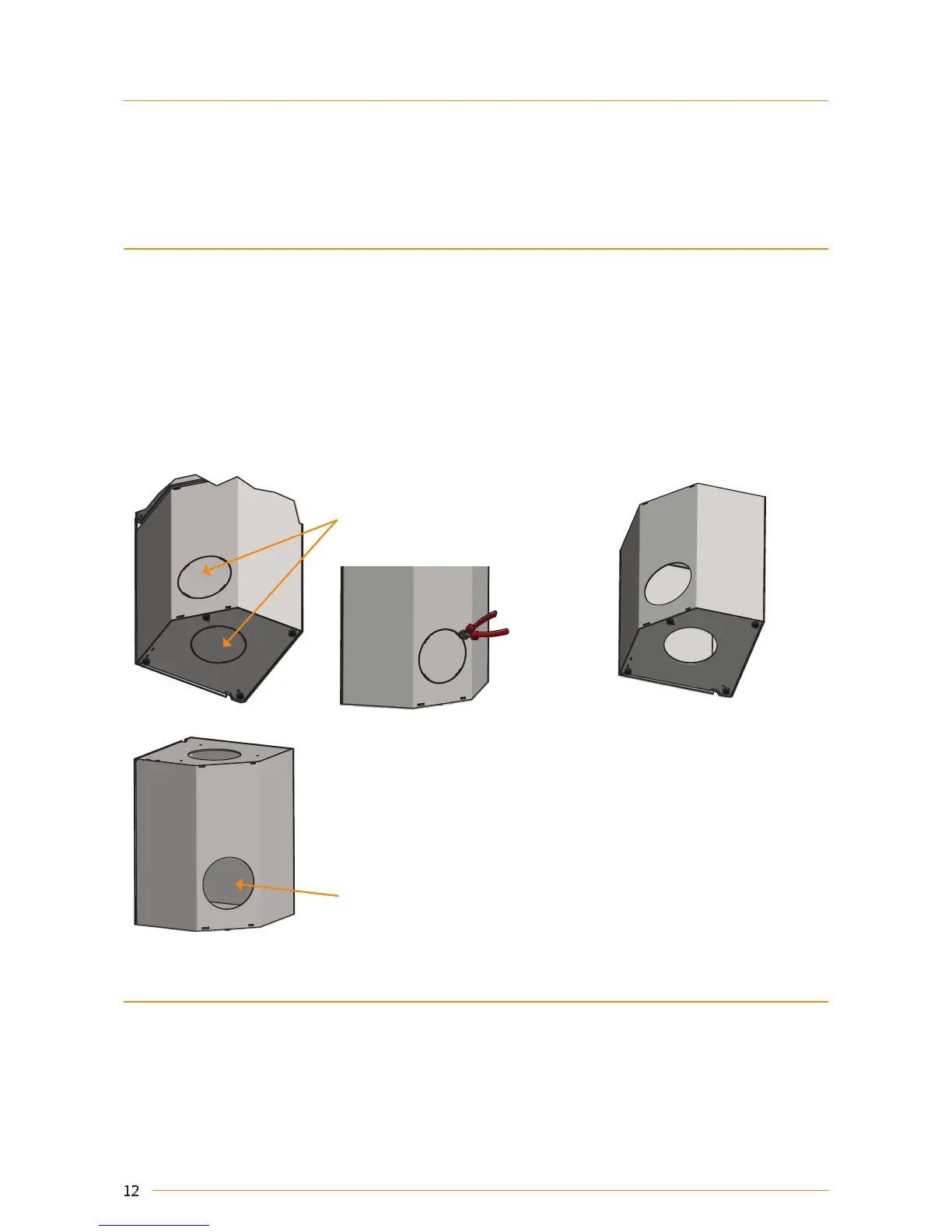
If you want external combustion air at the rear, you must close the hole in the bottom with the dismounted cover plate.
NOTE: if the stove has a fresh air connexion or closed combustion, the ventilation pipe must be open, when the stove
is in use!
External combustion air is
connected at the con-
nection piece under the
combustion chamber.
If you want external combustion
air via floor or wall, remove the
cover plate with a pair of cutting
pliers
LOAD-BEARING SUBSURFACE
All items in our product range come under the category of lightweight fireplaces and stoves and do not normally require
any reinforcement of the beam structure. They can be positioned on ordinary beams/floor.
You should of course make sure that the subsurface on which the stove is positioned can indeed support the weight of the
stove and, where applicable, a steel chimney, if you have opted for this solution.


 To Next Page