AVOID SERIOUS INJURY OR DEATH FROM COMPONENT FAILURE BY KEEPING IMPLEMENT IN
GOOD OPERATING CONDITION IN PERFORMING PROPER SERVICE, REPAIRS AND
MAINTENANCE.
BEFORE PERFORMING SERVICE, REPAIRS AND MAINTENANCE ON THE IMPLEMENT:
SECURE EQUIPMENT FOR SERVICE
BLOCK OUT POTENTIAL ENERGY HAZARDS; Rotating Parts, Raised Components, Hydraulic Pressure.
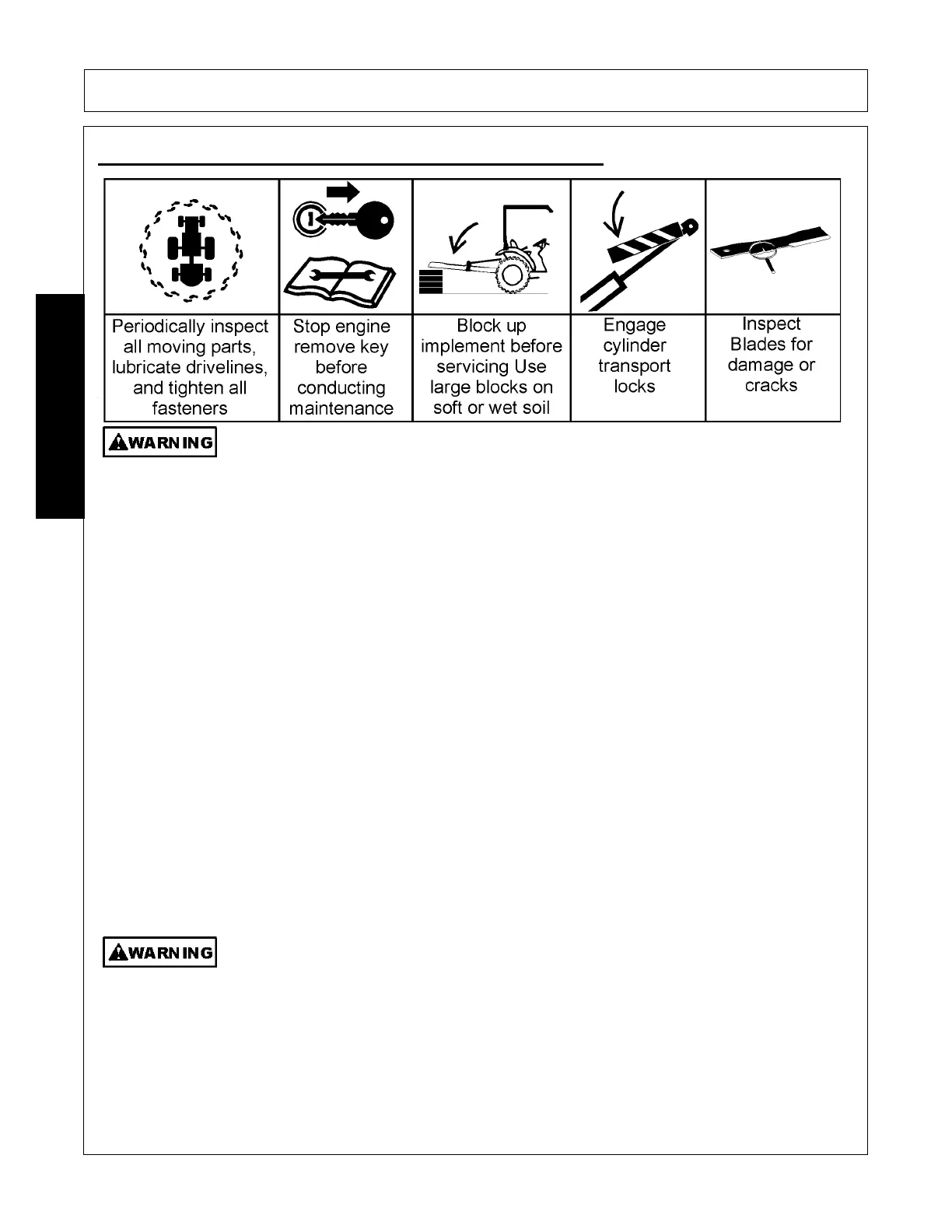
• STOP ENGINE, engage parking brake and allow all moving parts to stop and remove key before dismounting from tractor seat.
• PLACE implement on ground or securely block up raised equipment. Use large blocks on soft or wet soil.
•
PUSH and PULL Remote Hydraulic Cylinder lever to relieve hydraulic pressure.
• DISCONNECT IMPLEMENT driveline from tractor PTO Shaft.
WEAR SAFETY GLASSES, PROTECTIVE GLOVES and follow SAFETY PROCEDURES when performing service, repairs
and maintenance on the implement:
•Always WEAR protective GLOVES when handling chemicals or worn component with sharp edges.
•Always
WEAR GLOVES and SAFETY GLASSES when servicing components
• AVOID CONTACT with hot hydraulic oil tanks, pumps, motors, valves and hose connection surfaces.
• SECURELY support or BLOCK UP raised implement, framework and lifted components before working underneath equipment.
•
STOP any implement movements and SHUT-OFF TRACTOR engine before doing any work procedures.
• USE ladder or raised stands to reach high equipment areas inaccessible from ground.
• ENSURE good footing by standing on solid flat surfaces when getting on implement to perform work.
•
FOLLOW manufacturer's instructions in handling oils, solvents, cleansers, and other chemical agents.
• DO NOT change any factory-set hydraulic calibrations to avoid component or equipment failures.
• DO NOT modify or alter implement, functions or components.
•
DO NOT WELD or repair rotating mower components. These may cause vibrations and component failures being thrown from
mower.
PERFORM SERVICE, REPAIRS, LUBRICATION AND MAINTENANCE OUTLINED IN IMPLEMENT MAINTENANCE
SECTION:
• INSPECT for loose fasteners, worn or broken parts, leaky or loose fittings, missing or broken cotter keys and washers on pins, and
all moving parts for wear.
•
REPLACE any worn or broken parts with authorized service parts.
• LUBRICATE unit as specified by lubrication schedule
•
NEVER lubricate, adjust or remove material while it is running or in motion.
•
TORQUE all bolts and nuts as specified.
BLADE INSPECTION:
• REPLACE bent, damage, cracked or broken blades immediately with new blades.
•
AVOID blade failures and thrown broken blades. DO NOT straighten, weld, or weld hard-facing blades.
SAFETY SHIELDS, GUARDS AND SAFETY DEVICES INSPECTION:
• KEEP all Deflectors, Chain Guards, Steel Guards, Gearbox Shields, and PTO integral shields, Bands, Side Skirts and Skid Shoes
in place and in good condition.
• REPLACE any missing, broken or worn safety shields, guards and safety devices.
Operating, servicing and maintaining this equipment can expose you to chemicals including gasoline,
diesel fuel, lubricants, petroleum products, engine exhaust, carbon monoxide, and phthalates, which are
known to the State of California to cause cancer and birth defects or other reproductive harm. To minimize
exposure, avoid breathing exhaust, do not idle the engine except as necessary, service your vehicle in a
well-ventilated area and wear gloves or wash your hands frequently when servicing your vehicle. Battery
posts, terminals and related accessories contain lead and lead compounds, chemicals known to the state
of California to cause cancer, birth defects or other reproductive harm. For more information go to
www.P65Warnings.ca.gov. This website, operated by California's Office of Environmental Health Hazard
Assessment, provides information about these chemicals and how individuals may be exposed to them.
PN HM01



 To Next Page