Oponal Formang and Paroning
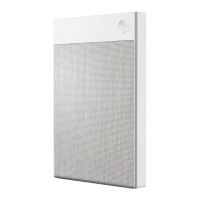
Seagate Ultra Touch is preformatted exFAT for compatibility with both PC/Mac computers and Android
mobile devices. If you use the drive with only one type of computer, you can optimize file copy
performance by formatting the drive in the native file system for your operating system—NTFS for Windows
or HFS+ for macOS. If you also use the drive with Android, make certain to use a compatible format such as
exFAT.
About file system formats
NTFS—The native file system for Windows. macOS can read NTFS volumes but cannot natively write to
them. NTFS is not recommended for connections to compatible Android mobile devices.
Mac OS Extended (HFS+)—An Apple file system optimized for macOS 10.12 and earlier. This file system
remains the best option for external hard drives and is the only format compatible with Time Machine.
Windows cannot natively read or write to HFS+ (journaled) volumes. HFS+ is not recommended for
connections to compatible Android mobile devices.
APFS (Apple File System)—An Apple file system optimized for solid state drives (SSDs) and flash-based
storage systems. Note the following restrictions:
You cannot use an APFS-formatted disk as your Time Machine backup drive. Format Seagate Ultra Touch
to HFS+ if you intend to use it with Time Machine.
APFS is only supported on macOS 10.13 or later.
APFS is not recommended for connections to compatible Android mobile devices.
exFAT—Compatible with macOS and Windows. exFAT is not a journaled file system, which means it can be
more susceptible to data corruption when errors occur or the drive is not disconnected properly from the
computer.
FAT32—Compatible with macOS and Windows. However, FAT32 is a legacy file system designed for low
capacity hard drives and it is not recommended for modern hard drives or operating systems. A FAT32
partition can reach up to 32GB when formatted on a Windows PC.
How to choose the file system format
Use NTFS if:



 To Next Page